Classic Carbonara
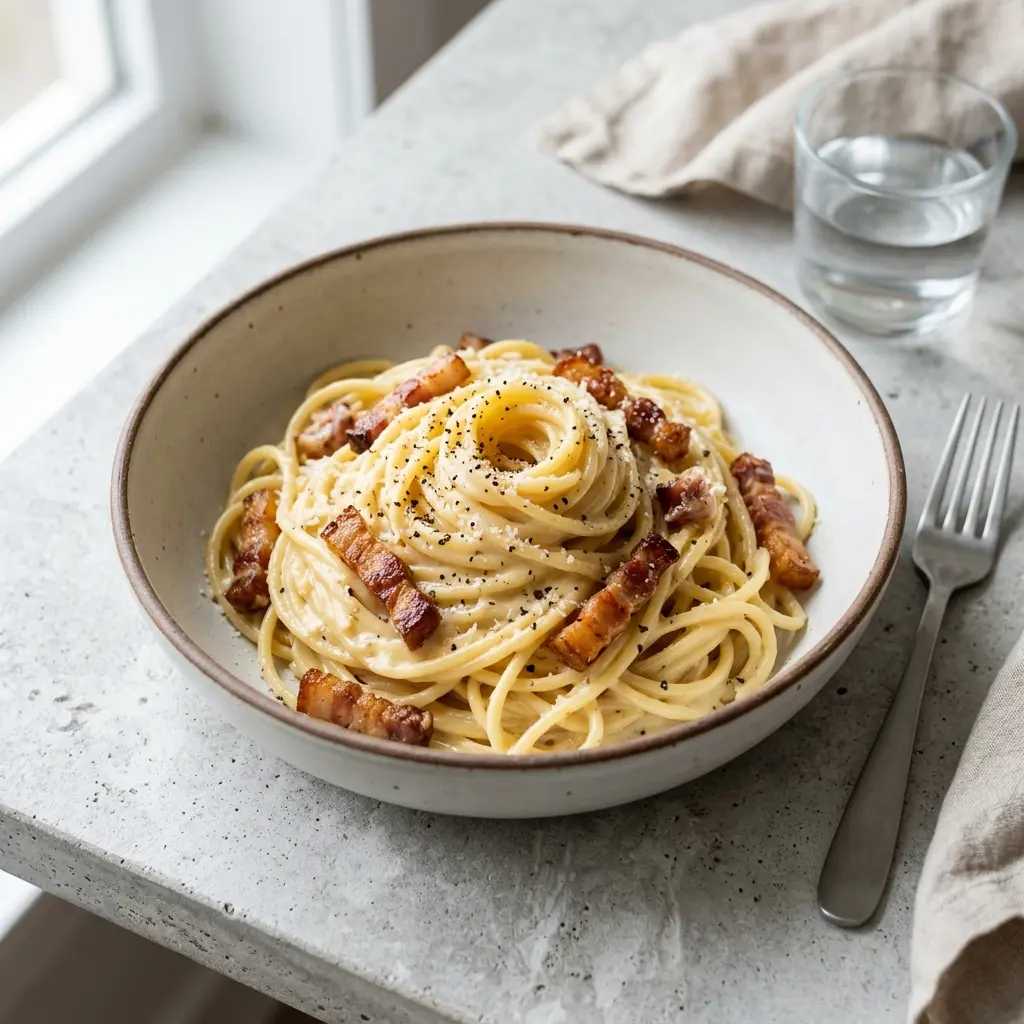
Classic carbonara uses just five ingredients: spaghetti, cured pork, eggs, hard cheese and black pepper. There is no cream and no garlic, because the sauce is made from eggs and cheese loosened with starchy pasta water and warmed by the hot pasta. Get the timing right and it comes out silky and glossy, and it is ready in 30 minutes.
- Total
- 30 min
- Prep
- 10 min
- Cook
- 20 min
- Serves
- 4
- Per serving
- 690kcal
Getting a silky sauce in classic carbonara
Carbonara is a Roman dish, and its exact origins are debated. What matters is the technique: the sauce is never cooked over direct heat. The hot spaghetti and the warm pork fat do the work, so take the pan off the heat before the eggs go in, and use the pasta water to bring the sauce to the right consistency. Grate the cheese finely so it melts, and go easy on the salt, because the pork and cheese are both salty already.
Step-by-step classic carbonara
Tap a time to start a timer.
- Get everything ready Fill a large saucepan with 4 litres of water, add salt and bring it to the boil. Whisk the whole eggs, the yolk, both cheeses and the pepper in a bowl to a thick paste.
- Cook the pasta Add the spaghetti to the boiling water and cook for , or according to the packet, until al dente.
- Crisp the pork While the pasta cooks, put the guanciale in a cold, dry frying pan and set it over a medium heat. Fry for , stirring now and then, until the fat has melted and the pieces are golden and crisp. Take the pan off the heat.
- Save some water Before draining the pasta, scoop out a mugful of the cooking water, about 200ml, then drain the spaghetti.
- Make the sauce off the heat Tip the spaghetti into the frying pan with the pork and its fat. Wait 30 seconds, then pour in the egg mixture and toss constantly with tongs. Add the pasta water 2 tbsp at a time until the sauce is glossy and coats every strand. The heat of the pasta cooks the eggs gently into a creamy sauce.
- Serve at once Divide between warm bowls and finish with more pepper and a little extra pecorino.
Swaps and what to serve with it
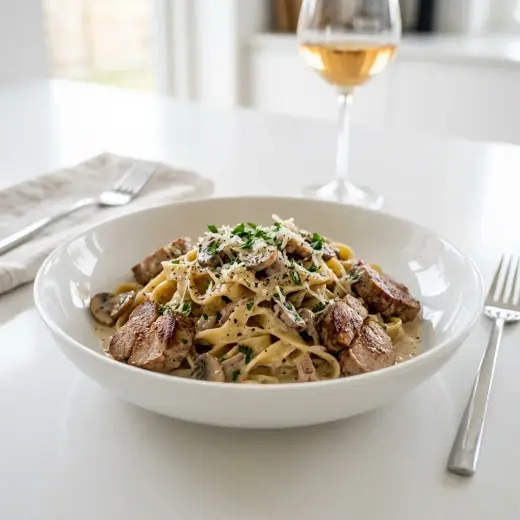
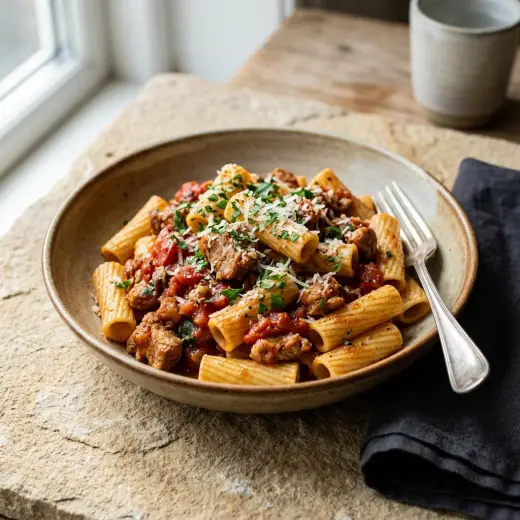
Guanciale, which is cured pork cheek, is available in delis and some larger supermarkets, but pancetta is a good second choice. A simple green salad with a sharp dressing cuts through the richness. For another pasta dish with pork, try pasta with pork and tomato, which has a lighter sauce, or pasta with pork tenderloin for a more substantial supper.
Common problems and fixes for Classic Carbonara
- The eggs scramble and the sauce looks like scrambled egg.
- The pan was too hot. Always take it off the heat before adding the egg, wait 30 seconds, and keep tossing as you add the pasta water, which cools the sauce and keeps it smooth.
- The sauce is thick and clumpy.
- Add more of the hot pasta water, 1 tbsp at a time, while tossing. The starchy water loosens the cheese and egg into a sauce.
- The pork is chewy rather than crisp.
- Start it in a cold pan so the fat renders slowly, cut the pieces small and cook until they are deep golden before you take the pan off the heat.
Frequently asked questions about Classic Carbonara
Can you use cream?
No. Traditional carbonara contains no cream at all, as the creaminess comes from the emulsion of egg, cheese and starchy pasta water. Cream makes the sauce heavier and dulls the flavour of the cheese.
What can I use instead of guanciale?
Pancetta is the easiest substitute, and unsmoked streaky bacon also works. Smoked bacon changes the flavour, so use it only if you like a smoky taste.
Can I use only Parmesan?
Yes. Pecorino Romano is sharper and saltier, so if you use only Parmesan the sauce will be milder. Taste before adding any salt.
Are the eggs safe to eat?
British Lion-stamped eggs are safe to eat lightly cooked, according to the Food Standards Agency, including for pregnant women. If you are not using Lion eggs, choose pasteurised eggs.
How did you like the recipe?
4.7 / 5 · 4 ratings