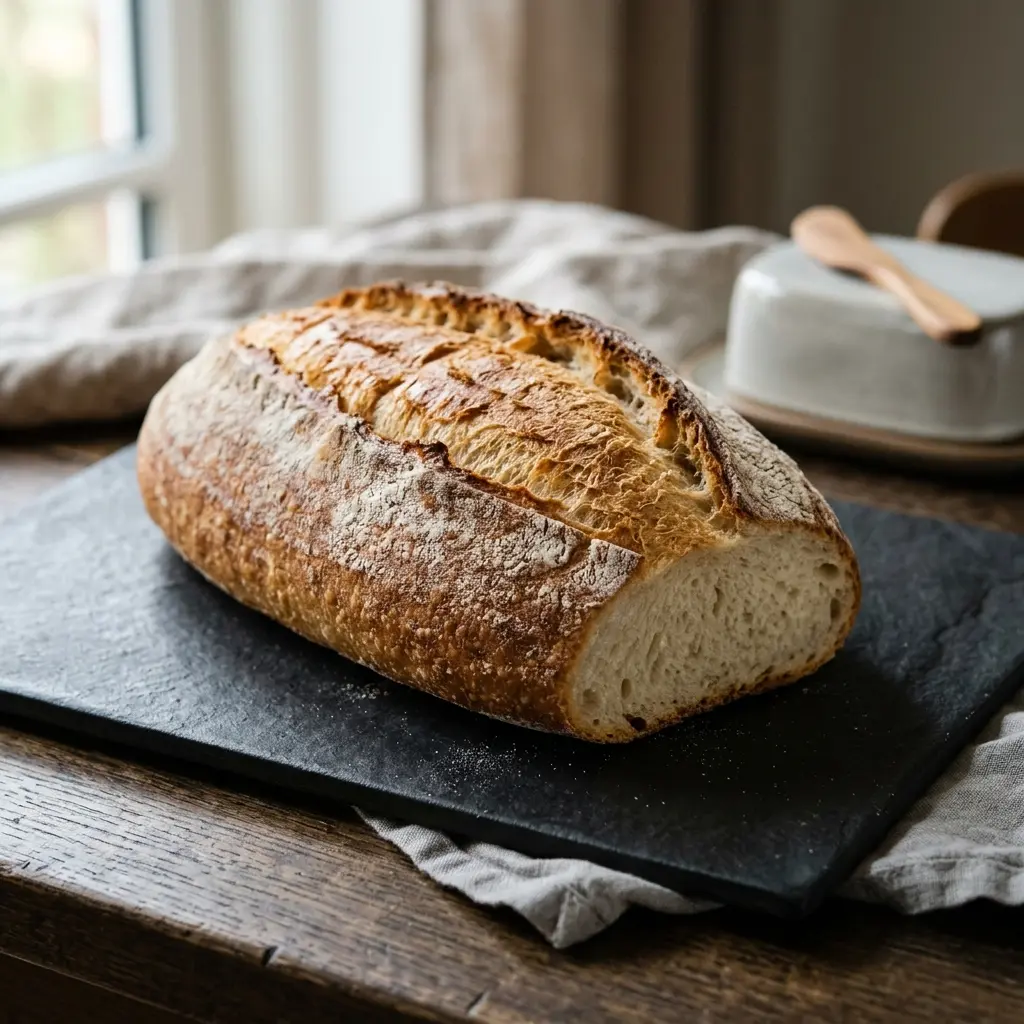
Why you should try white bread
Baking White Bread at home gives you full control over the ingredients you use. Freshly baked loaves have a much better aroma and flavour than store bought versions. It is a rewarding process that fills your house with a wonderful smell. You can easily slice it to your preferred thickness for different meals.
How to get white bread ready
Mix the dough: Combine the flour, yeast and salt in a large bowl. Pour in the warm water and oil then stir until a rough dough forms. Use your hands to bring the mixture together into a ball.
Knead the mixture: Place the dough on a lightly floured surface and knead for about ten minutes. The White Bread dough should become smooth and stretchy during this time. Place it back in the bowl and cover with a damp cloth.
Let it rise: Leave the dough in a warm place for about an hour or until it has doubled in size. Gently punch the dough down to release air and shape it to fit your loaf tin. Cover and let it rise again for another forty minutes.
Bake the loaf: Preheat your oven to 200C and bake for thirty minutes until the top is golden brown. The bread is ready when the bottom sounds hollow when tapped. Let the loaf cool completely on a wire rack before slicing.
The best tips for white bread
Always check that your yeast is fresh before you start mixing the ingredients. Warm water is essential for activating the yeast but it should not be too hot or it might kill the culture. Make sure you knead the White Bread dough thoroughly to develop the gluten for a better rise. If the dough feels too sticky, add a tiny amount of flour until it is easier to handle. Letting the loaf cool completely before cutting will prevent it from becoming squashed or gummy. You can store the finished bread in a paper bag to keep the crust at its best quality.
Adding a small bowl of water to the bottom of the oven can help create steam for a crispier crust.
You might also enjoy
classic stroganoff,
smoothie with chia seeds or
ratatouille.