Baked Sole
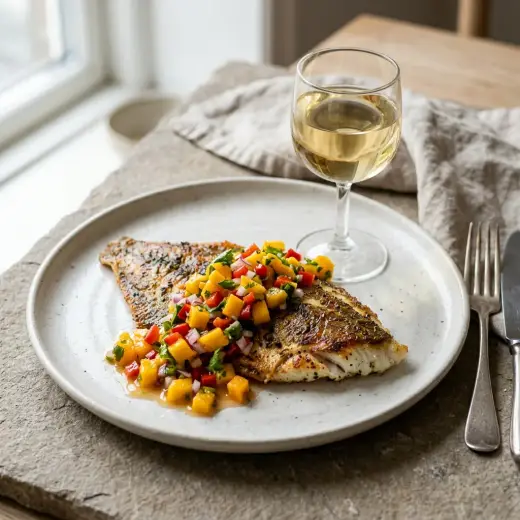
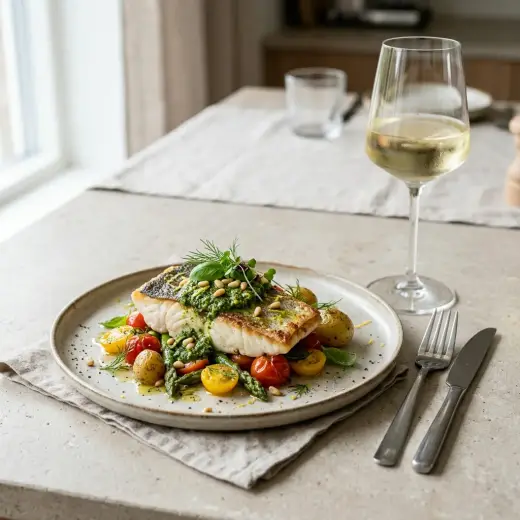
Baked sole is one of the quickest ways to get a delicate fish dinner on the table: thin fillets, a little garlic oil and lemon, and about 12 minutes in a hot oven. There is no batter or frying involved, so the fish tastes of itself. Lemon sole, Dover sole and similar flatfish fillets all work with this method, as long as you watch the clock.
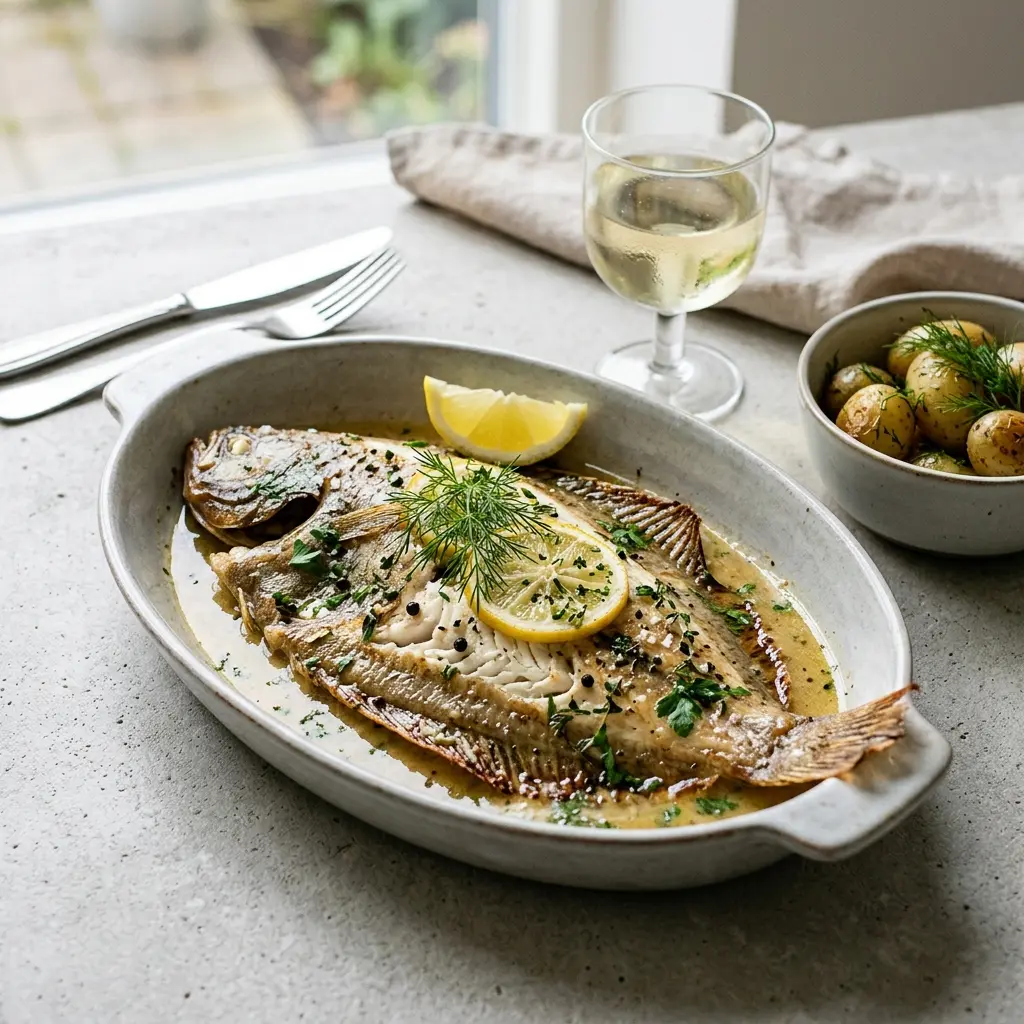
- Total
- 22 min
- Prep
- 10 min
- Cook
- 12 min
- Serves
- 4
- Per serving
- 195kcal
Keeping baked sole tender
Sole has fine, lean flesh that goes from just cooked to dry very quickly, which is why the oven needs to be properly hot and the timing tight. A hot oven cooks the thin fillets through before they can dry out, and the lemon slices on top protect the surface from the direct heat. Lay the fillets flat and in one layer, because overlapping pieces cook unevenly.
If you only have thicker fillets, give them a few extra minutes and test the thickest part. A splash of dry white wine in the bottom of the tray adds a little sauce, and you can swap the parsley for dill or chives.
The method for baked sole
Tap a time to start a timer.
- Heat the oven Heat the oven to 200°C (180°C fan), gas 6, and line a large baking tray with baking paper. Pat the fillets dry with kitchen paper and lay them in a single layer on the tray, without overlapping.
- Season the fish Stir the olive oil, garlic, salt and pepper together in a small bowl and brush it over the fillets. Lay two or three lemon slices on top of each one.
- Bake Slide the tray onto the middle shelf and bake for . The fish is done when it turns opaque and flakes easily when you press the thickest part with a fork. Very thin fillets can be ready after , so check early.
- Finish and serve Lift the fillets onto warm plates with a fish slice, scatter over the parsley and add a squeeze of lemon from the wedges. Spoon over any juices from the tray.
What to serve with it
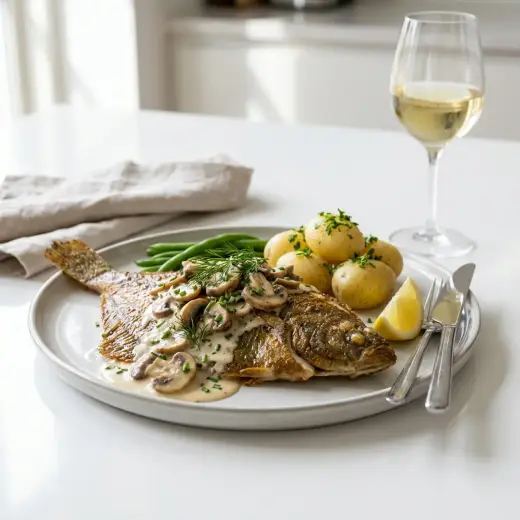
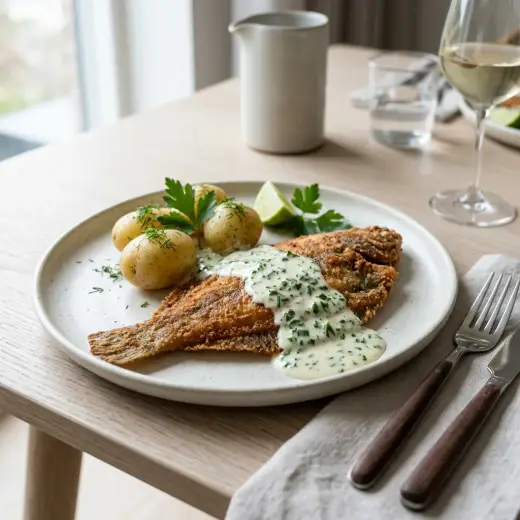
Keep the sides simple so the fish stays the centre of the plate: boiled new potatoes with butter, steamed tenderstem broccoli or a crisp green salad. For a richer meal, fish fillet with remoulade shows how well a creamy, tangy sauce pairs with white fish. If you cannot find sole, the same method works with baked plaice fillet.
Leftover fish keeps for up to two days in a covered container in the fridge. Eat it cold in a salad or reheat it gently until steaming hot.
Common problems and fixes for Baked Sole
- The fillets turn dry and chalky.
- Sole is thin, so a couple of extra minutes makes a real difference. Start checking at 8 minutes and take the tray out as soon as the flesh is opaque all the way through.
- There is a watery pool on the tray.
- Wet fish steams rather than bakes. Dry the fillets thoroughly with kitchen paper, and make sure frozen fish is fully thawed in the fridge first.
- The fillets stick to the tray.
- Use baking paper rather than bare metal, and brush a little oil underneath as well as on top. Slide a fish slice under the fillets rather than pulling at them.
Frequently asked questions about Baked Sole
How do I know when baked sole is cooked?
The flesh turns from translucent to opaque and flakes easily at the thickest part. A thermometer reading of about 55–63°C in the centre is a useful guide for tender fish.
Can I use frozen sole fillets?
Yes, but thaw them overnight in the fridge, never at room temperature. Pat them very dry before seasoning so they bake rather than steam.
What can I use instead of parsley?
Dill, chives or tarragon all suit white fish. Add them after baking so they stay fresh and green.
What should I serve with it?
Boiled new potatoes and tenderstem broccoli or buttered green beans are the easy choices. A simple green salad also works if you want something lighter.
How did you like the recipe?
4.7 / 5 · 48 ratings