Deep-Fried Oysters
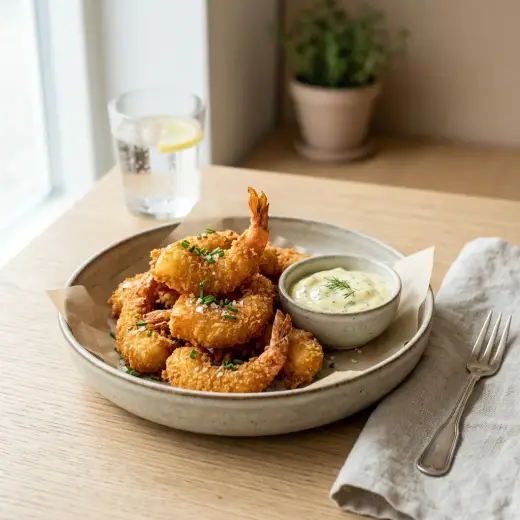
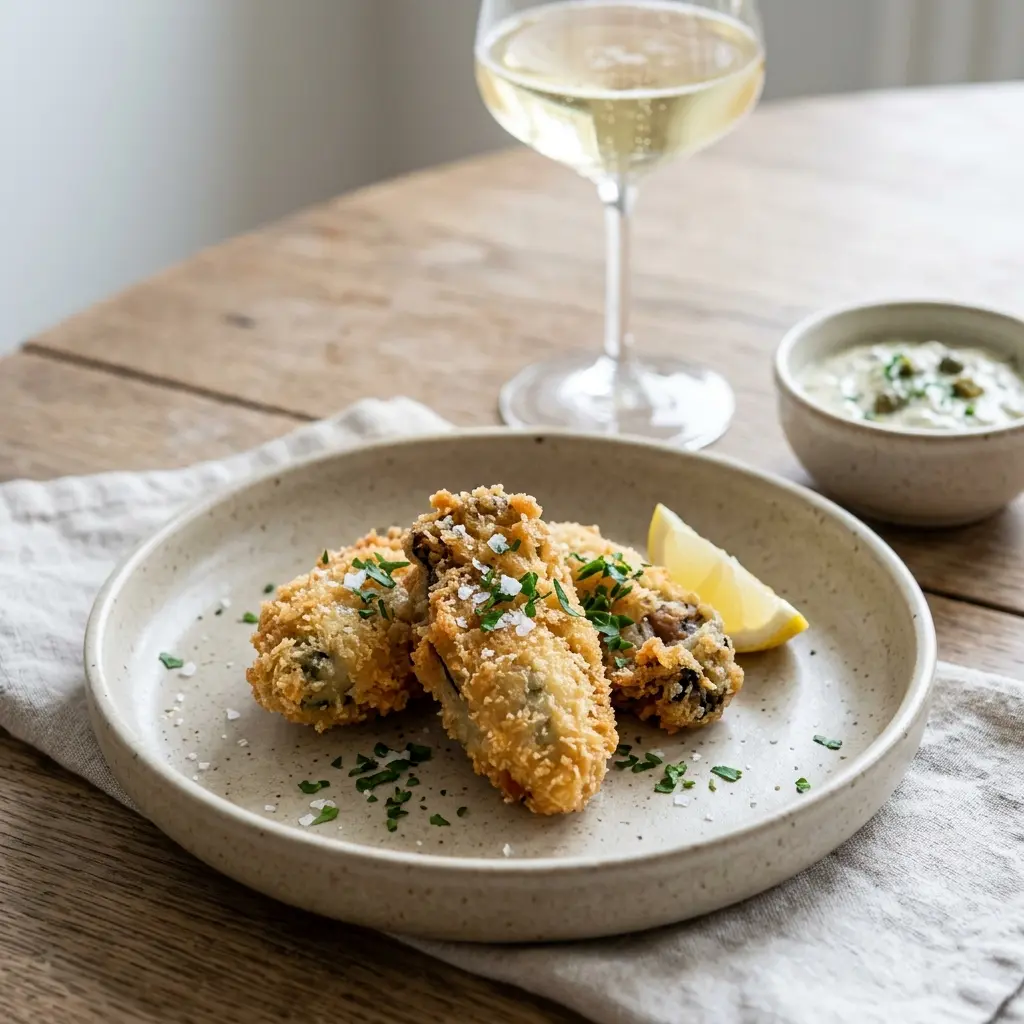
Deep-fried oysters have a crunchy golden coat and a hot, juicy centre that tastes of the sea. Twelve shucked oysters are dusted in seasoned flour, dipped in egg and rolled in panko, then fried for just 2 minutes in oil at 180°C. They make a good starter for two, ready in 35 minutes, and they are best eaten the moment they come out of the pan.
- Total
- 35 min
- Prep
- 20 min
- Cook
- 15 min
- Serves
- 2
- Per serving
- 450kcal
Buying and shucking oysters
Buy live oysters from a fishmonger or a supermarket fish counter, and ask for Pacific oysters if you can, as they are milder and a good size for deep-fried oysters. Keep them cold and cook them on the day if possible. Shucking takes practice. Work over a bowl, wear a thick tea towel on your holding hand and take your time. If it feels like too much work, use chilled shucked oysters instead.
How to prepare deep-fried oysters
Tap a time to start a timer.
- Shuck the oysters Fold a tea towel over your hand and hold an oyster flat side up. Push the tip of the oyster knife into the hinge and twist to pop it open. Slide the knife along the inside of the top shell to cut the muscle, then lift off the top. Cut the oyster free from the bottom shell and tip it onto a plate. Pat the oysters dry with kitchen paper.
- Set up the coating Put the flour, salt and pepper in one shallow dish, the beaten egg in a second and the panko in a third.
- Coat Dust each oyster in the flour and shake off any excess. Dip it in the egg, letting the extra drip off, then press it into the panko until it is fully covered. Set the coated oysters on a plate.
- Heat the oil Pour the oil into the saucepan so that it is about 4cm deep and no more than a third of the way up the sides. Heat to 180°C, checking with a cooking thermometer, which takes about .
- Fry in two batches Using a slotted spoon, lower 6 oysters into the oil and fry for , until golden brown. Lift them out, drain on a wire rack set over kitchen paper and bring the oil back to 180°C before frying the second batch.
- Serve Serve immediately, while the oysters are piping hot and the coating is crunchy, with lemon wedges and tartare sauce.
What to serve with them
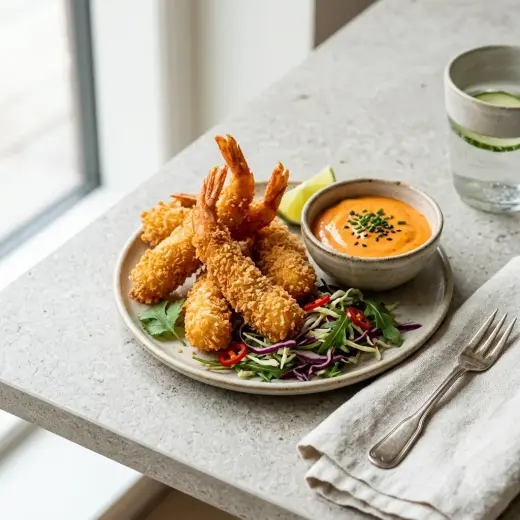
Squeeze lemon over the oysters and serve with tartare sauce, or mix mayonnaise with a little hot sauce for a quick dip. They are good with a dressed green salad and a glass of dry white wine. Alongside, you could put out a plate of prawn tempura, or a cooler dish like langoustine with dill and lemon, for a small seafood starter spread.
Common problems and fixes for Deep-Fried Oysters
- The coating is greasy rather than crisp.
- The oil was not hot enough. Use a thermometer, aim for 180°C and let the temperature recover between batches. Oil that is too cool soaks into the crumbs.
- The coating falls off in the pan.
- The oysters were still wet. Pat them dry before the flour, shake off the extra flour and press the panko on firmly. Handle them gently in the oil.
- The oysters are tough and rubbery.
- They were fried for too long. Two minutes is enough for oysters this size, because the centre is hot well before the coating burns. Take them out as soon as they turn golden.
Frequently asked questions about Deep-Fried Oysters
What oil is best for frying oysters?
A neutral oil with a high smoke point, such as sunflower or rapeseed, is best. Both let the flavour of the oysters come through. Never fill the pan more than a third full of oil.
How do you keep them crisp?
Serve them straight away. If you need to hold the first batch, put them on a wire rack in the oven at 100°C (80°C fan), gas ¼, for up to 10 minutes. Do not cover them, because steam softens the coating.
Can you use pre-shucked oysters?
Yes. Buy them chilled from a fishmonger, drain them well and pat them dry, then use them within the date on the pack. Shuck fresh oysters just before cooking.
How do you check that oysters are fresh?
Choose oysters with tightly closed shells, or shells that close when you tap them. Throw away any that stay open or smell off. Keep them in the fridge, covered with a damp cloth, and cook them within a day or two of buying.
How did you like the recipe?
4.7 / 5 · 31 ratings