Fish Fingers
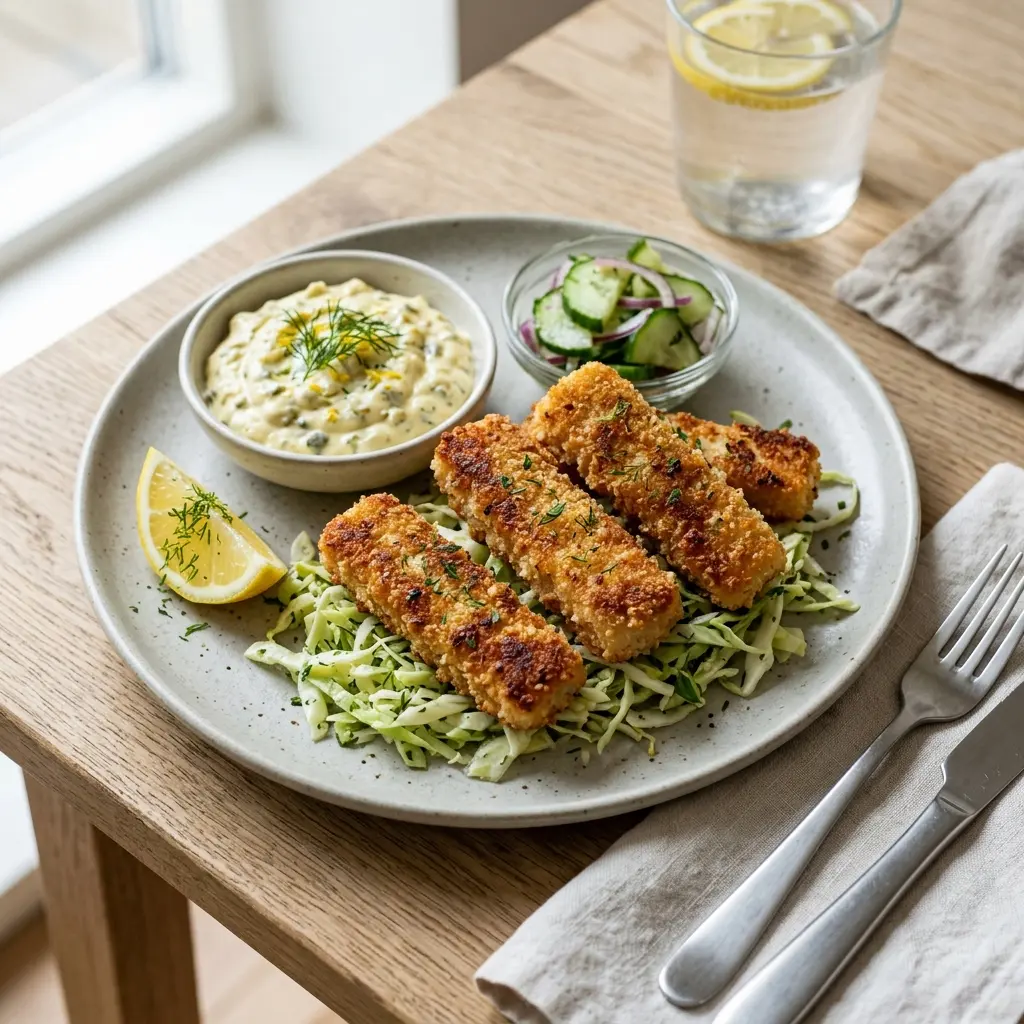
Homemade fish fingers are thick strips of cod, haddock or pollock in a crisp breadcrumb coating, and they are firmer and fishier than the frozen kind. Cutting, coating and shallow-frying twelve fingers takes under an hour including a short chill, and children can help with the flour, egg and crumbs. Serve them with chips, peas and a good dollop of tartare sauce.
- Total
- 47 min
- Prep
- 20 min
- Cook
- 12 min
- Serves
- 4
- Per serving
- 335kcal
Buying and preparing fish fingers
Cod, haddock and pollock are the classic choices, and a thick, evenly shaped piece from the middle of the fillet gives the neatest fingers. Pollock and coley cost less and take the coating just as well. If you only have frozen fillets, thaw them overnight in the fridge and dry them very well before you cut, because any surface water stops the flour sticking.
Panko makes a coarser, crunchier crust than ordinary dried breadcrumbs, and either works. Use plain flour rather than self-raising, and season it rather than the fish itself, so the salt is spread evenly.
How to prepare fish fingers
Tap a time to start a timer.
- Cut the fish Pat the fillets dry with kitchen paper and run a fingertip along them to check for stray bones. Cut each fillet into strips about 2cm wide and 8cm long, so you end up with 12 fingers of roughly equal thickness.
- Set up three dishes Mix the flour with the salt and pepper in the first dish. Beat the eggs in the second. Put the breadcrumbs in the third.
- Coat the fish Roll each finger in the flour and shake off the excess. Dip it in the egg, let the extra drip off, then press it firmly into the breadcrumbs on all sides. Lay the fingers on a baking tray and chill them for so the coating sets.
- Fry in two batches Heat 2 tbsp of the oil in a large frying pan over a medium heat for . Fry six fingers for on each side until deep golden. Drain on kitchen paper, wipe out the pan, add the remaining oil and fry the second batch the same way.
- Check and serve Break one finger open. The fish should be opaque and flake easily, and it should be steaming hot in the middle. Serve straight away with lemon wedges and tartare sauce.
What to serve with fish fingers
Chips, peas and tartare sauce are the traditional plate, and mushy peas or baked beans are the other usual answers. Mashed potato makes the meal softer for small children. For a fish finger sandwich, put three fingers in buttered white bread with tartare sauce or ketchup and a squeeze of lemon.
If you like a bigger bite, the same coating works well in a fish burger, and salmon fishcakes are another crumb-coated fish dinner that suits the freezer.
Common problems and fixes for Fish Fingers
- The coating slips off in the pan.
- Wet fish is the usual cause, so pat the strips dry before flouring. Press the crumbs on firmly and keep the 15-minute chill, which lets the egg glue them in place.
- The breadcrumbs darken before the fish is cooked.
- The pan is too hot. Fry over a medium heat, and cut the fingers no thicker than about 1.5cm so the fish cooks through in the time it takes the coating to turn golden.
- The fingers go soft after frying.
- Do not crowd the pan, which drops the oil temperature, and drain the fingers on kitchen paper or a wire rack rather than stacking them on a plate.
Frequently asked questions about Fish Fingers
Can you freeze homemade fish fingers?
Yes, if the fish was bought fresh and not previously frozen. Freeze the coated, uncooked fingers on a tray until solid, then bag them for up to 3 months. Bake from frozen at 220°C (200°C fan), gas 7, for 20–25 minutes, turning once, until golden and steaming hot.
Which fish is best?
Firm white fish such as cod, haddock or pollock holds its shape when cut and cooked. Coley is a cheaper alternative. Ask the fishmonger for skinless, pin-boned fillets to save time.
Can you bake them instead of frying?
Yes. Put the coated fingers on a hot, oiled baking tray and bake at 220°C (200°C fan), gas 7, for 15 minutes, turning them halfway. They are a little paler than fried ones, so brush the tops with oil before they go in.
How do you know when they are cooked?
The fish turns from translucent to opaque and flakes easily, and the fingers are steaming hot all the way through. Cut one in half to check the first time you make them.
How did you like the recipe?
4.7 / 5 · 32 ratings