Focaccia with Rosemary
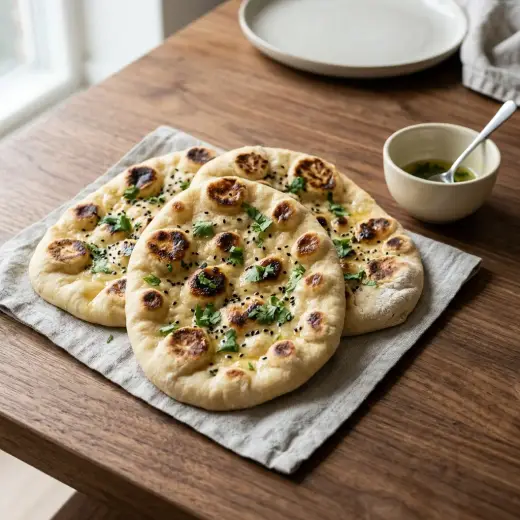
Focaccia with rosemary is an Italian flatbread baked in plenty of olive oil, so it comes out with a crisp, golden base and a soft, airy middle. The dough is wetter than for ordinary bread, so it is gentle work, and most of the time is spent waiting. Press deep dimples into the risen dough, scatter over rosemary and flaky salt, and bake until it smells wonderful.

- Total
- 2 h 25 min
- Prep
- 25 min
- Cook
- 20 min
- Serves
- 8
- Per serving
- 315kcal
Flour, oil and yeast for focaccia with rosemary
Use strong white bread flour, because its higher protein content builds the stretchy structure that holds the air bubbles. Plenty of good olive oil is the whole point, so do not cut it back: it fries the base and gives the crust its flavour. Fast-action dried yeast goes straight into the flour, with no need to dissolve it first.
The method for focaccia with rosemary
Tap a time to start a timer.
- Mix the dough Put the flour in a large bowl with the yeast on one side and the fine salt on the other. Pour in the lukewarm water and 30ml of the olive oil, then mix with your hand until there are no dry patches. The dough will be very sticky.
- Knead Knead with oiled hands, or on a lightly oiled surface, for about (or with a dough hook), until smooth and stretchy. It will stay soft and a little tacky, which is what keeps the crumb open.
- First rise Put the dough in a lightly oiled bowl, cover with a tea towel and leave for about 1 hour in a warm place, until doubled in size.
- Shape and second rise Pour 40ml of olive oil into the tin. Tip in the dough, turn it once to coat it in oil and gently stretch it towards the corners. If it springs back, rest it for and try again. Cover and leave for , until puffy.
- Dimple and top Heat the oven to 220°C (200°C fan), gas 7. Oil your fingers and press them straight down through the dough to the base, all over, to make deep dimples. Drizzle with the last 30ml of oil, then scatter over the rosemary leaves and the flaky salt.
- Bake Bake on the middle shelf for , until golden brown and crisp at the edges. Leave in the tin for , then move to a wire rack for another 5 before cutting into squares.
Serving and variations
Cut it into squares to serve with soup, cheese, olives and tomatoes, or split a piece for a sandwich. Halved cherry tomatoes or pitted olives pressed into the dimples are classic variations. If you are new to yeast baking, classic white bread and sunflower seed rolls use similar techniques.
Common problems and fixes for focaccia with Rosemary
- The focaccia is dense instead of airy.
- The dough needs a proper first rise and must be handled gently afterwards. Wait until it has doubled, and do not knock the air out when you tip it into the tin.
- The dough is too sticky to work.
- Use oiled hands and an oiled work surface, not extra flour. Too much flour makes the focaccia tight and bready.
- The rosemary burns and turns bitter.
- Press the leaves into the dimples and make sure each one is coated in oil, which protects them from the heat. If they are sitting dry on top, drizzle on a little more oil.
- The base is pale and soft.
- Bake in a metal tin rather than glass or ceramic, use all of the oil in the tin, and move the tray to a lower shelf for the last 5 minutes.
Frequently asked questions about focaccia with Rosemary
How do you store and reheat focaccia?
Wrap it in a clean tea towel or a bread bag at room temperature for up to 2 days. To freshen it, warm it for 5 minutes in a 180°C (160°C fan), gas 4 oven. You can also freeze slices for up to 3 months and reheat them from frozen for 8–10 minutes.
Can I make the dough ahead?
Yes. After kneading, cover the bowl and chill the dough for 8–12 hours instead of giving it the 1-hour first rise. Leave it at room temperature for an hour, then continue with the shaping step.
Can I use dried rosemary?
Yes, use 1 tsp of dried rosemary instead of the fresh sprigs. Rub it between your fingers first and mix it with some of the oil before sprinkling.
Why is my focaccia flat?
The yeast may be old or may have been killed by hot water. Use lukewarm water, check the date on the sachet, and give the dough enough time to double.
How did you like the recipe?
4.9 / 5 · 40 ratings