Rhubarb Jam
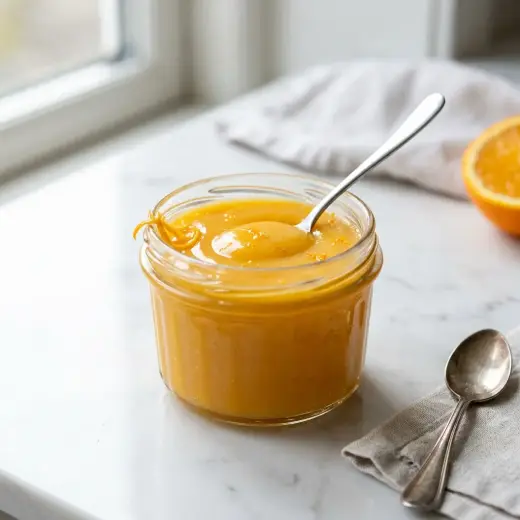
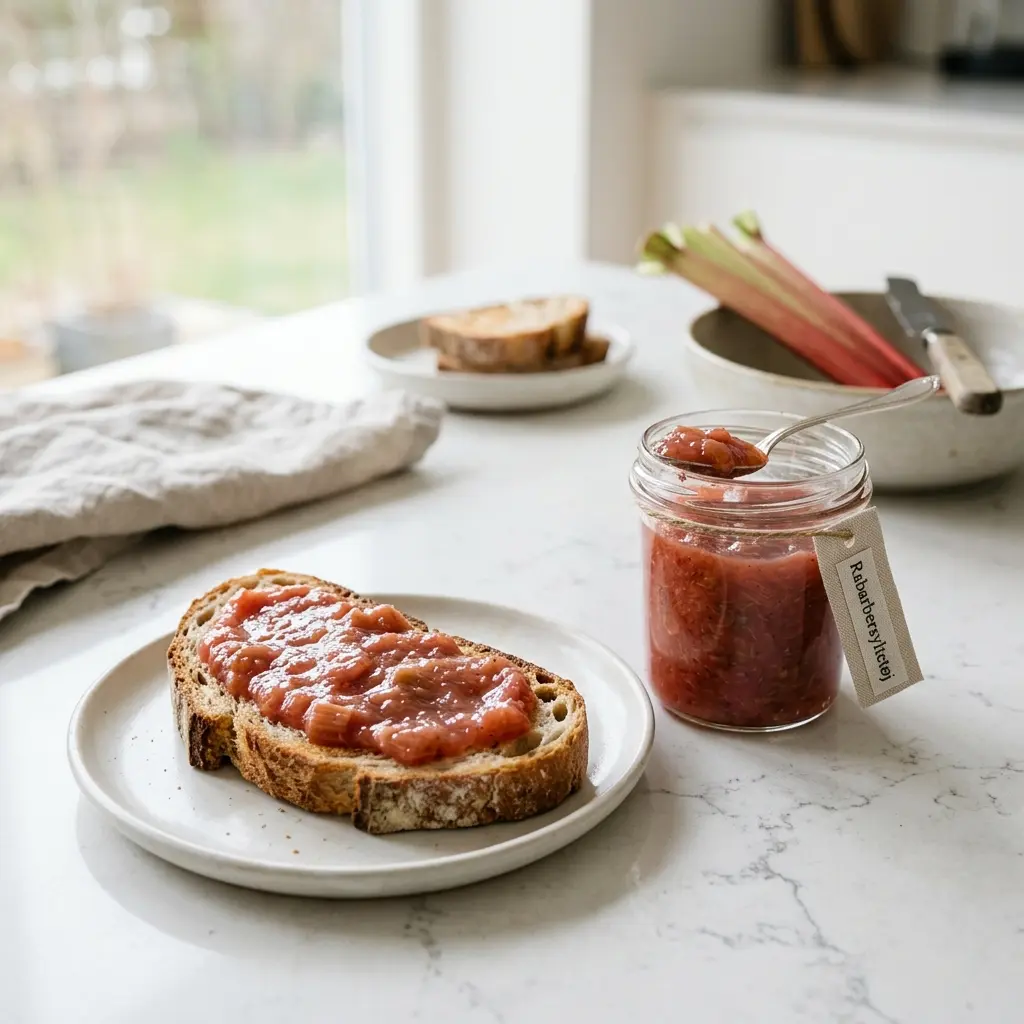
Rhubarb jam is tart, bright pink and easy to make with just four ingredients, as long as you let the fruit sit in the sugar first and check the set with a cold saucer. This small batch makes two 340g jars. Spread it on toast, spoon it onto scones with clotted cream, or stir it through porridge or plain yoghurt.
- Total
- 1 h 15 min
- Prep
- 15 min
- Cook
- 20 min
- Makes
- 2 x 340g jarsabout 700g
- Per 1 tbsp (about 20g)
- 52kcal
Fruit, sugar and pectin in rhubarb jam
Rhubarb is very tart and low in pectin, the natural setting agent in fruit. Jam sugar contains added pectin, which is why this recipe uses it, along with the lemon juice that supplies acid. With ordinary granulated sugar the jam still works, but it sets more loosely and needs a longer boil.
Early pink stalks from forced rhubarb give the prettiest colour and need no peeling. Thicker, green-red maincrop stalks have a stronger flavour and sometimes tough strings, so peel those away. Use a wide pan, as the jam foams as it boils.
To sterilise jars, wash the jars and lids in hot soapy water and rinse. Dry the jars upright in an oven at 140°C (120°C fan), gas 1, for 15 minutes, and keep them warm until you pot. Fill the hot jars with hot jam.
Making rhubarb jam
Tap a time to start a timer.
- Prepare Wash the rhubarb and trim the ends, peeling off any tough, stringy skin on thick stalks. Cut into 2cm pieces and put them in the pan with the sugar and lemon juice. Stir, then leave for so the sugar draws out the juice. Put two saucers in the freezer and sterilise the jars (see below).
- Dissolve Set the pan over a low-medium heat and stir often for until the sugar has dissolved and the rhubarb softens in its own juice.
- Boil and test Turn up the heat and boil rapidly, stirring, for , skimming off any foam. Take the pan off the heat and put a teaspoon of jam on a cold saucer. After , push it with your finger. If it wrinkles, it has set (or the thermometer reads 105°C). If not, boil for 2 more minutes and test again.
- Pot Stir in the vanilla and leave the jam to stand for so the fruit stays evenly spread. Pour into the hot sterilised jars with the funnel, leaving 5mm at the top. Seal at once, leave to cool, then label.
Ways to serve and flavour it
Rhubarb jam is at its best on warm scones with clotted cream, on toast or on malt bread with butter. For a change from rhubarb, try the same method with blackcurrant jam, or add a thumb-sized piece of finely grated ginger with the sugar for a warm, spicy flavour.
Spoon a little over porridge or Greek yoghurt, or use it to sandwich a Victoria sponge.
Common problems and fixes for Rhubarb Jam
- The jam has not set.
- Rhubarb is low in pectin, so it needs a hard boil. Return it to the heat, boil for 2 minutes and test again. Using jam sugar and the lemon juice helps it set reliably.
- The jam has set like toffee.
- It has boiled too long. Next time test after 8 minutes, and take the pan off the heat while you check. You can loosen the batch with a splash of water and a minute of simmering.
- The fruit floats to the top of the jar.
- Leave the jam to stand for 10 minutes after boiling, stirring it once before potting. It thickens slightly and holds the fruit in place.
Frequently asked questions about Rhubarb Jam
How long does homemade jam last?
Unopened jars keep for up to 1 year in a cool, dark cupboard. Once opened, keep the jar in the fridge and use it within 4 weeks.
Can you use frozen rhubarb?
Yes. Use it straight from the freezer without draining, but allow an extra 5 minutes of boiling, since frozen rhubarb releases more water as it thaws.
Can you use less sugar?
Only a little. Sugar helps jam set and keep, so with much less you get a softer set that must be stored in the fridge and eaten within 2–3 weeks.
Can you use granulated sugar instead of jam sugar?
Yes, but the jam sets more softly and usually needs 12–15 minutes of boiling. Test with the saucer until you see wrinkles.
How did you like the recipe?
4.8 / 5 · 17 ratings