Udon Noodles with Ginger
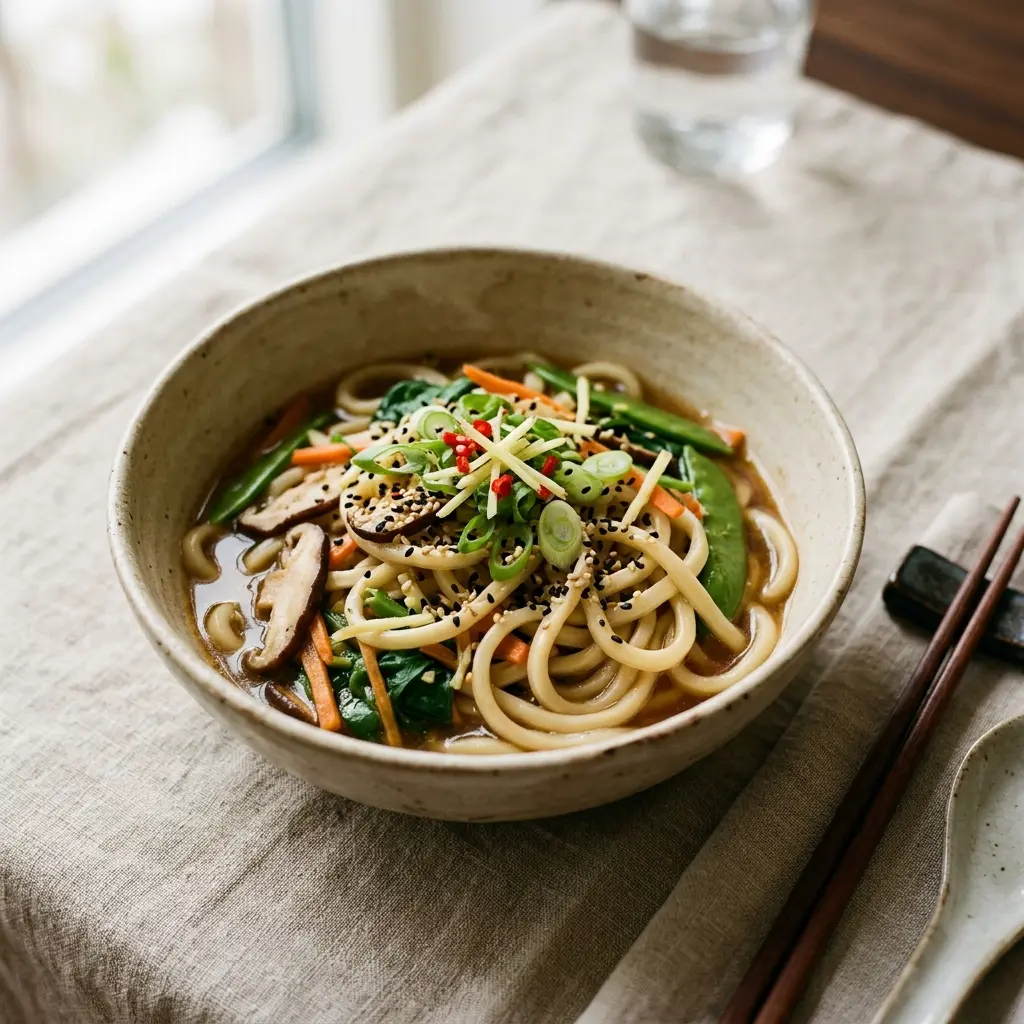
Udon noodles with ginger turn a few fridge staples into dinner in 20 minutes: thick, chewy Japanese noodles tossed with fresh ginger, garlic, spring onions and pak choi in a sesame and soy glaze. The noodles are loosened in hot water rather than boiled, so everything else happens in one wok. Fresh ginger gives the dish its warmth, and a little honey rounds off the soy sauce.
- Total
- 18 min
- Prep
- 10 min
- Cook
- 8 min
- Serves
- 2
- Per serving
- 420kcal
Making udon noodles with ginger ahead
Udon are thick, chewy Japanese wheat noodles, and stir-frying them like this is a quick take on yaki udon. The whole dish takes minutes once you start cooking, so do the chopping first and have the sauce mixed and the noodles ready. You can prepare the vegetables and sauce a few hours ahead and keep them covered in the fridge.
No pak choi? Use spinach, which wilts in under a minute, or tenderstem broccoli, cut into short lengths and added with the stalks. No honey? A pinch of sugar does the same job.
Making udon noodles with ginger
Tap a time to start a timer.
- Prepare the vegetables Peel the ginger with the edge of a teaspoon and grate it finely. Slice the garlic thinly. Separate the white and green parts of the spring onions and slice both thinly. Cut the pak choi stalks into 2cm pieces and shred the leaves. Stir the soy sauce, sesame oil, honey and water together in a small bowl.
- Loosen the noodles Put the udon in a heatproof bowl, cover with boiling water and gently separate the strands with a fork for . Drain well in a colander.
- Stir-fry the aromatics Heat the vegetable oil in the wok over a medium-high heat. Add the pak choi stalks and cook for , then add the ginger, garlic and white spring onion and stir-fry for until fragrant. Keep everything moving so the garlic does not catch and turn bitter.
- Add the noodles Add the pak choi leaves and the drained noodles, pour over the sauce and toss for , until the leaves have wilted and the noodles are hot and glossy. Serve straight away, topped with the green spring onion and the sesame seeds.
Variations and serving
This is a light meal for two on its own. For more protein, add tofu stir-fry on the side, or try the prawn version in Asian noodles with prawns.
Common problems and fixes for Udon Noodles with Ginger
- The noodles stick together in clumps.
- Noodles straight from the pack are stuck together. Loosen them in hot water until the strands separate and drain them well, as a wet wok also makes the sauce watery.
- The dish is too salty.
- Soy sauce is salty and fresh udon already contains some salt. Stick to the amount given, taste before adding more, and loosen the noodles with a splash of water rather than extra soy.
- The garlic and ginger taste bitter.
- They have burned. Keep the heat at medium-high, stir constantly and add the noodles and sauce as soon as the aromatics smell fragrant.
Frequently asked questions about Udon Noodles with Ginger
Can I use dried noodles?
Yes. Use about 160g dried udon, cook it for the time on the packet (usually 8–10 minutes), drain, and add it to the wok in the last step.
What can I add to make it more filling?
Cubed firm tofu, fried until golden for about 5 minutes, or 150g raw peeled prawns, stir-fried for 2–3 minutes until pink and opaque all the way through. Cook either one first, set it aside and return it to the wok with the noodles.
Which other vegetables work?
Sliced peppers, mushrooms, broccoli florets and thin carrot batons all work. Cut them small and add firm ones, such as carrot, with the pak choi stalks.
Do leftovers keep?
They are best eaten fresh, but you can cool them quickly and keep them in a covered container in the fridge for up to 2 days. Reheat in a hot pan with a splash of water until steaming hot all the way through.
How did you like the recipe?
4.8 / 5 · 6 ratings