White Loaf
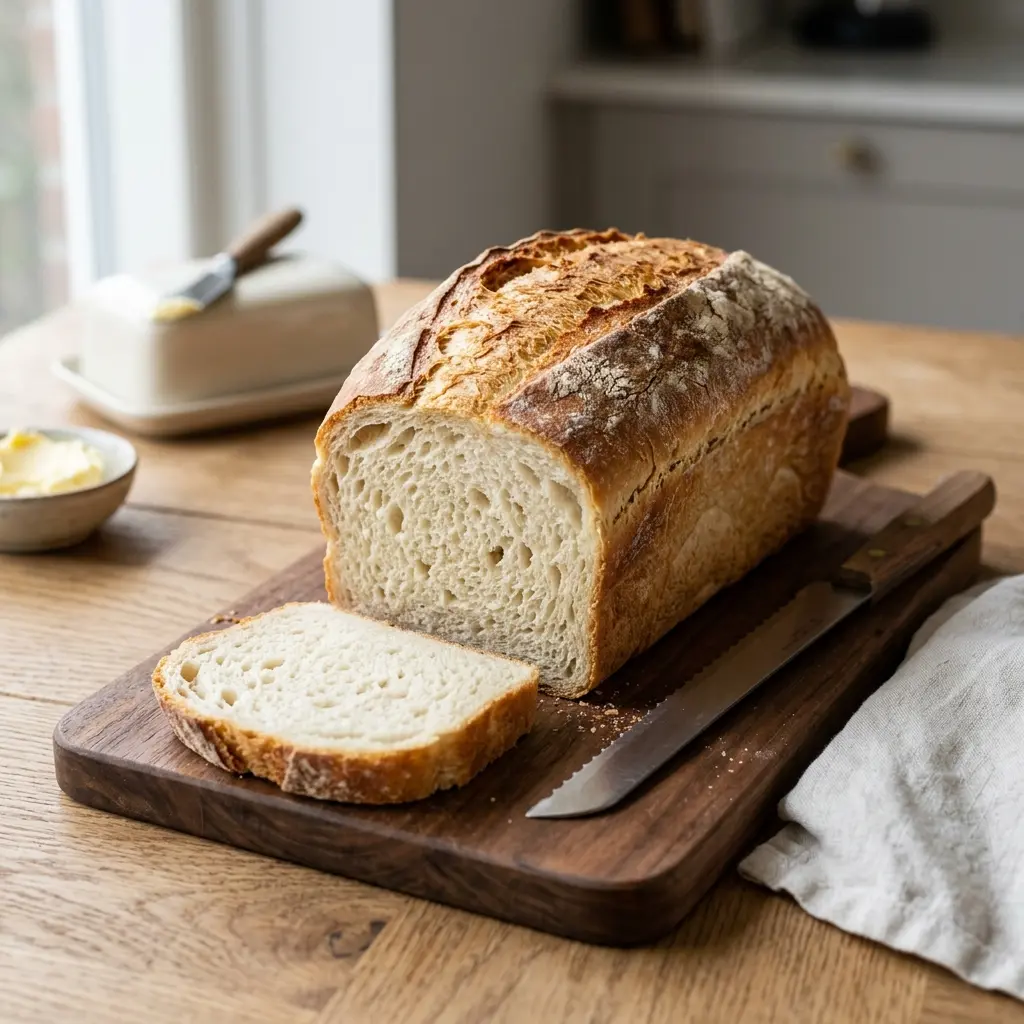
A white loaf made from five ingredients is a good first bread: strong flour, fast-action yeast, salt, a little butter and warm water. After 10 minutes of kneading, the dough rises twice, then bakes for about 35 minutes into a soft-crumbed, golden loaf that suits toast and sandwiches. Most of the time is hands-off rising, so you can get on with other things while the yeast works.
- Total
- 3 h 45 min
- Prep
- 25 min
- Cook
- 35 min
- Serves
- 1 loaf (16 slices)
- Per 1 slice
- 125kcal
How to tell when white loaf is ready
Bread is judged by the dough rather than the clock. After the first rise, a floured finger pressed into the dough should leave a dent that springs back slowly. If it springs back at once, give it more time. At the second rise, the dough should have grown to about 2–3cm over the rim of the tin and feel soft and airy. Rise times depend on the temperature of your kitchen: a cold room may need an extra 15–30 minutes, while a warm one can be quicker.
How to make white loaf
Tap a time to start a timer.
- Mix the dough Put the flour and salt in a large bowl, and the yeast on the other side so it does not touch the salt. Rub in the butter with your fingertips until it disappears. Add 300ml of the water and mix by hand to a soft, slightly tacky dough, adding the last 20ml only if there are dry bits of flour.
- Knead Tip the dough onto a lightly floured surface and knead for , pushing it away with the heel of your hand and folding it back, until it is smooth and stretchy. (A stand mixer with a dough hook takes about on a low speed.)
- First rise Shape the dough into a ball and put it in a lightly oiled bowl. Cover with a damp tea towel and leave in a warm place for 1 hour, until doubled in size.
- Shape and fill the tin Grease the loaf tin with oil. Tip out the dough, press out the air and flatten it into a rectangle about as wide as the tin. Roll it up tightly from the short end like a Swiss roll, tuck the ends under and sit it seam-side down in the tin.
- Second rise Cover with the tea towel and leave for about , until the dough has risen to 2–3cm above the rim. Meanwhile, heat the oven to 220°C (200°C fan), gas 7.
- Bake Brush the top with milk for a softer, shinier crust, if you like. Bake for , until deep golden. Turn the loaf out of the tin and tap the base: it should sound hollow. If not, return it to the oven upside down for .
- Cool Slide the loaf onto a wire rack and leave it to cool for 1 hour before you slice it.
Serving and sandwich ideas
A fresh white loaf makes excellent toast, and slices well enough for a sandwich the next day. Tuna sandwich with bacon is a good use for the thick slices, or fill them with prawn salad for sandwiches for something lighter.
For a crunchier crust, leave the milk off the top and dust it lightly with flour before baking. A loaf is at its best on the day it is baked, still slightly warm from cooling, with plenty of salted butter.
Common problems and fixes for White Loaf
- The loaf is dense and has barely risen.
- The yeast may be old, or the water was too hot. Water that feels comfortably warm on your wrist is right, because yeast starts to weaken above 45°C. Check the date on the sachet, and give the dough more time in a warmer spot if the kitchen is cold.
- The crumb is gummy and doughy in the middle.
- Either it was cut while still warm or it was under-baked. Leave it to cool for the full hour, and check the base sounds hollow before you take it out of the oven.
- The dough is too sticky to knead.
- Keep kneading rather than adding lots of flour. It will become smooth and less tacky after 5 minutes or so as the gluten develops. A very light dusting is fine, but extra flour makes a drier, denser loaf.
Frequently asked questions about White Loaf
How long does homemade white bread keep?
A loaf keeps for 2–3 days in a bread bin or paper bag. For longer, slice it once completely cool and freeze the slices for up to 1 month, then toast them straight from the freezer.
Why did my white loaf not rise properly?
Old yeast, water that was too hot or too cold a room are the usual causes. Use water at about body temperature, keep the salt away from the yeast when mixing, and let the dough rise somewhere warm and free of draughts.
Can I use plain flour instead of strong bread flour?
You can, but the loaf will be denser and will not rise as high. Strong bread flour has more protein, which forms the gluten that traps the gas from the yeast.
Can I use fresh yeast or the fast-action kind from a tin?
Yes. Use the same weight of fast-action yeast from a tin, or 15g of fresh yeast, crumbled into the warm water first. Dried active yeast needs to be mixed with warm water and left for 10 minutes before use.
How did you like the recipe?
4.7 / 5 · 35 ratings