Benefits of making salmon nigiri
Preparing salmon nigiri at home is much cheaper than eating at a restaurant. You can choose the best quality fish to ensure the best possible flavour and texture. It is a rewarding skill to learn how to shape the rice perfectly in your own kitchen. This dish is also very quick to assemble once you have prepared the sushi rice.
How to cook salmon nigiri
Cook the rice: Rinse the sushi rice under cold water until the water runs clear. Put the rice and water in a small pot and bring it to a boil. Reduce the heat to low and cover with a lid for 15 minutes. Remove from the heat and let it rest for another 15 minutes while still covered.
Season the rice: Mix the rice vinegar with sugar and salt in a small bowl until dissolved. Transfer the warm rice to a large wooden bowl and drizzle the vinegar mixture over it. Fold the rice gently with a spoon to mix the seasoning without crushing the grains. Let the rice cool down to room temperature before handling.
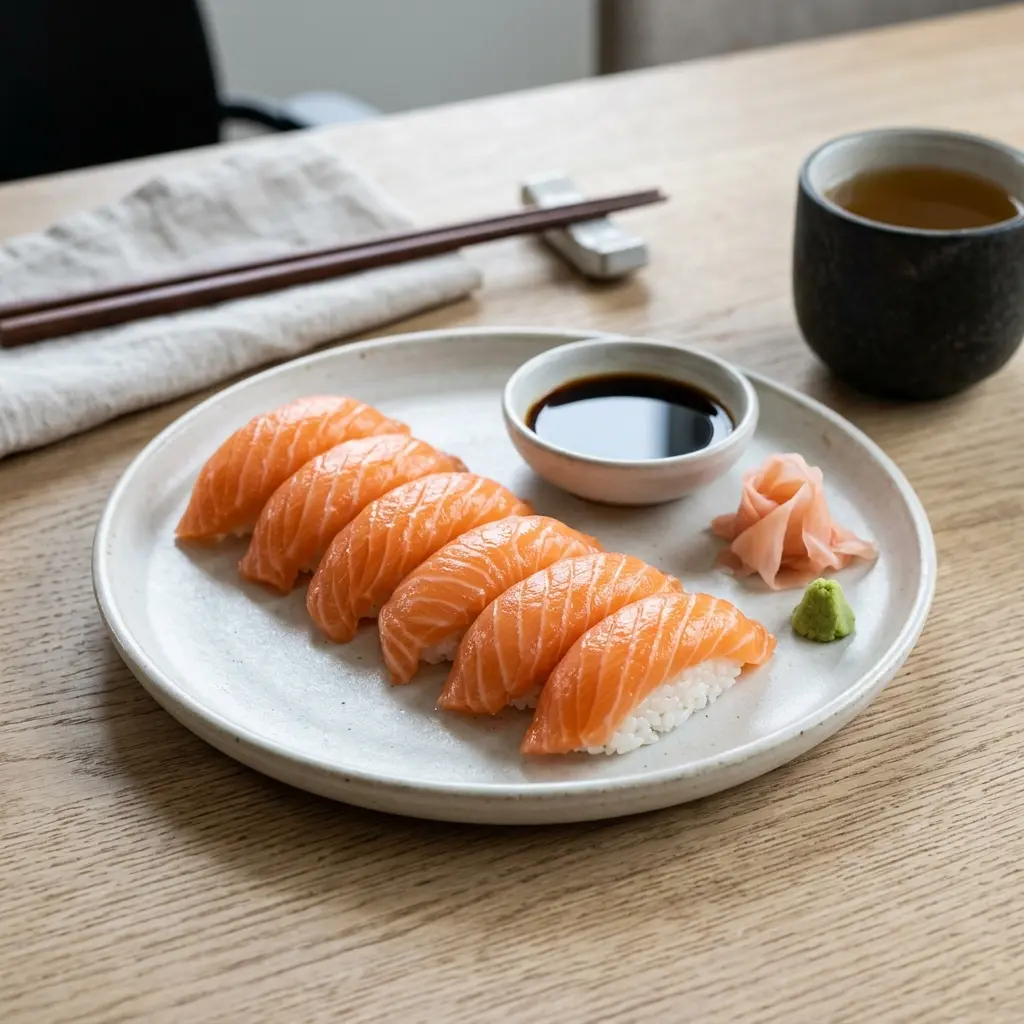
Slice the fish: Use a very sharp knife to cut the salmon fillet into thin rectangles. Slice against the grain of the fish at a slight angle to get smooth pieces. Each slice should be about 1 centimetre thick and long enough to cover the rice mounds. Keep the salmon cold until you are ready to assemble the sushi.
Assemble the sushi: Wet your hands with water so the rice does not stick to your fingers. Shape a small amount of rice into an oval mound in your palm. Put a tiny dot of wasabi on the salmon slice and place it over the rice mound. Press the salmon nigiri gently to make sure the fish stays in place and serve with soy sauce.
Tips and tricks for salmon nigiri
Always use fresh sashimi grade fish when making salmon nigiri to ensure it is safe to eat raw. You can find this at a local fishmonger or a specialist Japanese market. Keep a small bowl of water nearby to dip your fingers into while shaping the rice. This prevents the sticky rice from sticking to your skin and makes the process much cleaner.
Apply only light pressure when forming the rice mounds to keep the texture light and airy. If you press too hard the rice will become dense and heavy. Try to keep the salmon slices cold until the very last moment to maintain the best quality. Serve the sushi immediately after assembly for the best taste and experience.
You can also try these recipes:
baked chicken thighs,
brioche burger buns or
beef stew with bacon.