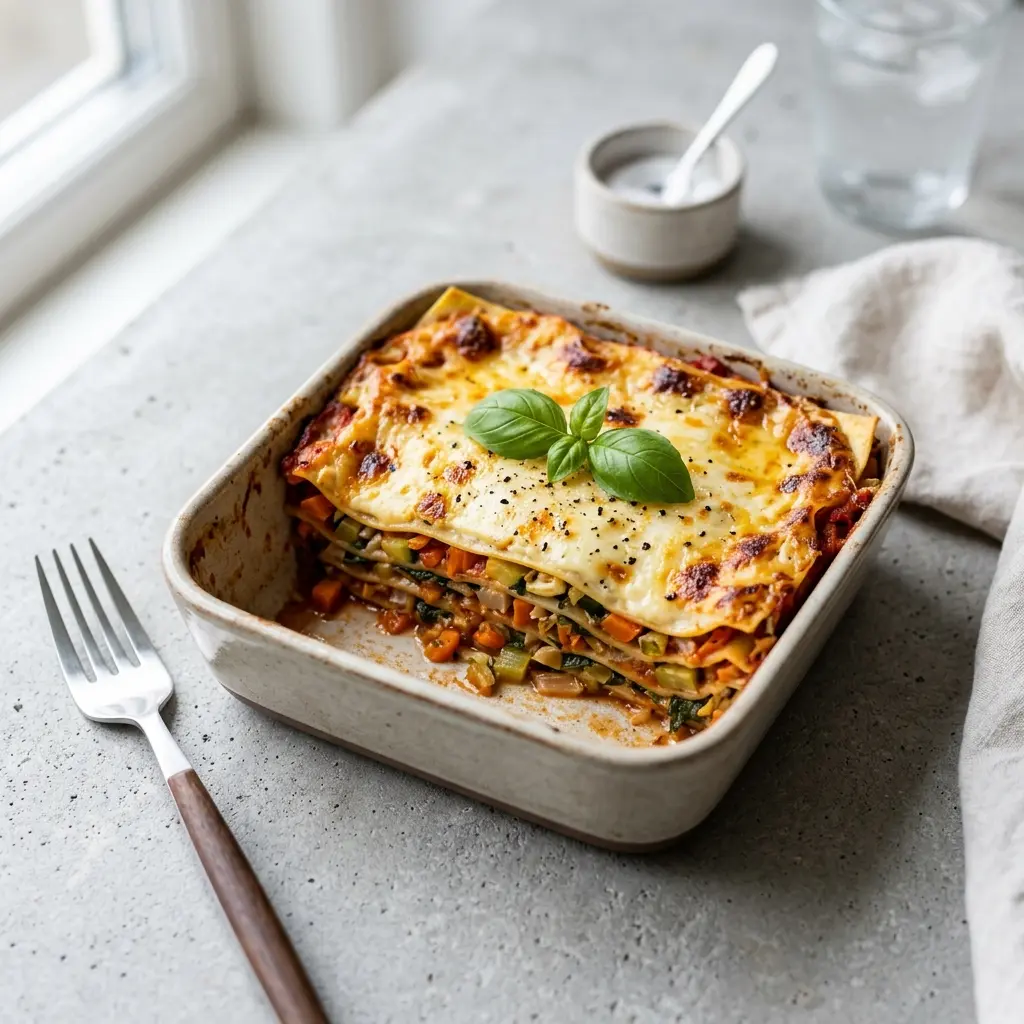
Why you should try vegetable lasagne
Making a vegetable lasagne is a great way to eat more greens while still having a comforting meal. The layers of pasta and cheese sauce provide a perfect texture alongside the soft roasted vegetables. It is a simple dish that works well for leftovers the next day. This recipe is straightforward to follow and requires basic ingredients from your local shop.
A step-by-step guide to vegetable lasagne
Prepare vegetables: Heat the oil in a large pan and fry the onions and garlic until they are soft. Add the courgettes, peppers and aubergine then cook for a few more minutes. Pour in the chopped tomatoes and oregano and let the sauce simmer for ten minutes. This creates the base for your vegetable lasagne.
Mix cheese: In a small bowl, combine the ricotta cheese with one egg and a pinch of salt. Stir the mixture until it is smooth and well combined. This creamy layer will sit between the pasta and the vegetables. Having the cheese ready makes the assembly process much faster.
Assemble layers: Spread a thin layer of the vegetable sauce in the bottom of a large baking dish. Place a layer of lasagne sheets on top followed by some ricotta mixture and more sauce. Repeat these layers until you have used all your ingredients. Finish with a final layer of pasta and the remaining sauce.
Bake dish: Sprinkle the grated mozzarella over the top of the dish. Place it in the oven at 200 degrees for about thirty minutes until the cheese is golden and bubbling. Let the dish sit for five minutes before serving. This helps the layers stay together when you cut into it.
My best tips for vegetable lasagne
Try to cut your vegetables into similar sizes so they cook evenly in the pan. If you want a deeper flavour, you can roast the peppers and aubergine before adding them to the tomato sauce. Ensure the pasta sheets are completely covered by the sauce to prevent them from becoming hard or crunchy. You can use low fat ricotta if you want a lighter version of this vegetable lasagne.
Letting the dish rest after baking is very important for the structure. This prevents the filling from sliding out when you serve the portions. If the cheese starts to brown too quickly, cover the dish with a piece of foil for the last ten minutes of cooking. Adding a handful of fresh spinach to the sauce is another easy way to pack in more nutrients.
You might also enjoy
classic white bread,
pasta with minced beef and cream or
steak with smashed potatoes.