Baked Langoustines
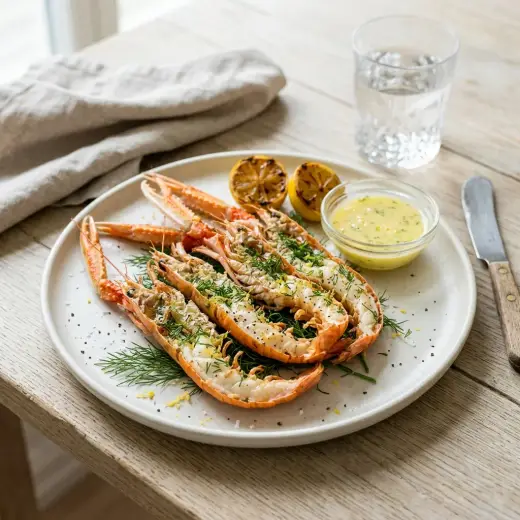
Baked langoustines are quick to cook and look impressive on the table. Each one is split in half, spread with garlic, lemon and parsley butter, and roasted in a hot oven until the flesh turns opaque and the butter bubbles. The whole dish takes about 30 minutes, and the buttery juices left in the tray are worth mopping up with bread.
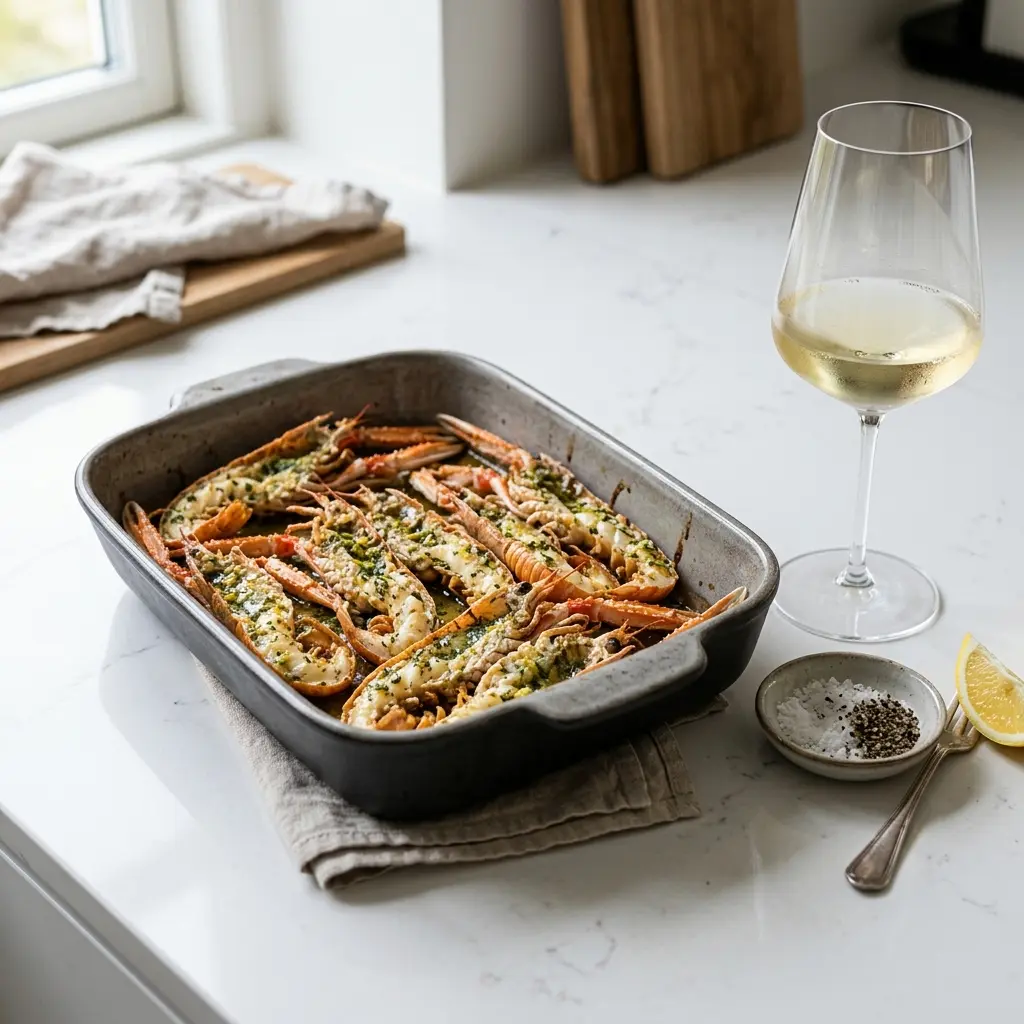
- Total
- 30 min
- Prep
- 20 min
- Cook
- 10 min
- Serves
- 4
- Per serving
- 260kcal
How long to cook baked langoustines
Split langoustines cook in 8–10 minutes at 200°C (180°C fan), gas 6. The butter over the flesh protects it and bastes it as it melts, but the window between cooked and rubbery is short, so stay near the oven. Look for opaque white flesh and bright orange-pink shells.
Buy langoustines that smell of the sea and have firm, glossy shells. If you can only find them frozen, that is fine, as they are usually frozen soon after landing. Thaw them in the fridge overnight, never on the worktop.
How to cook baked langoustines
Tap a time to start a timer.
- Heat the oven Heat the oven to 200°C (180°C fan), gas 6.
- Make the garlic butter Beat the softened butter in a small bowl with the garlic, lemon zest, 1 tbsp lemon juice, parsley and the pinch of salt until evenly mixed.
- Split the langoustines Lay each langoustine on its back on a board. Holding it steady, cut firmly through the middle of the shell from head to tail with a heavy, sharp knife. Pull out the dark vein that runs along the tail, then open the two halves flat.
- Butter and arrange Lay the halves cut side up on the baking tray in a single layer. Spread the garlic butter over the flesh, using about a heaped teaspoon per half.
- Bake Bake on the middle shelf for , until the flesh is opaque and white, the shells have turned a bright orange-pink and the butter is bubbling. Take them out as soon as they are done, because overcooked langoustines turn tough.
- Serve Move the langoustines to a warm platter, spoon over the buttery juices from the tray and serve with lemon wedges and bread.
Serving and variations
Serve the langoustines straight from the tray with plenty of bread, lemon wedges and a green salad. Hand out napkins: the best part is sucking the sweet meat from the claws and legs.
A pinch of chilli flakes or a spoonful of chopped chives in the butter changes the flavour without changing the timing. For a pan version, try pan-fried langoustine tails. Another quick shellfish starter for the same table is baked oysters.
Common problems and fixes for Baked Langoustines
- The langoustines are tough and rubbery.
- They were in the oven too long. The tails are small, so set a timer for 8 minutes and check the thickest one: the flesh should be opaque all the way through, not translucent.
- The butter slides off or splits into a greasy pool.
- Start with butter that is soft but not melted, and spread it firmly over dry flesh. Pat thawed langoustines dry before you split them.
- The shell is too hard to cut through.
- Use a heavy knife and press down with the flat of your other hand along the back of the blade. Alternatively, ask the fishmonger to split them for you.
Frequently asked questions about Baked Langoustines
How long do you bake langoustines?
8–10 minutes at 200°C (180°C fan), gas 6, for halves. They are ready when the flesh is opaque and white, the shells are bright orange-pink and the butter is bubbling.
Can you use frozen langoustines?
Yes. Thaw them completely in the fridge overnight, then pat them dry with kitchen paper before splitting. Wet shellfish steams in the oven and the butter will not stay on.
Do you need to remove the vein?
It is best to. The dark line down the tail is the gut, and it can taste gritty. Lift it out with the tip of a knife after splitting.
What do you serve with them?
Crusty bread to mop up the butter, a crisp green salad and lemon wedges are all you need. New potatoes or a glass of dry white wine make it a fuller meal.
How did you like the recipe?
4.8 / 5 · 4 ratings