Breakfast Rolls
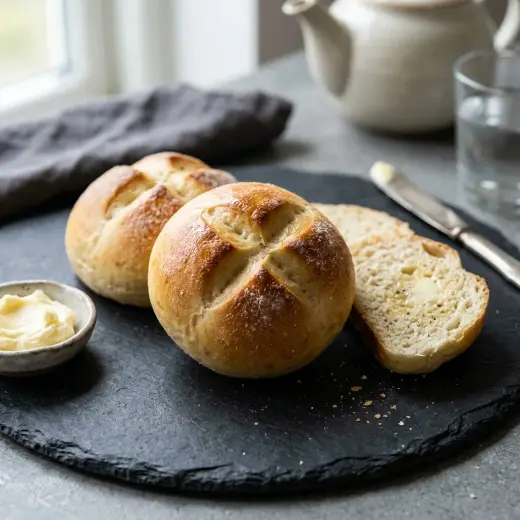
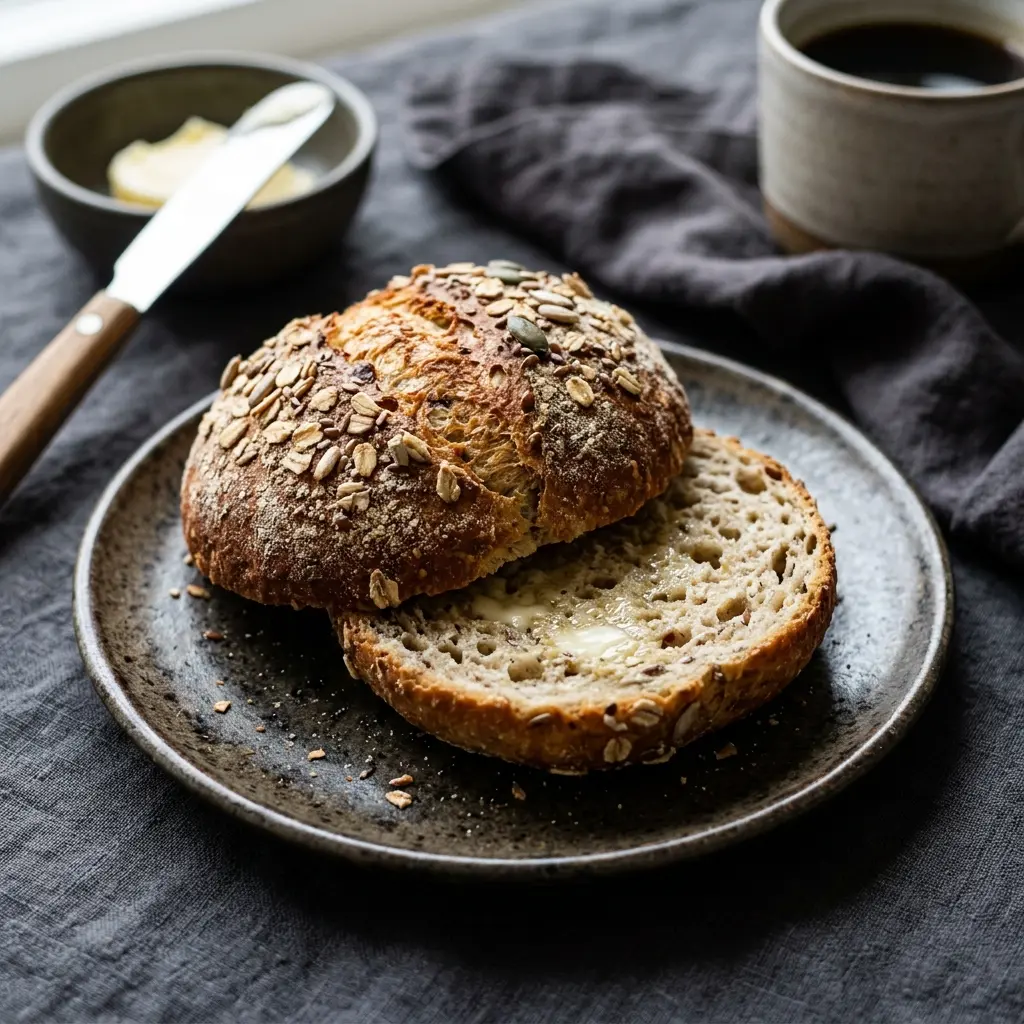
Breakfast rolls are soft, lightly golden and ready to split and butter while still slightly warm. This dough needs only flour, yeast, salt, water, butter and an egg for glazing, and most of the time is spent waiting for it to prove rather than working on it. The recipe makes eight rolls of about 105g each, which is enough for a family breakfast.
- Total
- 2 h 18 min
- Prep
- 20 min
- Cook
- 18 min
- Serves
- 8 rolls
- Per 1 roll
- 245kcal
Common mistakes with breakfast rolls
Most problems come down to the yeast and the timing. Water should be lukewarm, not hot, because yeast weakens above about 45°C and dies at around 55°C. The salt and yeast should not be tipped in together, as direct contact slows the yeast. Give the dough its full prove, and use the poke test rather than the clock: a floured fingertip should leave a dent that fills back in slowly.
The method for breakfast rolls
Tap a time to start a timer.
- Mix the dough Put the flour in a large bowl with the yeast on one side and the salt on the other. Add the melted butter and the lukewarm water, which should feel barely warm to your finger. Stir with your hand until you have a soft, slightly sticky dough.
- Knead Knead on a lightly floured surface for (or with a dough hook) until smooth and stretchy. It should spring back slowly when you press it with a finger.
- First prove Put the dough in a lightly oiled bowl, cover with a damp tea towel and leave it in a warm place for about 1 hour, until doubled in size.
- Shape Tip the dough out, press out the air and divide it into 8 pieces of about 105g. Roll each into a tight ball, tucking the edges underneath. Place them 3cm apart on a lined baking tray, cover loosely and prove for , until puffy.
- Glaze About before the end of the prove, heat the oven to 200°C (180°C fan), gas 6. Brush the tops with the beaten egg.
- Bake Bake for , until deep golden and the underneath sounds hollow when tapped. Cool on a wire rack for at least before eating.
What to serve with breakfast rolls
Split them and serve with butter and jam, or as part of a full English breakfast. They also make a good base for smoked salmon with scrambled eggs. To make rolls without turning on the oven, there is an air fryer breakfast rolls version.
Common problems and fixes for Breakfast Rolls
- The rolls are dense and heavy.
- The dough was either under-kneaded or not proved for long enough. Knead for the full 10 minutes and prove until a lightly floured finger leaves a dent that springs back slowly.
- The dough is too sticky to handle.
- It is meant to be soft and a little tacky at first. Keep kneading for 5 minutes, and use oiled hands rather than adding lots of extra flour, which would make the rolls dry.
- The tops brown before the rolls are cooked through.
- Move the tray down a shelf and cover the rolls loosely with foil after 10 minutes of baking.
- The rolls did not rise.
- Water that was too hot can kill the yeast, and so can old yeast. Use lukewarm water and check the date on the sachet.
Frequently asked questions about Breakfast Rolls
Can you freeze breakfast rolls?
Yes, once they are completely cool, freeze them in a bag for up to 3 months. Defrost at room temperature for about an hour, then warm in a 180°C (160°C fan), gas 4 oven for 5 minutes.
How do you keep them soft?
Keep them in a bread bin or airtight container once cool, for up to 2 days. If they firm up, split and toast them or warm them for a few minutes in the oven.
Can you make the dough the night before?
Yes. After shaping, cover the rolls and chill them for up to 12 hours. Take them out 30 minutes before baking, then glaze and bake as above.
Which flour is best?
Strong white bread flour, because its higher gluten content gives a better rise and a lightly chewy crumb. Plain flour works if you have nothing else, but the rolls will be softer and less airy.
How did you like the recipe?
4.7 / 5 · 39 ratings