What is good about eccles cakes
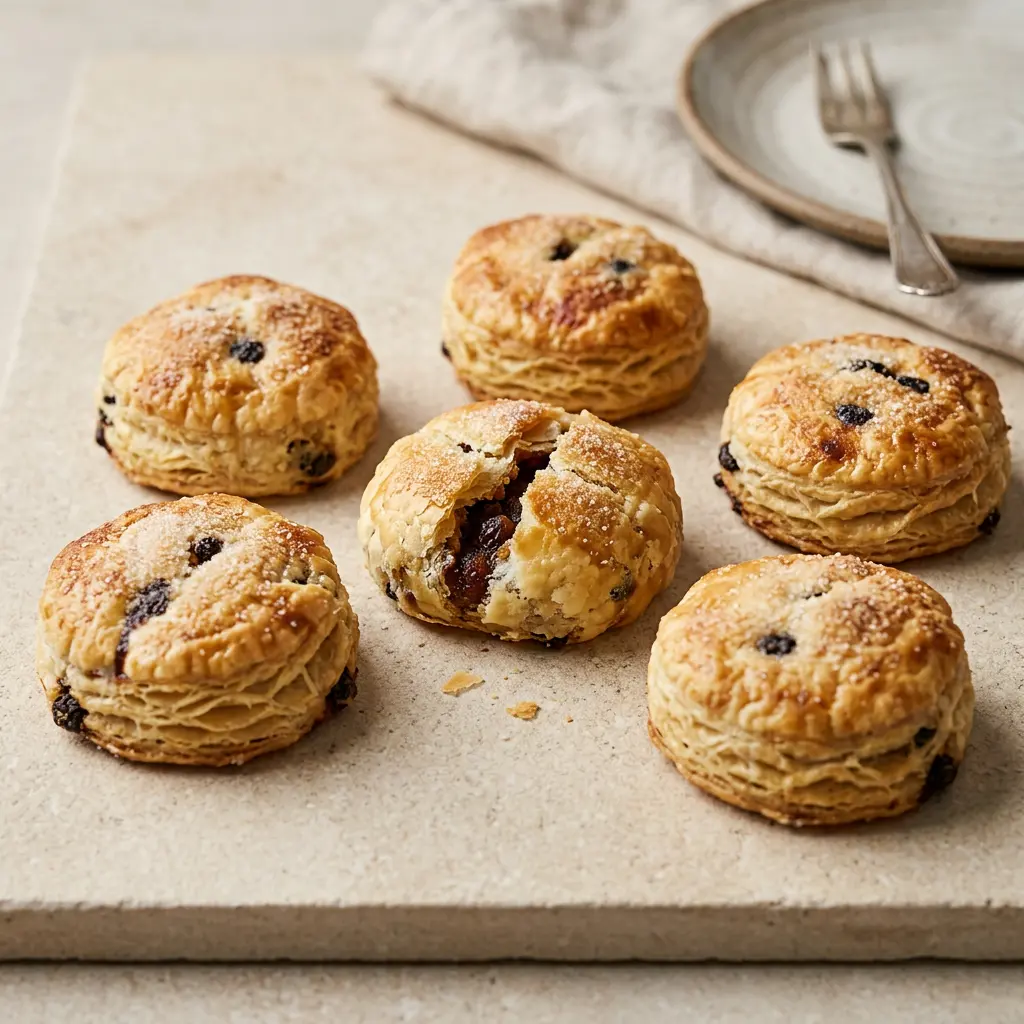
Making Eccles cakes at home is much simpler than many people realise. Using ready-made puff pastry saves time while still providing a professional and crispy finish. The filling is packed with juicy currants and warming spices that smell wonderful while baking in the oven. These cakes are not overly sweet, making them a balanced choice for anyone who enjoys traditional baking.
How to prepare eccles cakes
Prepare the filling: Melt the butter in a small saucepan over low heat and then remove it from the stove. Stir in the brown sugar, currants, and mixed spice until everything is well combined. Let the mixture cool slightly so it is easier to handle when filling the pastry. This ensures the currants are evenly coated in the buttery spice mix.
Cut the pastry: Roll out the puff pastry on a lightly floured surface until it is thin. Use a round cutter to create twelve circles that are about ten centimetres wide. If you do not have a cutter, you can use a small bowl as a guide. Place a spoonful of the currant mixture into the centre of each pastry circle.
Shape the cakes: Gather the edges of the pastry over the filling and pinch them together to seal the cake. Turn the cake over so the seam is on the bottom and gently flatten it with a rolling pin until the currants just start to show through. This traditional look is a hallmark of authentic Eccles cakes. Place each cake onto a baking tray lined with parchment paper.
Bake until golden: Make three small parallel cuts on top of each cake with a sharp knife. Brush the tops with lightly beaten egg white and sprinkle a little caster sugar over them. Bake in a preheated oven at 220C for about fifteen minutes until they are puffed and golden brown. Transfer them to a wire rack to cool before serving.
Good advice for making eccles cakes
To get the best texture for your Eccles cakes, make sure the puff pastry is kept cold until you are ready to use it. This helps the layers rise properly and creates a flaky finish. When flattening the cakes, be careful not to press too hard or the pastry might tear. You want the currants to be visible but still encased in the dough. If you prefer a different flavour, you can add a little grated orange zest to the filling.
These cakes are best served warm on the day they are made. You can store leftovers in an airtight container for a couple of days and reheat them briefly in the oven to restore the crunch. Using a high oven temperature is key to getting the puff pastry to rise quickly and become crisp. Make sure your oven is fully preheated before putting the cakes inside.
You can also try
breaded veal schnitzel,
pork medallions or
potato pie.