Why you should cook glazed ham
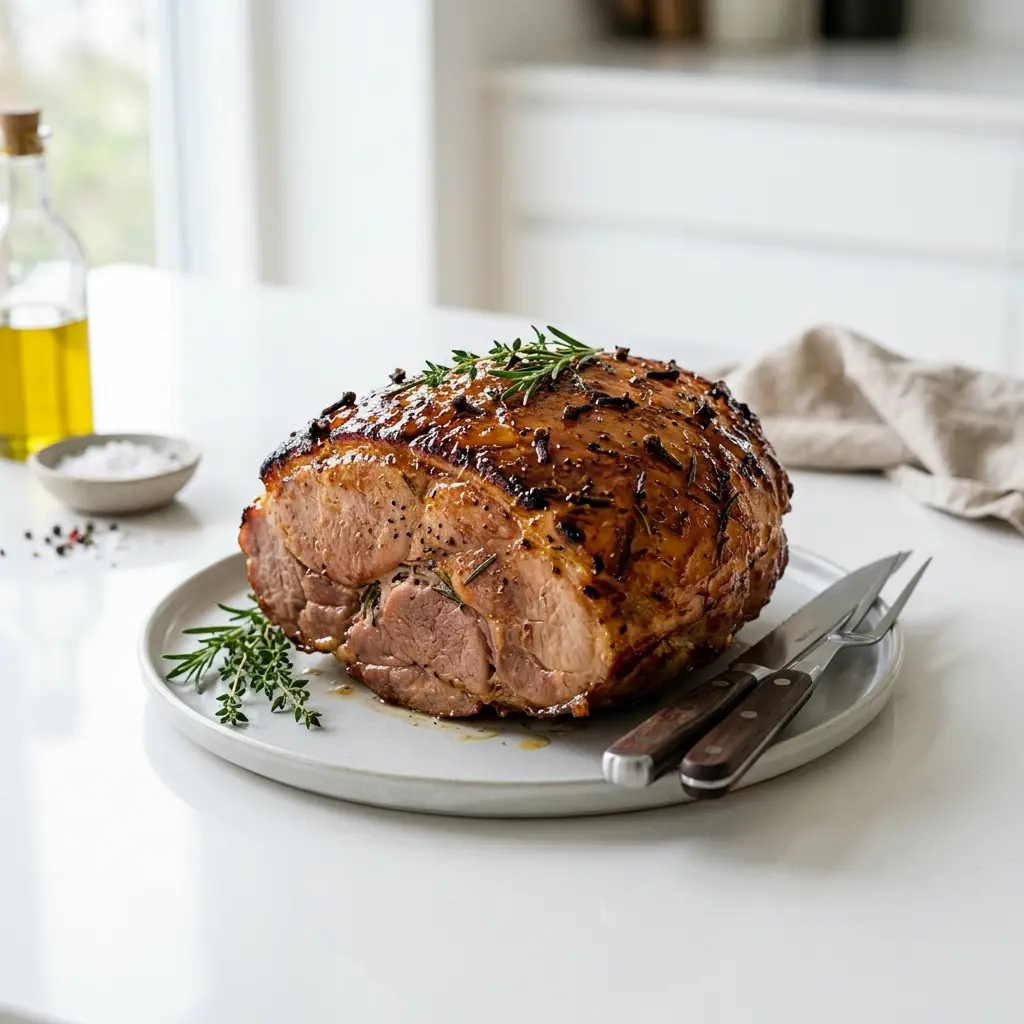
This Glazed Ham is perfect because it requires very little active work in the kitchen. Boiling the ham first ensures the meat stays tender and removes some of the excess salt. The glaze adds a beautiful golden colour and a balance of sweet and sharp flavours. It is a reliable dish that feeds a large group of people with minimal effort.
A step-by-step guide to glazed ham
Boil the meat: Place the gammon in a large pot and cover it with cold water. Add the onion, carrots and peppercorns before bringing the water to a boil. Simmer the meat gently for about one hour to ensure it is cooked through and tender. Drain the water and let the meat cool slightly so you can handle it.
Prepare the surface: Preheat your oven to 200C or 180C fan. Carefully cut away the top layer of skin from the ham, leaving a thin layer of fat underneath. Use a sharp knife to score a diamond pattern into the fat. Be careful not to cut into the meat itself.
Apply the glaze: Push a whole clove into the centre of each diamond on the surface of the fat. Mix the brown sugar, honey and mustard in a small bowl until it forms a smooth paste. Brush half of this mixture over the top and sides of the meat. This will create the base for your Glazed Ham.
Roast and finish: Place the meat in a roasting tin and bake for twenty minutes. Remove it briefly to brush on the remaining glaze and then bake for another ten to fifteen minutes. The surface should be dark golden and bubbling when finished. Let the meat rest for at least ten minutes before carving into thin slices.
Good advice for glazed ham
If you prefer a less salty taste, soak the gammon in cold water for a few hours before starting the recipe. This is especially helpful for larger joints. Always use a sharp knife when scoring the fat to keep the diamond shapes neat and even.
Make sure the oven is fully preheated before putting the Glazed Ham inside to get the best caramelisation. You can swap Dijon mustard for English mustard if you want a stronger kick. Keep an eye on the sugar in the glaze during the final minutes of roasting as it can burn quickly. If the edges start to get too dark, cover them loosely with a piece of foil.
Find more ideas here:
cod starter,
pan-fried pork chops on the bone or
veal medallion.