Glazed Pork Belly
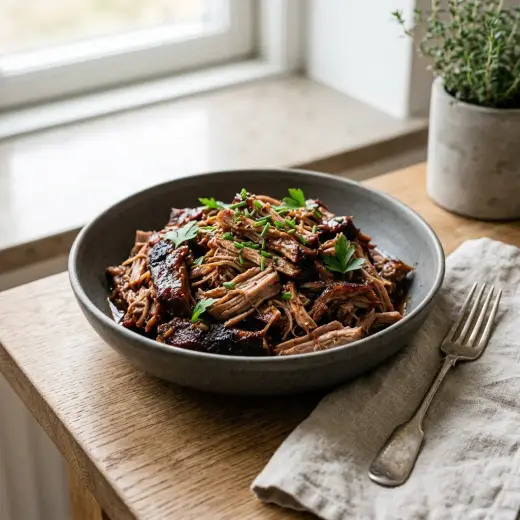
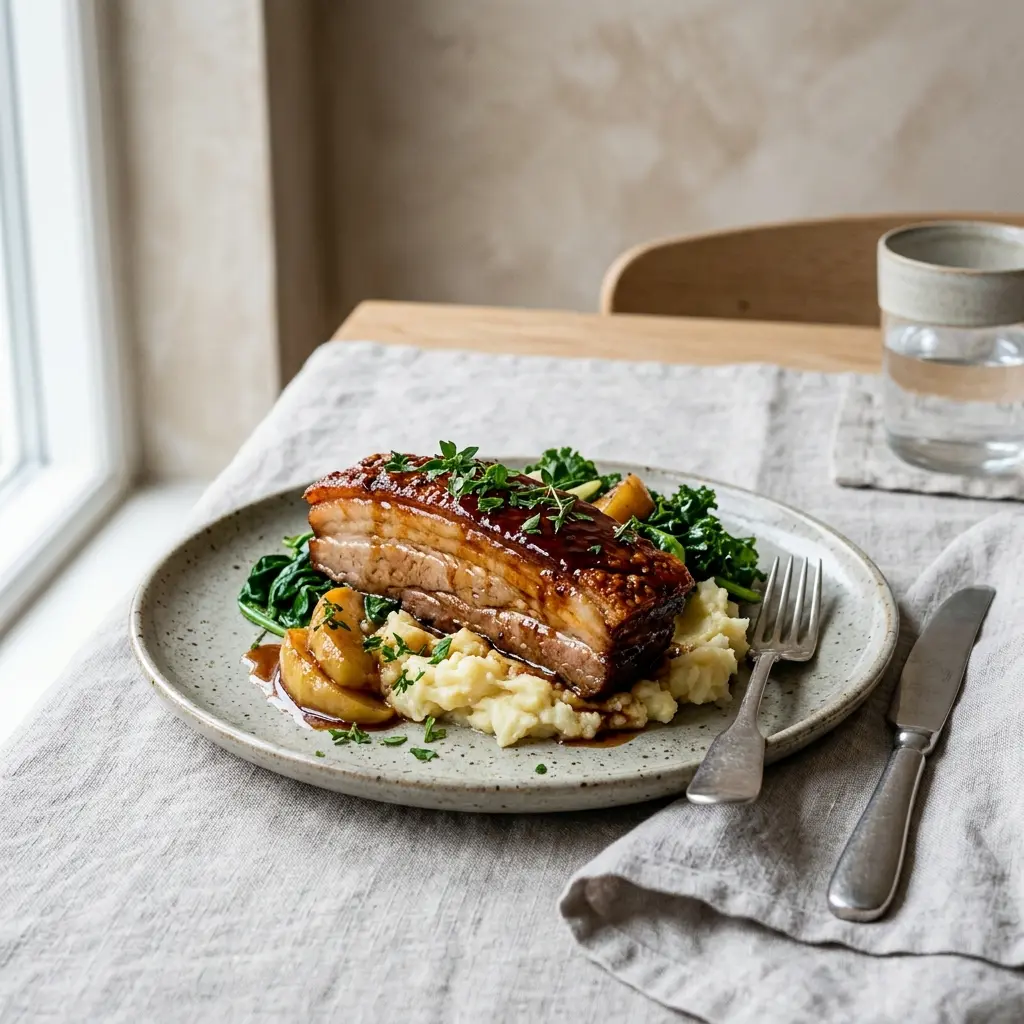
Glazed pork belly is slow-roasted so the fat melts away and the meat turns soft enough to cut with a spoon, then finished in a hot oven with a sticky soy, honey and ginger glaze. A 1kg joint feeds four. The slow roast takes 2 hours but needs no attention, and the glaze is made in a saucepan while the pork is nearly done.
- Total
- 2 h 40 min
- Prep
- 15 min
- Cook
- 2 h 15 min
- Serves
- 4
- Per serving
- 650kcal
Keeping glazed pork belly tender
Belly is a fatty, tough cut, so the long, low roast is what makes it tender. The fat melts into the tin, leaving soft meat. Pouring the fat off halfway keeps the underside from stewing in it, and the glaze goes on only at the end because the sugar would burn over 2 hours.
Look for a boneless joint with an even thickness of meat and fat, which cooks more evenly. If the butcher has not scored the skin, do it yourself with a very sharp knife or a clean craft knife.
Glazed pork belly, step by step
Tap a time to start a timer.
- Score and season Heat the oven to 160°C (140°C fan), gas 3. Pat the pork dry with kitchen paper. If the skin is not already scored, cut lines about 5mm apart through the skin and fat without reaching the meat. Rub the salt into the skin and put the joint skin side up in a roasting tin.
- Roast slowly Roast for 2 hours, until the meat gives easily when pressed with a spoon. The fat will run into the tin. After about an hour, carefully pour off the fat into a heatproof jar so the pork roasts rather than stews.
- Make the glaze About before the end of the roasting time, put the soy sauce, sugar, honey, garlic, ginger and water in a small saucepan. Bring to the boil, then simmer for , until the glaze is syrupy and coats the back of a spoon.
- Glaze and crisp Take the tin out and raise the oven to 220°C (200°C fan), gas 7. Pour off any fat, then brush the glaze over the sides and ends of the pork, keeping it off the skin. Return to the oven for , brushing again after , until the sides are glossy and dark and the skin has blistered. Watch it closely, as the sugar can burn.
- Rest and slice Rest the pork for . Cut it into thick slices with a sharp knife and spoon over any glaze left in the pan.
Serving and variations
Slice it thickly and serve with rice or mash and a green vegetable. Keep the pan juices for spooning over. A teaspoon of Chinese five-spice in the glaze gives it a more spiced flavour.
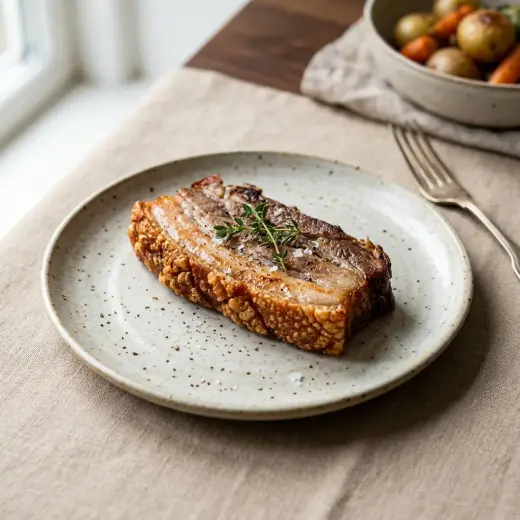
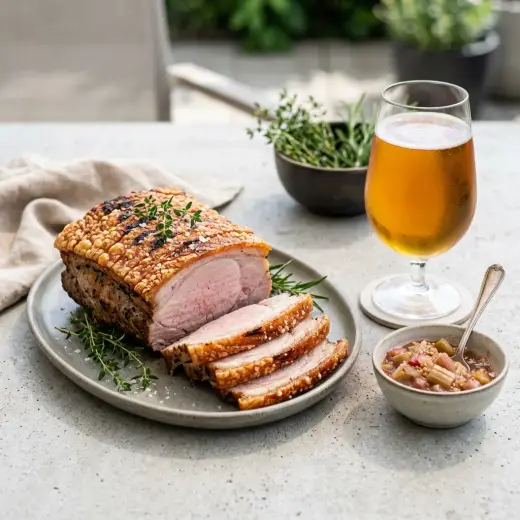
For a simpler roast with plenty of crackling, try oven-roasted pork belly, or pair the pork with apples in traditional pork belly with apples.
Common problems and fixes for Glazed Pork Belly
- The skin is soft instead of crisp.
- Moisture is the cause. Dry the skin well before salting, keep glaze off it, and give the joint the full 15 minutes at 220°C (200°C fan), gas 7. If it still has not blistered, move the tin higher in the oven for the last 5 minutes.
- The glaze burns before the pork is ready.
- Sugar scorches quickly at 220°C. Apply the glaze only in the last 15 minutes, as in the method, and cover the tin loosely with foil if the sides darken too fast.
- The glaze is thin and runs off the meat.
- It needs to reduce for longer. Keep simmering until it coats the back of a spoon, since it thickens more as it cools.
Frequently asked questions about Glazed Pork Belly
How long does glazed pork belly take to cook?
It takes 2 hours at 160°C (140°C fan), gas 3, plus 15 minutes at 220°C (200°C fan), gas 7 with the glaze, then 10 minutes of resting. That makes about 2 hours 25 minutes of oven time for a 1kg joint.
What should I serve with it?
Steamed rice, or mashed potato, soaks up the sauce well. Add tenderstem broccoli, pak choi or a crunchy cabbage slaw to cut through the richness.
Can you make it ahead?
Yes. Roast the pork for 2 hours, cool it and keep it in the fridge for up to 2 days. Glaze and crisp it in a 220°C (200°C fan), gas 7 oven for 20–25 minutes until steaming hot all the way through.
Is the pork cooked through?
Yes. After 2 hours the centre is far above the safe 75°C, with no pink and clear juices. The meat is ready when it is soft enough to pull apart with a fork.
How did you like the recipe?
4.7 / 5 · 8 ratings