Greek Meatloaf
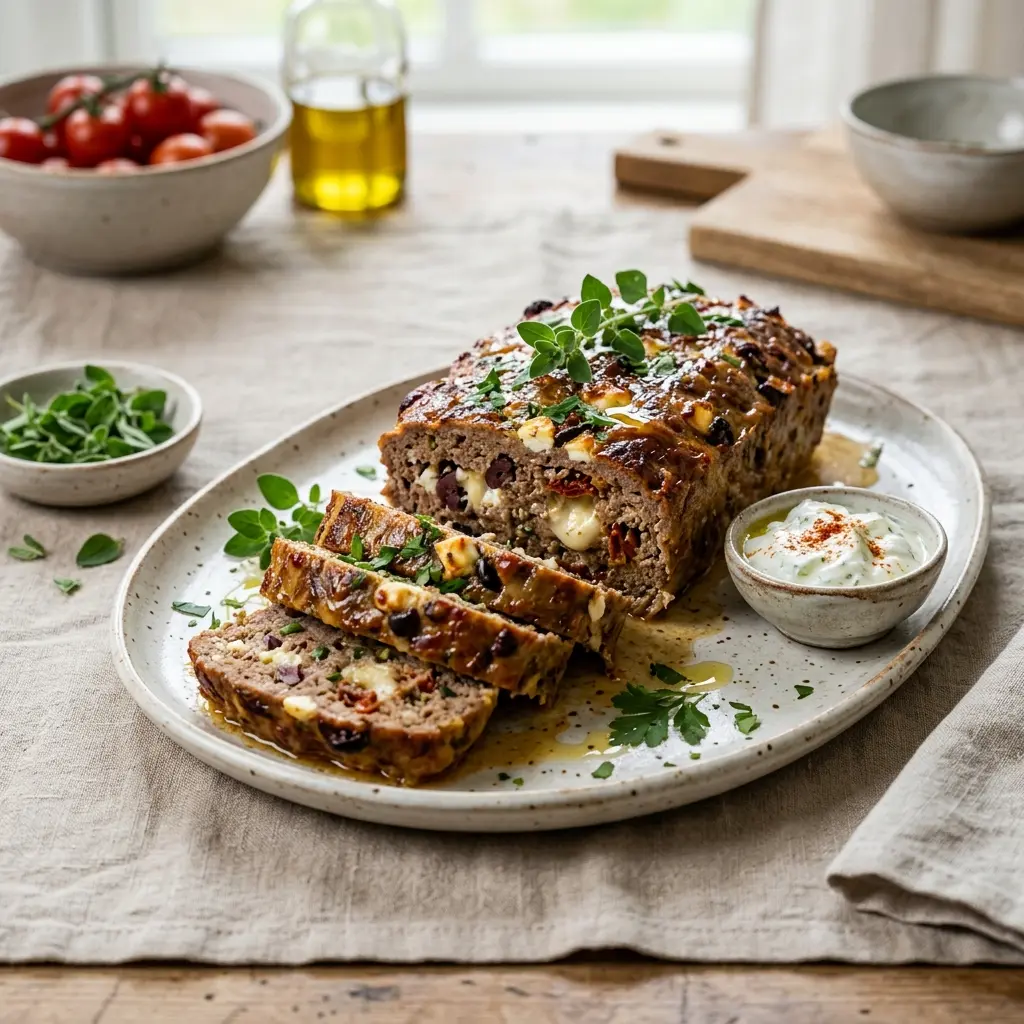
Greek meatloaf swaps the usual beef and ketchup for lamb mince, crumbled feta, oregano and dried mint. The feta melts into the meat as it bakes, which keeps the slices moist, and it also supplies much of the salt, so very little extra goes in. It takes 15 minutes to mix and 50 in the oven, and it is good hot with roast potatoes or cold in a pitta the next day.
- Total
- 1 h 15 min
- Prep
- 15 min
- Cook
- 50 min
- Serves
- 4
- Per serving
- 450kcal
Internal temperature and resting for Greek meatloaf
A meatloaf is cooked when it is hot all the way to the middle, not when the top looks brown. Lamb mince should reach 75°C in the centre with no pink, so a meat thermometer is worth using. Then leave the loaf for 10 minutes before you cut it, because the juices need time to settle and the slices will hold together much better.
Chop the onion very finely, or grate it, so it melts into the mixture rather than leaving soft chunks.
How to make Greek meatloaf
Tap a time to start a timer.
- Heat the oven Heat the oven to 180°C (160°C fan), gas 4, and line a baking tray with baking paper.
- Mix the base Put the lamb mince, breadcrumbs, egg, onion and garlic in a large bowl. Add the oregano, mint, salt and pepper, then crumble in the feta.
- Combine Mix with your hands for about a minute, just until everything is evenly spread. Overworking the meat makes the loaf dense.
- Shape Tip the mixture onto the tray and press it into a loaf about 20cm long and 8cm tall, smoothing the top and sides so it holds together.
- Bake Bake in the middle of the oven for , until browned on top, with clear juices and no pink in the middle. A thermometer should read 75°C in the centre.
- Rest and slice Leave the loaf on the tray for , then cut into thick slices with a sharp knife and serve with tzatziki and lemon wedges.
Serving and variations
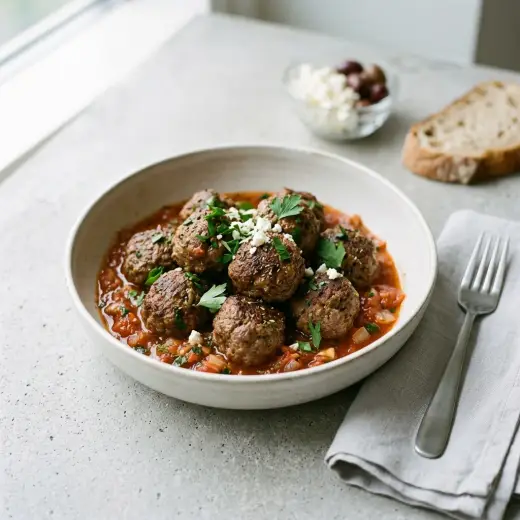
Serve slices with warm pitta, a Greek-style salad of tomato, cucumber and olives, or roast potatoes with lemon and oregano. The same flavours work well in Greek beef meatballs, which cook faster for a midweek supper. For a richer loaf, a little streaky bacon wrapped over the top, as in meatloaf with bacon, adds a salty, crisp edge.
Chopped black olives or sun-dried tomatoes can go into the mix if you want more of a Mediterranean flavour.
Common problems and fixes for Greek Meatloaf
- The loaf falls apart when sliced.
- It was cut too soon or the mixture was too wet. Rest it for the full 10 minutes, and add a spoonful more breadcrumbs next time if the mixture feels sticky.
- The meatloaf sits in a pool of fat.
- Lamb mince is fatty. Shaping the loaf on a tray rather than in a tin lets the fat run off, and you can spoon it away before slicing.
- The slices taste too salty.
- Feta is salty, which is why the recipe uses only half a teaspoon of salt. Taste your feta before you add any extra salt.
Frequently asked questions about Greek Meatloaf
What temperature should meatloaf reach?
It must be steaming hot all the way through, with no pink and clear juices, which is 75°C in the centre. Check with a thermometer in the thickest part.
Can I use beef or pork mince instead of lamb?
Yes. Beef mince gives a milder loaf and pork mince a softer one. Use the same weight and bake for the same time.
What can I use instead of feta?
A crumbly white cheese such as Cheshire or Lancashire works, though it is less salty, so add a pinch more salt.
Can I freeze it?
Yes. Cool the cooked loaf completely, slice it and freeze for up to 3 months. Defrost in the fridge overnight, then reheat until steaming hot throughout. It also keeps for 3 days in the fridge.
How did you like the recipe?
4.9 / 5 · 56 ratings