Homemade Salsa
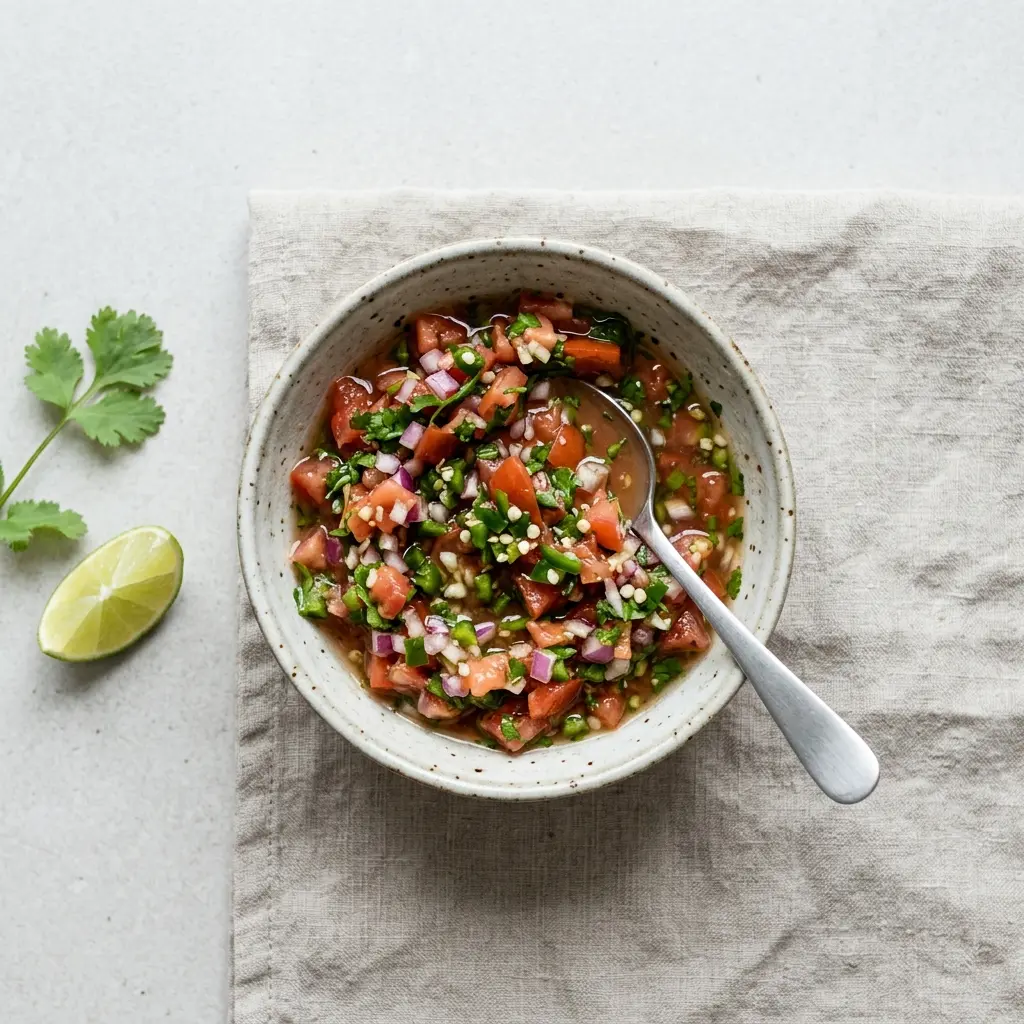
Homemade salsa needs no cooking at all: ripe tomatoes, red onion, garlic, jalapeño, coriander and lime juice chopped and left to mingle for half an hour. The result is fresh, juicy and far brighter than most jars. Serve it with tortilla chips, spoon it over grilled chicken or fish, or stir it into a jacket potato. It makes enough for four.
- Total
- 45 min
- Prep
- 15 min
- Serves
- 4
- Per serving
- 35kcal
Where homemade salsa comes from
Salsa is simply the Spanish word for sauce. This uncooked version, often called salsa fresca or pico de gallo, comes from Mexico, where it sits on the table next to almost everything. It works the same way in a British kitchen: it is a fresh, tangy contrast to anything rich or grilled.
The quality of the tomatoes matters more than anything else, so use the ripest you can find and keep the pieces small enough to scoop up on a chip.
The method for homemade salsa
Tap a time to start a timer.
- Prepare the tomatoes Cut the tomatoes in half, scoop out the watery seeds with a teaspoon and chop the flesh into 5mm pieces. Tip them into a bowl.
- Chop the onion, garlic and chilli Finely dice the red onion and mince the garlic. Slice the jalapeño, removing the seeds if you want it milder, and chop it very finely. Add all three to the tomatoes.
- Add coriander and lime Roughly chop the coriander leaves and the tender stems, discarding the thick lower stems. Stir them in with the lime juice and the salt.
- Rest and serve Cover and chill for so the salt draws out the juices and the flavours blend. Taste, and add more lime or salt if you need to, then serve cold.
Serving and storing
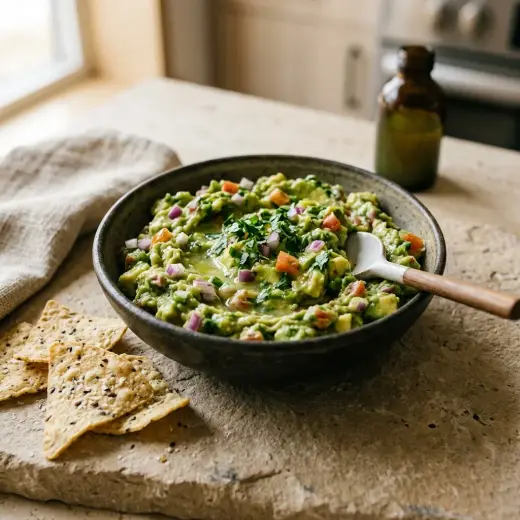
Serve the salsa with tortilla chips, or spoon it over grilled chicken, fish or a jacket potato. It also goes well alongside guacamole, and, like bruschetta, it is good spooned onto toasted bread.
If you cannot find a jalapeño, use any fresh green chilli. Spring onions can replace the red onion, flat-leaf parsley can stand in for coriander if you dislike its taste, and lemon juice works instead of lime. Adding a pinch of ground cumin gives a warmer, smokier flavour. For a milder salsa for children, leave out the chilli and add a little diced red pepper for sweetness.
Keep any left over in an airtight container in the fridge and eat it within 3 days.
Common problems and fixes for Homemade Salsa
- The salsa is watery.
- Tomatoes hold a lot of juice. Scoop out the seeds before chopping, and after resting, tip the salsa into a sieve for a minute to drain off the extra liquid.
- The salsa tastes flat.
- It usually needs more salt or acid rather than more herbs. Add a pinch of salt and another squeeze of lime, stir and taste again after 5 minutes.
- The salsa is too hot.
- The heat is in the seeds and white pith of the chilli. Add a diced extra tomato or a spoonful of finely chopped onion to dilute it, and use half the chilli next time.
Frequently asked questions about Homemade Salsa
How long does homemade salsa last in the fridge?
Up to 3 days in an airtight container. The tomatoes release more juice over time, so drain off any liquid and stir before serving.
Can you freeze homemade salsa?
It does not freeze well. The tomatoes turn soft and watery once thawed. It is better made fresh, as it takes only 15 minutes.
Can you make it in a food processor?
Yes. Pulse in short bursts for a few seconds until it is chopped rather than puréed, and drain off any extra liquid afterwards.
Which tomatoes are best for salsa?
Ripe, in-season tomatoes give the most flavour. Vine tomatoes work well. In winter, plum or cherry tomatoes taste better than large, pale ones.
How did you like the recipe?
4.8 / 5 · 7 ratings