Pan-Fried Frozen Salmon
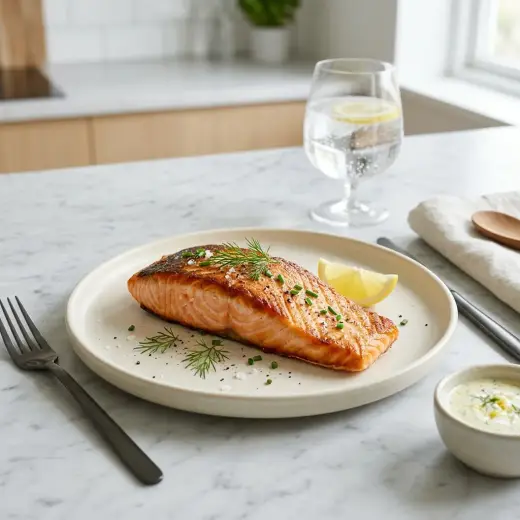
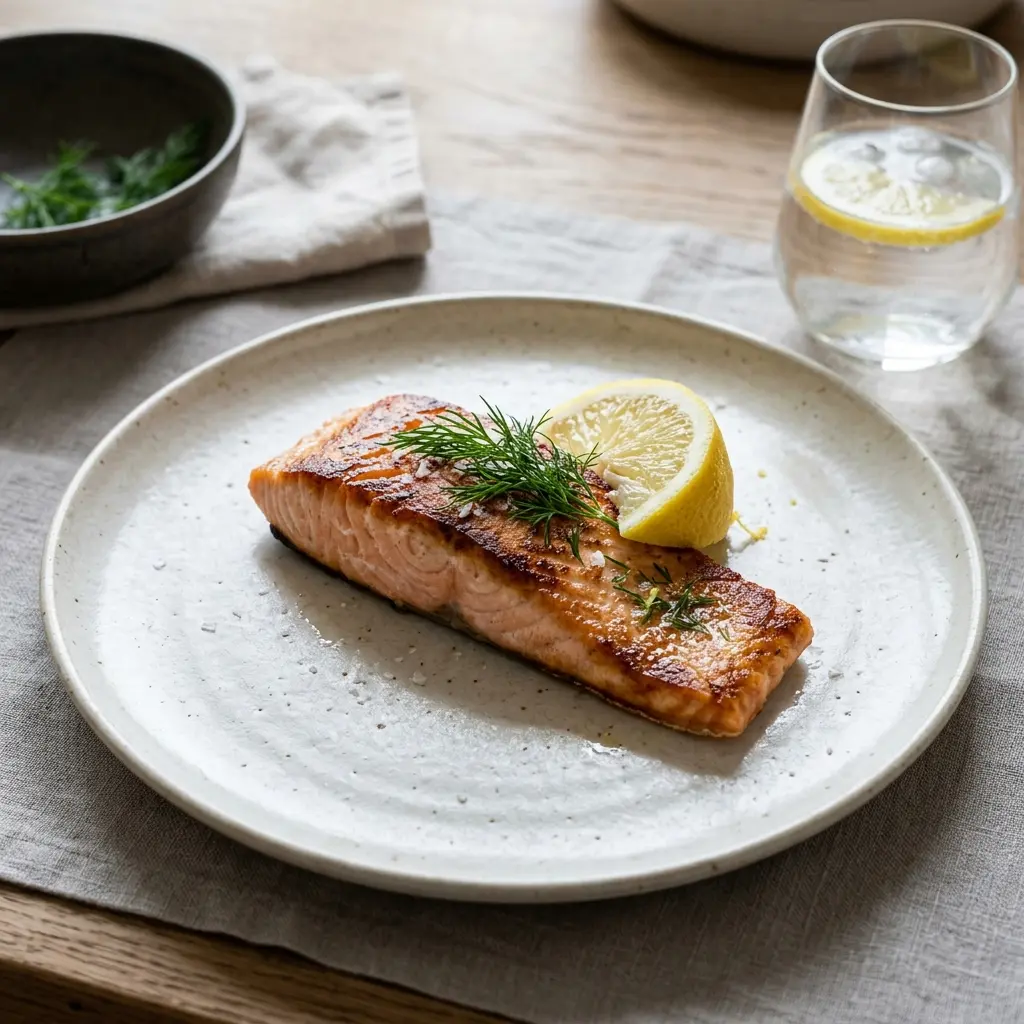
You can have pan-fried frozen salmon on the table in 20 minutes, straight from the freezer and with no defrosting. The fillets are seared, then steamed under a lid until cooked through, and finished with the lid off so the skin crisps. It is a dependable dinner for two when you have forgotten to take the fish out, and it needs only oil, salt, pepper and a lemon.
- Total
- 20 min
- Prep
- 3 min
- Cook
- 15 min
- Serves
- 2
- Per serving
- 340kcal
Internal temperature and resting for pan-fried frozen salmon
The risk with frozen fish is a cooked outside and a cold middle. The lid is what solves it: the trapped steam thaws the centre while the heat is low, so the outside does not overcook. Check by pushing a fork into the thickest part. The flesh should be opaque and flake easily, with no translucent or icy area. A thermometer reading of 55–63 °C is a good guide for juicy fish.
Rest the salmon for 2 minutes on a warm plate before serving. It carries on cooking gently, and the juices settle back into the flesh.
Cooking pan-fried frozen salmon
Tap a time to start a timer.
- Dry the fillets Take the fillets out of the packaging and pat off any ice crystals with kitchen paper. Do not rinse them. Season the flesh side with the salt and pepper.
- Heat the pan Put the oil in the frying pan and heat over a medium-high heat for , until it shimmers.
- Sear Lay the fillets in the pan, flesh-side down and not touching. Cook for without moving them, until the underside is golden. Stand back, as frozen fish spits a little.
- Steam through Turn the fillets over with the fish slice so they are skin-side down. Turn the heat to medium-low, cover with the lid and cook for . The steam thaws and cooks the middle.
- Crisp the skin Take off the lid, turn the heat up to medium-high and cook for , until the skin is crisp. The salmon is ready when the flesh is opaque all the way through and flakes easily with a fork, with no icy or translucent patches in the centre. Rest on a warm plate for and serve with the lemon wedges.
Oven method and what to serve with it
Oven instead? Put the frozen fillets on a lined baking tray, brush with the oil and season, then bake at 200°C (180°C fan), gas 6, for 20–25 minutes, until opaque and flaking. There are more details in baked salmon, and the pan-fried salmon page covers fresh fillets.
Serve with new potatoes and steamed greens, or with buttered peas and a squeeze of lemon. A knob of butter and a few sprigs of dill added to the pan for the last minute will give a richer finish.
Common problems and fixes for Pan-Fried Frozen Salmon
- The outside is cooked but the middle is still cold or translucent.
- The fillets were thicker than 2.5cm. Put the lid back on over a low heat for 2–3 minutes, then check the thickest part again. Do not serve fish that is cold or glassy in the centre.
- The oil spits wildly when the fish goes in.
- Ice crystals on the surface hit the hot oil. Pat the fillets thoroughly with kitchen paper before cooking, and use a deep-sided pan with a lid to catch the spitting.
- The skin is soft instead of crisp.
- The steam from the lid softened it. Take the lid off for the last 3 minutes and keep the skin touching the pan so the moisture can evaporate.
Frequently asked questions about Pan-Fried Frozen Salmon
Can you cook salmon from frozen?
Yes. Most frozen salmon fillets can be cooked from frozen, as long as they are cooked until steaming hot and opaque all the way through. If the packet says to defrost first, follow it and thaw the fish in the fridge overnight.
How long does frozen salmon take in a frying pan?
About 15 minutes for fillets 2.5cm thick: 3 minutes searing, 8 minutes covered and 3 minutes uncovered. Thicker fillets need 2–4 minutes more with the lid on.
How do you know when frozen salmon is cooked?
The flesh turns opaque and flakes easily when pressed with a fork. If you use a thermometer, 55–63 °C in the thickest part is a good guide for moist fish. The centre should not feel icy.
Is it better to defrost salmon first?
Defrosting in the fridge overnight gives a quicker cook of about 8 minutes and less spitting. Cooking from frozen gives a slightly softer texture, but the flavour is just as good.
How did you like the recipe?
4.6 / 5 · 20 ratings