Baked Salmon
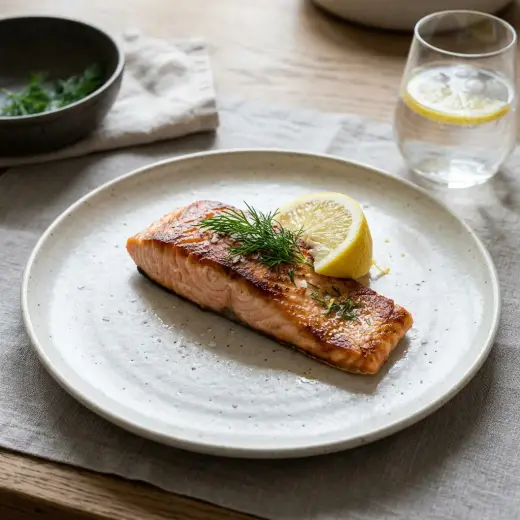
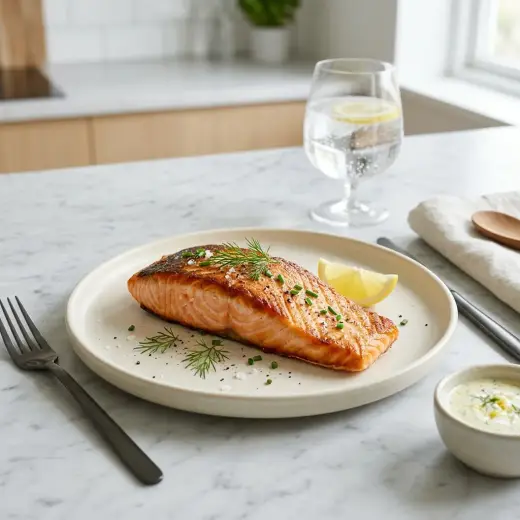
Baked salmon needs about 5 minutes of work and 15 in the oven, which makes it one of the easiest fish dinners to get right. The fillets sit on a lined tray under a slice of lemon, and the heat does the rest. You can tell when it is done by its colour and how easily it flakes, so a thermometer helps but is not essential.
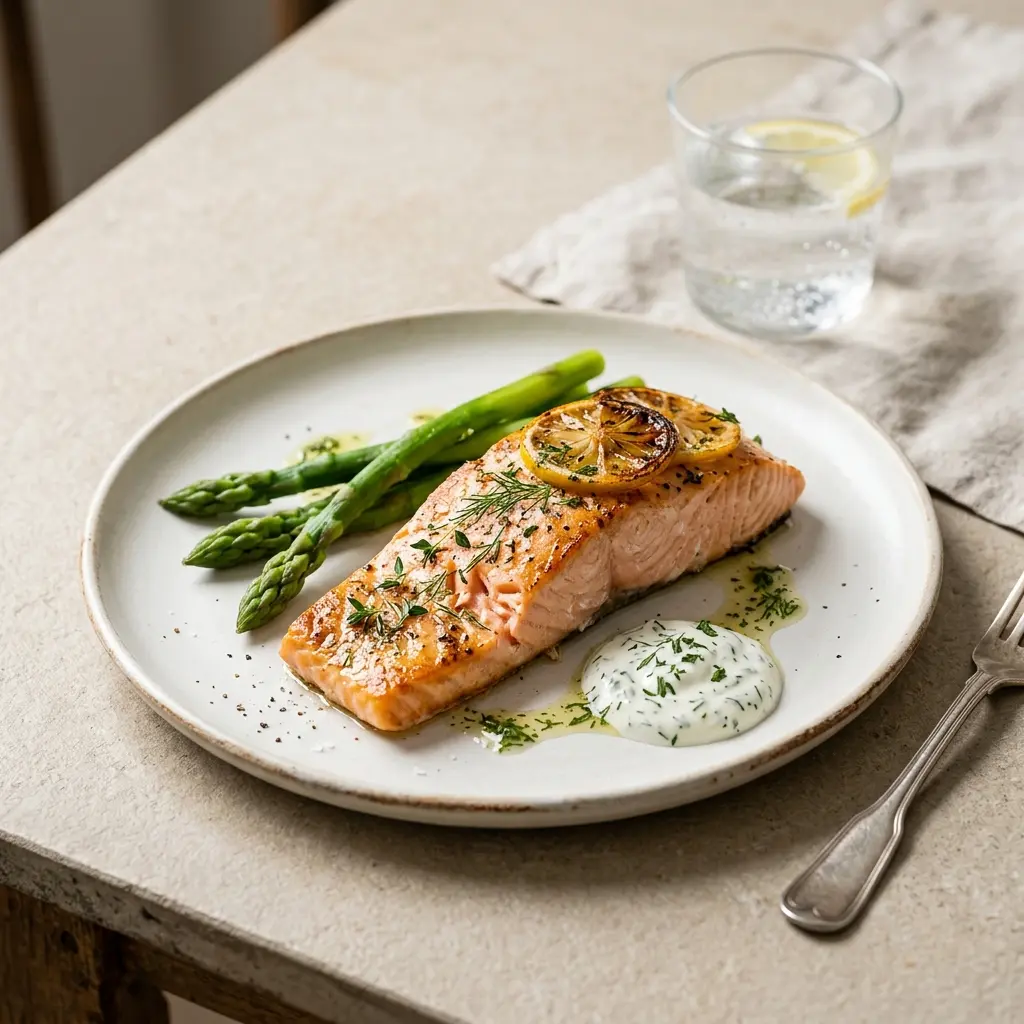
- Total
- 22 min
- Prep
- 5 min
- Cook
- 15 min
- Serves
- 4
- Per serving
- 320kcal
Internal temperature and resting for baked salmon
Salmon is ready when the flesh has turned from translucent to opaque and separates into large flakes. If you use a thermometer, 55–63 °C in the thickest part is a useful guide: closer to 55°C is soft and silky, while 63°C is fully firm. Remove the fish from the oven at the lower end of your preferred range, because it rises a few degrees while it rests.
Take the salmon from the fridge as you turn the oven on, rather than cooking it straight from cold, and keep fillets the same thickness. Thin tail pieces cook much faster, so tuck the end under itself to make it even.
How to make baked salmon
Tap a time to start a timer.
- Preheat Heat the oven to 200°C (180°C fan), gas 6, and line a baking tray with baking paper.
- Dry and season Pat the fillets dry with kitchen paper. Do not rinse them. Place them on the tray skin-side down, rub the oil over the flesh and season with the salt and pepper.
- Add the lemon Lay a thin slice of lemon on top of each fillet. It adds flavour and shields the top of the fish from the direct heat.
- Bake Bake for , until the flesh turns opaque and flakes easily when pressed with a fork. A thermometer in the thickest part should read 55–63 °C. Thinner fillets are ready at , thick ones need the full 15.
- Rest and serve Leave the salmon on the tray for , then lift it off the skin with a fish slice. Scatter over the parsley and serve with the lemon wedges.
What to serve with baked salmon
New potatoes with butter and mint, steamed green beans or tenderstem broccoli suit this simple fish well, as does a bowl of rice and a green salad. For a creamy sauce, try salmon with parsley sauce, and for feeding a crowd, the same method works on a whole side in baked side of salmon.
Swap the parsley for dill or chives if you have them, and add a crushed garlic clove to the oil for a stronger flavour.
Common problems and fixes for Baked Salmon
- The salmon is dry and chalky.
- It has stayed in the oven too long. Check at 12 minutes and take the fillets out as soon as they flake, since they keep cooking as they rest. Choose fillets of the same thickness so they finish together.
- White liquid has seeped out of the fish.
- This is harmless protein, which sets on the surface when the fish cooks too fast or too long. A slightly lower temperature, such as 180°C (160°C fan), and a shorter time reduce it.
- The skin is soggy and sticks to the paper.
- Pat the fillets very dry first and bake them skin-side down. After the 2-minute rest, slide a fish slice between the flesh and skin, leaving the skin behind if it clings.
Frequently asked questions about Baked Salmon
How long do you bake salmon at 200°C?
Bake fillets 2.5–3cm thick for 12–15 minutes at 200°C (180°C fan). Thinner fillets take 10–12 minutes, and a whole side of salmon needs 20–25 minutes.
Should you bake salmon covered or uncovered?
Uncovered gives lightly roasted fish with a firmer top. For softer, steamed-style salmon, wrap each fillet in a foil parcel with the lemon and bake for 15–18 minutes.
Can you eat the skin?
Yes, it is edible and many people like it crisp. For crisper skin, use the top shelf of the oven and finish the fish under a hot grill for the last 2 minutes.
How long does cooked salmon keep?
Cool it quickly, cover and chill it, and eat it within 2 days. Reheat gently until steaming hot, or eat it cold flaked into a salad.
How did you like the recipe?
4.7 / 5 · 15 ratings