Pan-Fried T-Bone Steak
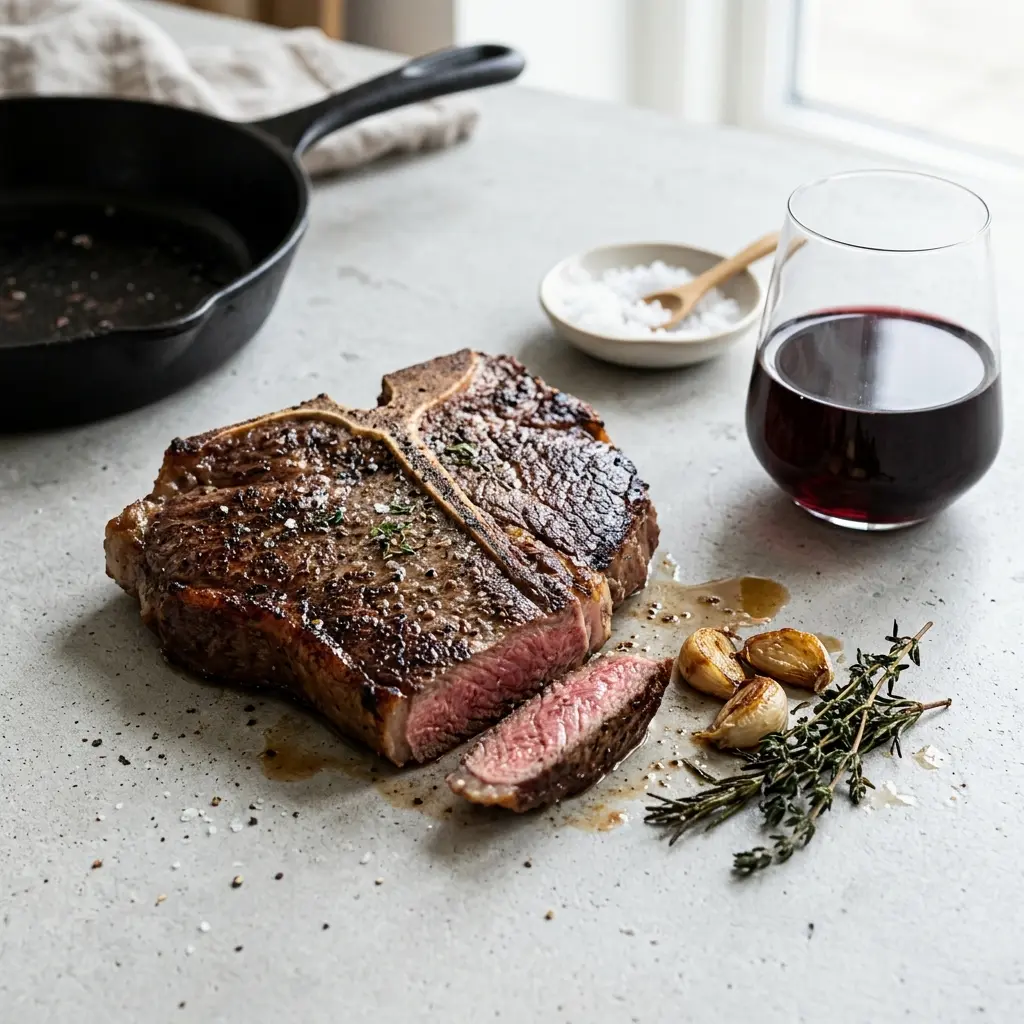
A pan-fried T-bone steak gives you two cuts on one bone, sirloin on one side and a small piece of tender fillet on the other, and a hot pan is all it takes to cook it well. A dark crust, a pink middle and a spoonful of garlic and rosemary butter on top turn an ordinary weeknight into a steakhouse dinner. This version serves two, with a steak each.
- Total
- 55 min
- Prep
- 5 min
- Cook
- 10 min
- Serves
- 2
- Per serving
- 640kcal
Keeping pan-fried T-bone steak juicy
The two muscles in a T-bone cook at different speeds. The sirloin is bigger and firmer, and the fillet is leaner and smaller, so it can overcook first. A very hot pan, a dry surface and a thermometer give you control over both.
Buy steaks at least 3cm thick, with a good layer of white fat along the edge. Thin steaks overcook before they develop a crust. Let the meat come up to room temperature before cooking, and resist the urge to prod or move it once it is in the pan.
Preparing pan-fried T-bone steak
Tap a time to start a timer.
- Bring to room temperature Take the steaks out of the fridge before cooking. Pat them dry all over with kitchen paper, then season both sides and the fat edge with the salt and pepper.
- Heat the pan Set a heavy frying pan over a high heat for , until very hot. Add the oil and swirl to coat. Turn on the extractor fan, as it will smoke a little.
- Sear the fat Using tongs, stand each steak on its fat edge and cook for until the fat starts to render and turn golden.
- Sear the first side Lay the steaks flat in the pan, leaving space between them. Cook for without moving them, until a dark brown crust forms underneath.
- Turn and baste Flip the steaks. Cook for , then add the butter, garlic and rosemary. Tilt the pan and spoon the foaming butter over the steaks for .
- Check the temperature Push a thermometer into the thickest part of the meat, away from the bone. Take the steaks out at 50°C for medium-rare, as the temperature rises by around 4°C while they rest.
- Rest Move the steaks to a warm plate and leave them to rest for , loosely covered with foil. Pour over any buttery juices from the pan.
- Carve Cut the meat away from the bone, then slice each piece against the grain and serve.
What to serve with pan-fried T-bone steak
Chips, a jacket potato, grilled tomatoes and a peppery rocket salad are all classic sides. The garlic butter in the pan is a sauce in itself, but for something richer try the sauce from steak with pepper sauce. For a potato side that looks as good as the steak, steak with hasselback potatoes is worth a look.
Common problems and fixes for Pan-Fried T-Bone Steak
- The steak is grey with no crust.
- The pan was not hot enough or the steak was wet. Dry it well, preheat the pan for the full 3 minutes and cook one steak at a time if your pan is small.
- The fillet side is overcooked while the sirloin is still pink.
- The fillet is leaner and smaller, so it cooks faster. Keep the thermometer on the thickest part of the sirloin, and position the fillet side away from the hottest part of the pan.
- The butter burns and tastes bitter.
- Add it only after turning the steak, when the pan has cooled slightly, and lower the heat to medium. Keep spooning it over the meat so it foams rather than browns.
Frequently asked questions about Pan-Fried T-Bone Steak
How long do you cook a T-bone steak for medium-rare?
About 10 minutes in total for a 3cm steak: 1 minute on the fat edge, 4 minutes on the first side, 3 on the second and 1–2 minutes basting. Remove it from the pan at 50°C and let it rest.
What temperature should a T-bone steak be?
Take it off the heat at about 45°C for rare, 50°C for medium-rare and 55°C for medium. The temperature climbs about 4°C as it rests.
Which oil is best for frying steak?
Vegetable, rapeseed or sunflower oil, which cope with high heat. Add butter only towards the end, otherwise it burns.
What is the difference between T-bone and porterhouse?
Both have a T-shaped bone with sirloin on one side and fillet on the other. A porterhouse is cut further back and has a larger fillet.
How did you like the recipe?
4.9 / 5 · 32 ratings