Pasta with Salmon and Cream Sauce
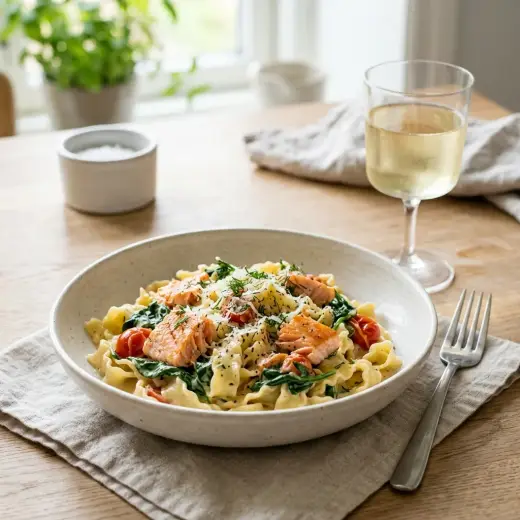
Pasta with salmon and cream sauce comes together in about 30 minutes with one frying pan and one pan of pasta. Chunks of salmon are browned briefly, then returned to a double cream sauce with onion, garlic and wilted spinach, so the fish stays soft instead of drying out. A squeeze of lemon at the end stops the sauce tasting heavy. It makes a weeknight dinner for four.
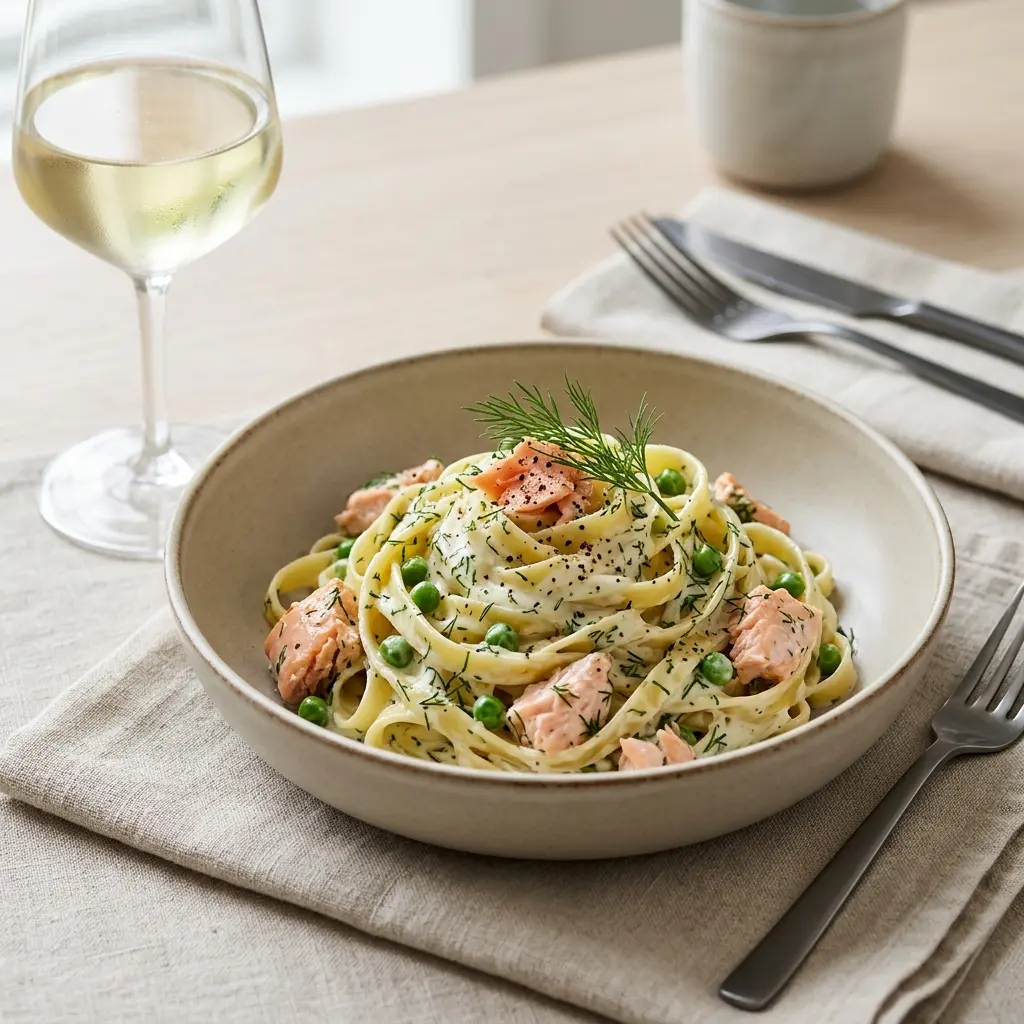
- Total
- 30 min
- Prep
- 10 min
- Cook
- 20 min
- Serves
- 4
- Per serving
- 840kcal
Keeping the salmon soft in pasta with salmon and cream sauce
Salmon cooks fast, and a second round of heat in the sauce is all it needs. That is why the chunks are only browned first and put back at the very end. Choose salmon fillets rather than a single thick piece so the chunks are an even size, and remove any pin bones by running your fingers along the flesh. Fresh herbs such as dill or chives stirred in with the lemon suit the fish well.
How to cook pasta with salmon and cream sauce
Tap a time to start a timer.
- Start the pasta Bring a large pan of water to the boil and add the salt. Cook the pasta for , or to the packet time. Scoop out a mugful of the cooking water, then drain.
- Prepare the salmon While the pasta cooks, pat the salmon dry with kitchen paper and cut it into 3cm chunks. Finely chop the onion, crush the garlic and zest the lemon.
- Brown the salmon Heat the oil in a large deep frying pan over a medium-high heat. Fry the salmon for , turning gently, until lightly golden outside and still slightly translucent in the middle. Lift it onto a plate.
- Make the sauce Turn the heat down to medium. Cook the onion in the same pan for until soft, then add the garlic for . Pour in the cream and simmer gently for until it lightly coats the back of a spoon. Stir in the spinach for about until it wilts.
- Bring it together Tip in the drained pasta, the salmon and any juices from the plate, then add the lemon zest and half the juice. Toss gently over a low heat for until the salmon is opaque all the way through. Loosen with a splash of the pasta water if needed, season with pepper and add more lemon to taste.
Swaps and serving
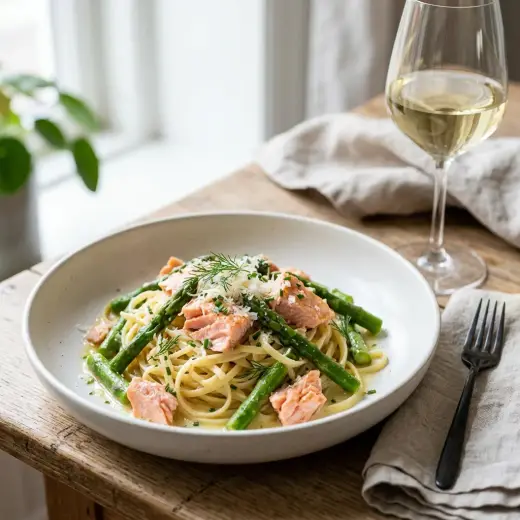
Penne and fusilli both trap the sauce, but tagliatelle or rigatoni work just as well. A crisp green salad with a sharp dressing is all you need on the side. For a version with a green vegetable cooked in with the pasta, see pasta with salmon and asparagus, and if you fancy a lighter, wine-based sauce, try pasta with prawns and white wine sauce.
Common problems and fixes for pasta with Salmon and Cream Sauce
- The salmon turns dry and chalky.
- It only needs a short time in the pan to colour, as it finishes cooking in the hot sauce. Take it out after 3–4 minutes, while the middle is still slightly translucent.
- The cream sauce splits or looks oily.
- Double cream copes well with a gentle simmer, but a hard boil or a lot of lemon juice added in one go can make it separate. Keep the heat low once the pasta is in, add the juice a little at a time, and stir in a splash of pasta water to bring it back together.
- The sauce is too thick or clings to the pan.
- The cream thickens quickly and the pasta soaks it up. Add the starchy cooking water a tablespoon at a time until the sauce is glossy and runs freely off the spoon.
Frequently asked questions about pasta with Salmon and Cream Sauce
Can I use frozen salmon?
Yes. Defrost the fillets fully in the fridge overnight, then pat them very dry with kitchen paper before frying, or they will steam rather than brown.
How long does it keep, and can I reheat it?
It keeps for up to 2 days in a covered container in the fridge. Reheat it once, gently, with a splash of milk or water, until it is steaming hot all the way through.
What can I use instead of double cream?
Crème fraîche gives a tangier, slightly lighter sauce and holds up well to heat. Single cream is thinner and splits more easily, so keep it at the barest simmer and do not boil it.
Which vegetables can I add?
Peas, thin asparagus spears or small broccoli florets all work. Add them to the pasta water for the last 2–3 minutes of cooking so they need no separate pan.
How did you like the recipe?
4.6 / 5 · 48 ratings