Pound Cake
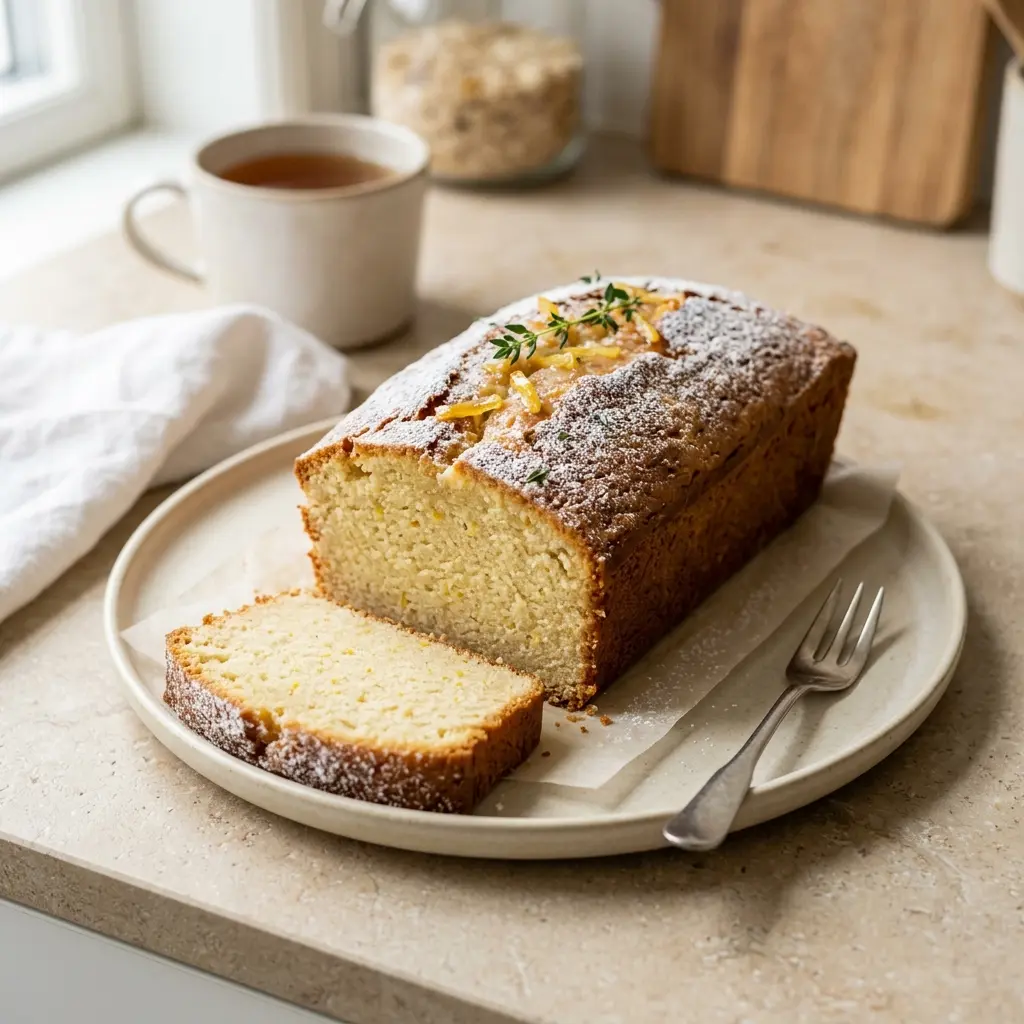
A pound cake is a loaf built on one simple idea: the same weight of butter, caster sugar and flour, plus eggs to bind it. The name comes from the old rule of using the same weight of each, and this version is scaled to 250g to fit a 900g loaf tin. The result is a close, buttery crumb that slices cleanly and is good with a cup of tea, jam or fresh fruit.
- Total
- 2 h 25 min
- Prep
- 15 min
- Cook
- 1 h
- Serves
- 8
- Per 1 slice (1/8 of the loaf)
- 495kcal
Getting the pound cake texture right
Pound cake has no raising tricks beyond air beaten into the butter and sugar, so how you cream it matters more than anything else. Use butter soft enough to dent easily with a finger, which usually means taking it out of the fridge an hour or two before you start, and beat until pale. Eggs added slowly keep the batter smooth.
Weigh everything on digital scales. Because the recipe is just equal weights, a small error shows up in the finished loaf.
Pound cake, step by step
Tap a time to start a timer.
- Prepare the tin Heat the oven to 160°C (140°C fan), gas 3. Grease the loaf tin and line the base and long sides with a strip of baking paper.
- Cream the butter and sugar Beat the butter and caster sugar with an electric whisk for , until pale, light and fluffy. Scrape down the bowl halfway.
- Add the eggs Lightly beat the eggs with the vanilla in a jug. Add them to the bowl a little at a time, whisking well after each addition. If the mixture looks curdled, stir in a spoonful of the flour.
- Fold in the flour Sift over the flour and fold it in with a large metal spoon, using figure-of-eight movements, until no streaks remain. Do not beat it, as this knocks out the air.
- Bake Spoon the batter into the tin, level the top and bake in the middle of the oven for , until golden and a skewer pushed into the centre comes out clean.
- Cool Leave the cake in the tin for , then lift it out onto a wire rack and cool completely, about 1 hour, before slicing.
Serving and variations
A slice of warm pound cake is lovely with butter, though it is just as good cold with jam, lemon curd or fruit. Spoon over fruit salad with vanilla cream for a simple dessert, or slice it thinly for a trifle base. If you prefer a different method, the air fryer pound cake makes a smaller loaf in the air fryer.
Common problems and fixes for Pound Cake
- The batter looks curdled after adding the eggs.
- The eggs were too cold or went in too quickly. Add a spoonful of the flour with the last of the egg and keep whisking. The cake will still bake well.
- The top is browning before the middle is cooked.
- Cover the loaf loosely with foil after about 40 minutes and carry on baking. Opening the oven door before then can make the loaf dip.
- The loaf is dense and heavy rather than close and buttery.
- Usually the butter was too cold to cream properly or the flour was stirred too hard. Soften the butter fully and fold the flour in gently.
Frequently asked questions about Pound Cake
How do you know when a pound cake is cooked?
A skewer pushed into the middle comes out clean, and the top is golden and springs back lightly when pressed. Start checking at 55 minutes.
How long does it keep, and can you freeze it?
Wrapped in cling film or in an airtight tin, it keeps for up to 4 days at room temperature. It also freezes well for up to 3 months. Wrap the cooled loaf in foil, then thaw it at room temperature.
Why did my loaf sink in the middle?
It was most likely taken out too early, or the oven door was opened in the first 40 minutes. Check that a skewer comes out clean before removing it.
Can I use plain flour instead of self-raising?
Yes. Use 250g plain flour mixed with 3 tsp baking powder, and sift them together twice.
Can I add flavour to the loaf?
Yes. Stir in the grated zest of one lemon or orange, or swap the vanilla for 1 tsp of almond extract. Keep the weights of butter, sugar and flour the same.
How did you like the recipe?
4.7 / 5 · 47 ratings