Seeded Bread
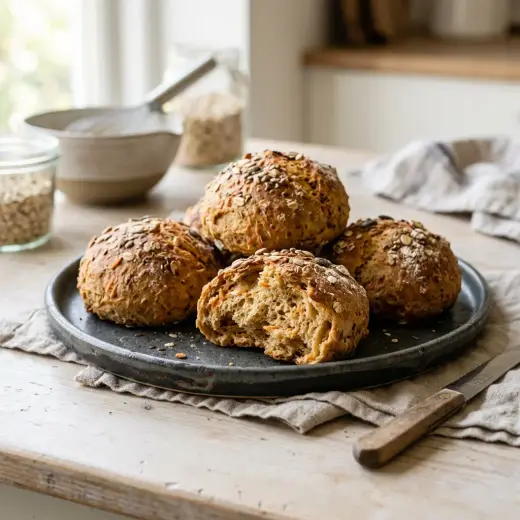
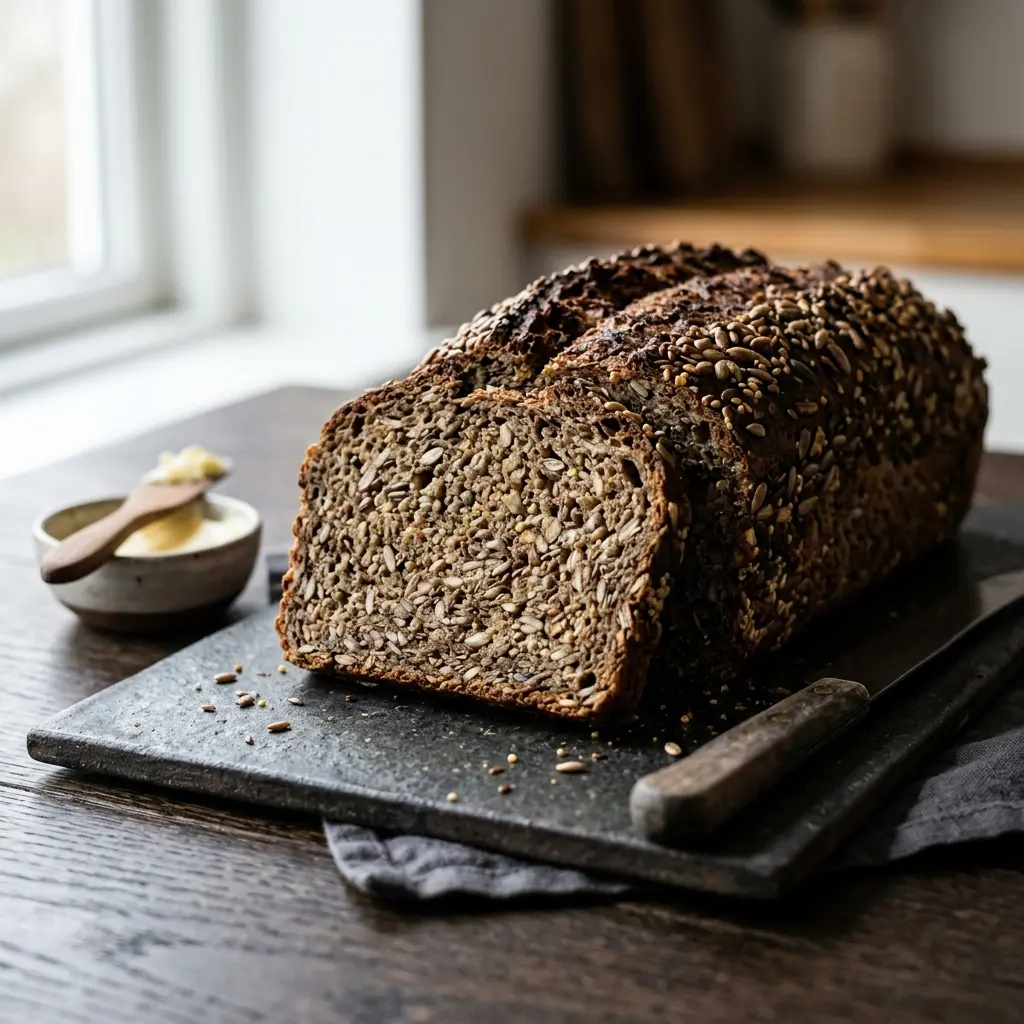
Seeded bread needs only a bowl, a baking tray and some patience: a firm knead, a rise until doubled and a hot oven. Strong white flour gives a soft, springy crumb, and 100g of mixed seeds add crunch and a nutty flavour. It makes one large loaf of ten slices, ready in 3½ hours, with only about 25 minutes of hands-on work.
- Total
- 3 h 30 min
- Prep
- 25 min
- Cook
- 35 min
- Serves
- 10
- Per serving
- 240kcal
Shaping and baking seeded bread
The dough is deliberately on the wet side, because the seeds soak up water as it proves. Knead it firmly and resist adding lots of extra flour, which gives a dry, heavy loaf. A well-kneaded dough turns smooth and stretches thinly without tearing.
Dusting the tray with flour and slashing the top lets the loaf expand in the oven without splitting along the side. If you want more flavour, toast the seeds in a dry frying pan for 2–3 minutes and let them cool before kneading them in.
Making seeded bread
Tap a time to start a timer.
- Mix the dough Put the flour in a large bowl with the salt on one side and the yeast on the other. Add the lukewarm water, olive oil and honey and stir with your hand or a wooden spoon until you have a rough, shaggy dough with no dry flour left.
- Knead Tip the dough onto a lightly floured surface and knead for , until smooth and elastic. It will be slightly sticky, so add extra flour only a teaspoon at a time.
- Add the seeds Flatten the dough, scatter over 85g of the seeds, then fold and knead for until they are spread evenly. Keep the remaining 15g for the top.
- First rise Shape the dough into a ball, return it to the bowl and cover with a damp tea towel. Leave in a warm place for about 1 hour, until doubled in size.
- Shape and second rise Knock the air out of the dough, shape it into an oval loaf and put it on a floured baking tray. Cover and leave for until puffy. Heat the oven to 200°C (180°C fan), gas 6, for the last .
- Top and bake Brush the loaf with water, scatter over the reserved seeds and slash the top three times, about 1cm deep. Bake for , until deep golden and hollow-sounding when you tap the base.
- Cool Transfer to a wire rack and leave for at least 1 hour before slicing, so the crumb can set.
Flour, seeds and swaps
Strong white bread flour has the protein needed for a springy crumb, so plain flour is a poor swap. Fast-action yeast can go straight into the flour, and one 7g sachet is right for 500g. The teaspoon of honey is there to feed the yeast, so a pinch of sugar does the same job.
Ways to enjoy it
Slices toast well with butter and jam, such as blackcurrant jam, or go alongside soup and cheese. For a darker, denser loaf with the same seeds, try seeded rye bread.
Common problems and fixes for Seeded Bread
- The loaf is dense and heavy.
- The water was probably too hot or the dough was under-risen. Use lukewarm water, never hot, as heat weakens yeast. The first rise is done when the dough has doubled and a floured fingertip leaves a dent that springs back slowly.
- The seeds fall off the crust when you slice.
- Brush the loaf with water just before scattering the seeds, then press them in lightly with a flat hand. The damp surface holds them in place during baking.
- The crust is harder than you like.
- For a softer crust, wrap the loaf in a clean tea towel straight after baking and leave it to cool wrapped. Do this instead of cooling it uncovered on the rack.
Frequently asked questions about Seeded Bread
How should seeded bread be stored?
Keep it in a paper bag or bread bin at room temperature for up to three days. Avoid plastic bags, which soften the crust. To freeze, slice the loaf first and freeze for up to one month, then toast the slices from frozen.
Can I use different seeds?
Yes, any mix of sunflower, pumpkin, linseed, sesame or poppy seeds works. Keep the total at 100g so the dough stays balanced.
How do I know when the loaf is cooked?
Tap the base with your knuckles: it should sound hollow. The crust should be deep golden brown and firm. If it sounds dull, bake for another 5 minutes.
Can I use wholemeal flour?
Yes, swap up to half the flour (250g) for strong wholemeal. Wholemeal absorbs more water, so add about 25ml (2 tbsp) extra and expect a denser, nuttier loaf.
How did you like the recipe?
4.8 / 5 · 23 ratings