Wholemeal Rolls
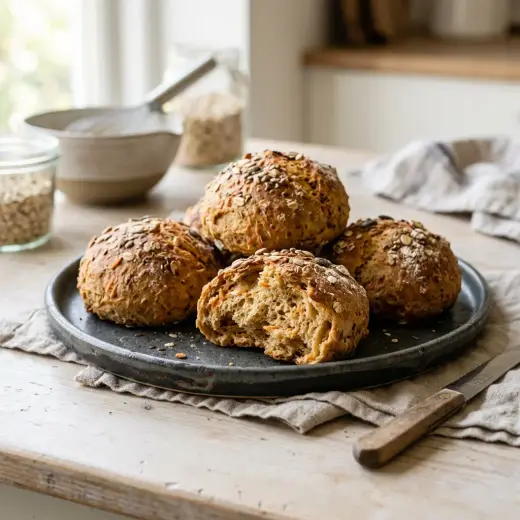
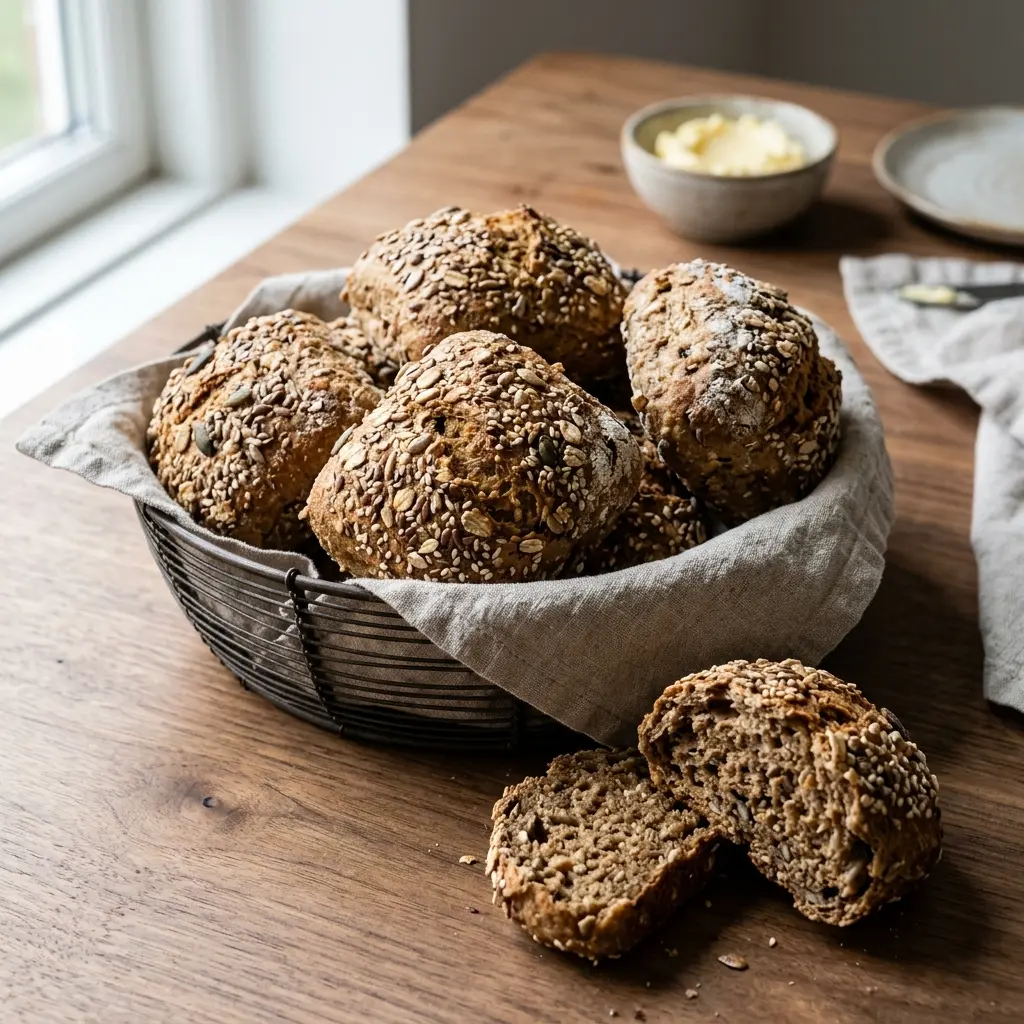
Wholemeal rolls are simpler than most people expect: one long rise, shaping, a short second proof and 20 minutes in a hot oven. Wholemeal flour gives them a nutty flavour and more fibre than white rolls, but it also needs thorough kneading and a good amount of water to stay soft. This recipe makes ten rolls that are good for sandwiches or warm with butter.
- Total
- 2 h 30 min
- Prep
- 25 min
- Cook
- 20 min
- Makes
- 10 rolls
- Per 1 roll
- 196kcal
Getting the dough for wholemeal rolls right
Wholemeal flour absorbs more water than white flour, which is why this dough is wetter than you might expect. It should feel slightly tacky after kneading. Resist adding flour, because the bran will keep absorbing water as the dough rests and the rolls will turn out dry and dense if you add more.
Use fast-action yeast, which can go straight into the flour, and keep the water lukewarm. If you prefer a lighter roll, replace half of the wholemeal flour with strong white bread flour.
The method for wholemeal rolls
Tap a time to start a timer.
- Mix the dough Stir the flour, yeast and salt together in a large bowl, keeping the yeast and salt on opposite sides. Add the lukewarm water, honey and melted butter and mix to a rough dough. Add a splash more water only if there are dry patches of flour left.
- Knead Tip the dough onto a lightly floured surface and knead for , or for in a stand mixer with a dough hook, until smooth and springy. It should feel slightly tacky but not stick to your hands.
- First rise Put the dough in the oiled bowl, cover with a clean tea towel and leave in a warm place for about 1 hour, until doubled in size.
- Shape Line a baking tray with baking paper. Knock the air out of the dough and divide it into 10 pieces of about 85g each. Roll each piece into a smooth ball and set them on the tray about 3cm apart.
- Second proof Cover with the tea towel and leave for , until puffy. About in, heat the oven to 220°C (200°C fan), gas 7.
- Bake Bake for until the rolls are deep golden and sound hollow when you tap the base. Transfer to a wire rack and leave to cool for at least before cutting.
Serving and keeping wholemeal rolls
The rolls are best slightly warm with butter, and they hold up well to fillings such as cheese and pickle or ham and mustard. Try them with gooseberry jam for tea.
If you want to prepare the dough in advance, the recipe for overnight rolls shows how to shape and bake in the morning.
Common problems and fixes for Wholemeal Rolls
- The rolls are dense and heavy.
- Wholemeal dough needs full kneading and enough water. Knead for the full 10 minutes, let the dough double in size and do not add extra flour while kneading.
- The dough does not rise.
- Water that is too hot kills yeast, and anything above about 55°C is too hot. Use lukewarm water and check the sachet is in date. A cold kitchen simply slows the rise, so give it longer.
- The rolls are pale on the base and soft all over.
- The oven was not hot enough. Wait until it has fully come to temperature, bake on the middle shelf and tap the base to check it sounds hollow.
Frequently asked questions about Wholemeal Rolls
How long do wholemeal rolls stay fresh?
They are best on the day they are baked and stay good for 2 days in a bread bin or an airtight container. Freeze them for up to 3 months and warm them in the oven at 180°C (160°C fan), gas 4, for 5–8 minutes.
Why are my rolls heavy and dense?
The most common causes are too little kneading, too little water or a rise that was cut short. Wholemeal flour is heavier than white flour, so it needs the full 10 minutes of kneading and a dough that doubles in size.
Can I use fresh yeast?
Yes. Replace the sachet with 15g fresh yeast, crumbled into the lukewarm water and left for 5 minutes, then continue as normal.
Can I use half white flour?
Yes. Swap 250g of the wholemeal flour for strong white bread flour for a lighter, softer roll. The dough may need a splash less water.
How did you like the recipe?
4.9 / 5 · 5 ratings