Victoria sponge
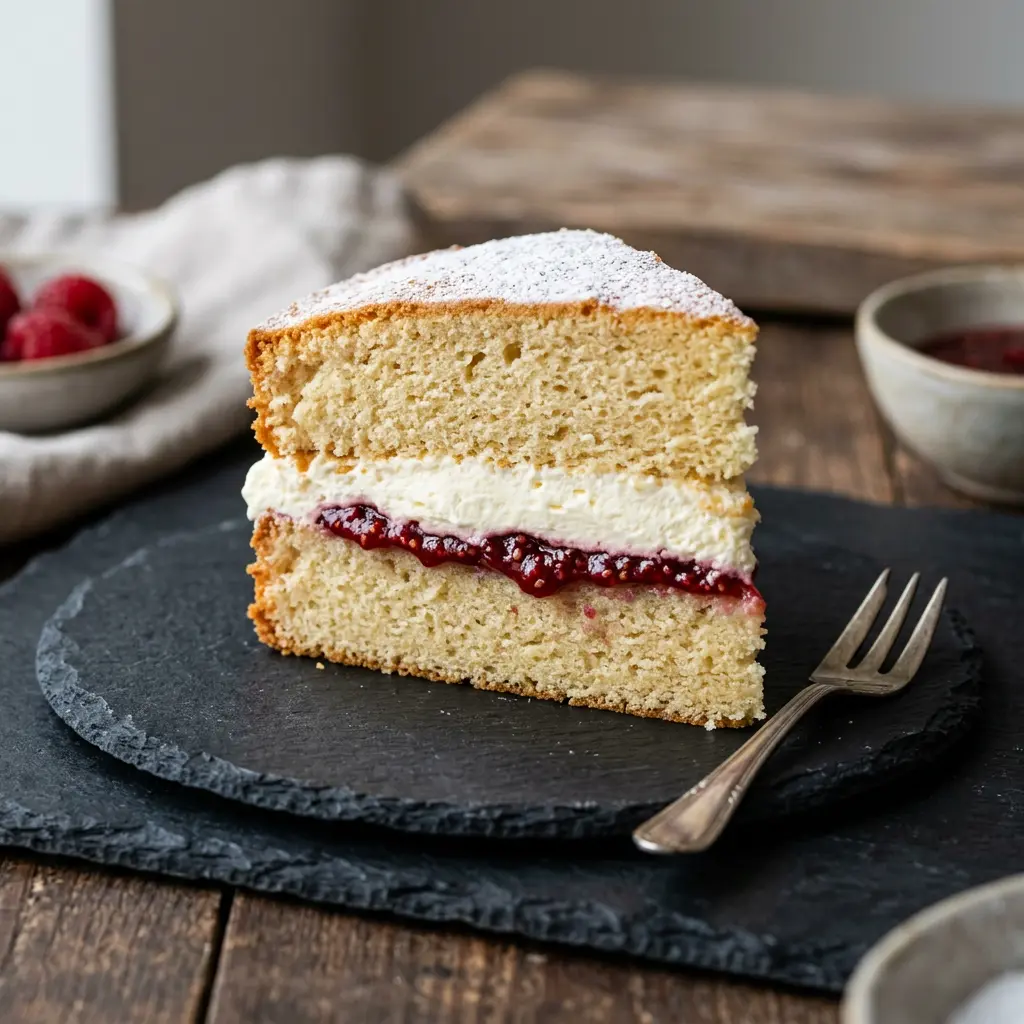
Two even layers, a generous spread of jam and softly whipped cream: a good Victoria sponge needs little more than equal weights of butter, sugar, eggs and flour. The all-in-one method puts everything in a single bowl, so the batter takes about five minutes to mix, and the cake is ready to fill once the layers have cooled for an hour. It serves eight.
- Total
- 1 h 40 min
- Prep
- 15 min
- Cook
- 25 min
- Serves
- 8
- Per serving
- 585kcal
Before you start: Victoria sponge
The recipe works on equal weights: 200g each of butter, sugar and flour, with four large eggs. Soft butter and room-temperature eggs matter more than anything else, because they let the batter mix smoothly without curdling. If the eggs are cold, stand them in a bowl of warm tap water for 5 minutes.
This cake is named after Queen Victoria, who is said to have enjoyed a slice with her afternoon tea. Use 20cm sandwich tins rather than deep cake tins, so the layers bake in 25 minutes and stay light. Raspberry jam works just as well as strawberry, and a simple vanilla buttercream can replace the cream if the cake needs to sit out for a few hours.
Step-by-step Victoria sponge
Tap a time to start a timer.
- Prepare the tins Heat the oven to 180°C (160°C fan), gas 4. Grease the two tins with a little butter and line each base with a circle of baking paper.
- Beat the batter Put the butter, caster sugar, eggs, flour, baking powder and milk in a large bowl. Beat with an electric whisk for , until smooth, pale and thick enough to drop off the spoon when you give it a sharp tap.
- Bake Divide the batter between the tins, weighing it if you want matching layers (about 415g each), and level the tops. Bake side by side on the middle shelf for , until golden, risen and springy. A skewer pushed into the centre should come out clean.
- Cool Leave the sponges in the tins for , then turn them out onto a wire rack and peel off the paper. Leave them to cool completely, about 1 hour, before you fill them.
- Whip and fill Whisk the cream with 1 tbsp icing sugar until it just holds soft peaks. Spread the jam over the flatter sponge, then the cream on top of the jam with a palette knife. Set the second sponge on top, press down lightly and dust with the remaining icing sugar.
Serving and keeping your Victoria sponge
Cut it into wedges and serve it with a pot of tea. For the rest of an afternoon-tea spread, try carrot cake or ginger biscuits, both baked in the same way ahead of time.
Once it is filled with cream, keep the cake in the fridge and eat it within 2 days. Take it out 30 minutes before serving so the sponge softens again.
Common problems and fixes for Victoria sponge
- The sponge is heavy and dense.
- The butter was too cold or the eggs went in straight from the fridge, so the batter did not trap enough air. Soften the butter until a finger leaves an easy dent, and take the eggs out an hour before baking.
- The cakes rose well, then sank in the middle.
- The oven door was opened too early, or the cakes were underbaked. Do not open the door before 20 minutes, and check that a skewer comes out clean before you take the tins out.
- The cream slides out of the sides when you cut the cake.
- The cream was whipped too loosely or the sponge was still warm. Stop whisking at soft peaks that hold their shape on the whisk, and sandwich the layers only once the sponges are cold.
Frequently asked questions about Victoria sponge
Do you put jam or cream first on a Victoria sponge?
Put the jam on first, directly on the sponge, then the cream on top. The jam soaks in slightly and the cream stays in a neat, thick layer instead of mixing with it.
Can you make a Victoria sponge the day before?
Yes, bake the layers a day ahead and keep them wrapped in baking paper in an airtight tin. Fill the cake on the day you plan to serve it so the cream stays fresh.
Can you freeze the sponge layers?
Yes, for up to 3 months. Wrap each cooled layer in cling film, then freeze in a bag. Thaw them in the fridge overnight before filling.
What can I use instead of self-raising flour?
Use 200g plain flour and 3 tsp baking powder in place of the self-raising flour and the 1 tsp baking powder in the list. Sift them together so the raising agent is spread evenly.
How did you like the recipe?
4.8 / 5 · 23 ratings