Apple Juice
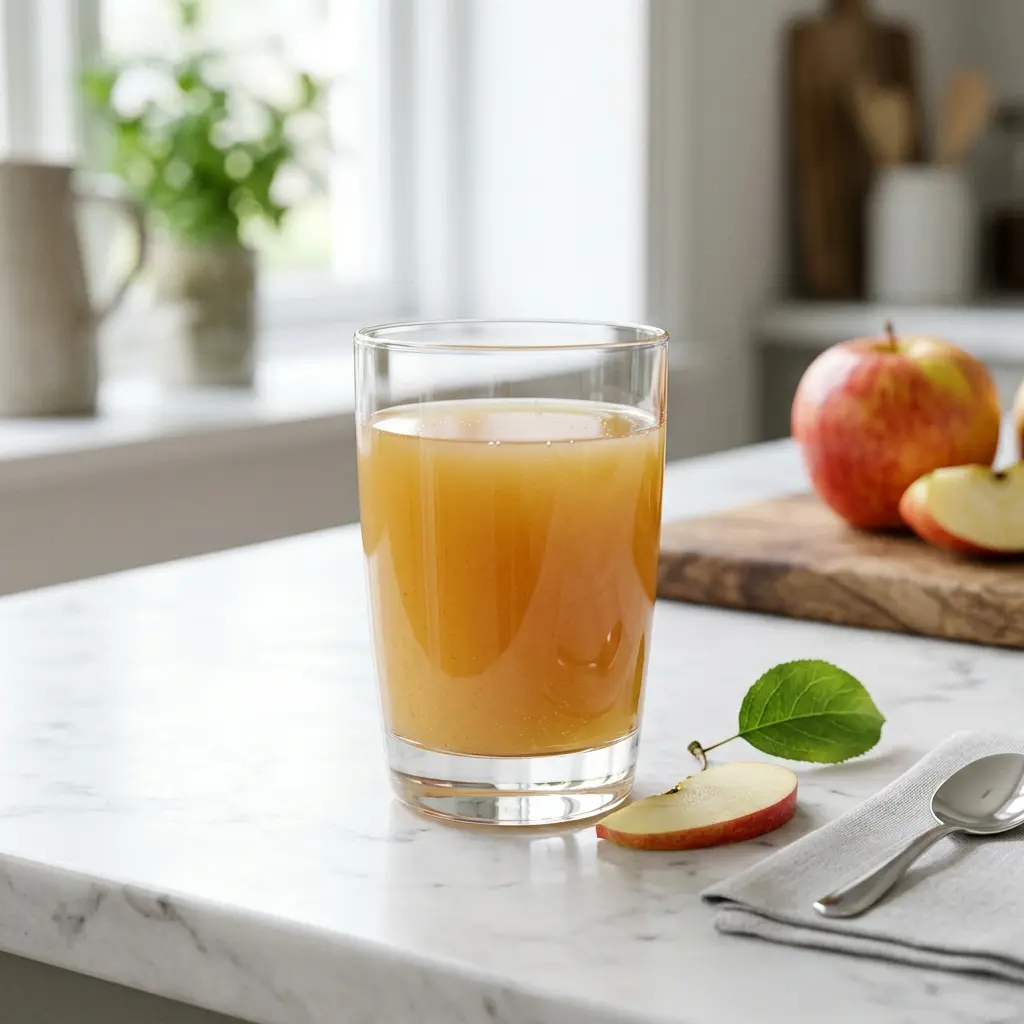
Apple juice from your own kitchen needs no juicer, just a pan and a muslin cloth. Simmering chopped apples with a little water softens the fruit and releases its juice, which you then strain off slowly for a clear, golden drink. It is a good way to use up a bag of windfalls or a glut from the garden, and a mix of sweet and tart varieties tastes best. This makes about 1 litre.
- Total
- 2 h 10 min
- Prep
- 15 min
- Cook
- 25 min
- Serves
- 1 litre (4 x 250ml glasses)
- Per 250ml glass
- 105kcal
Making apple juice ahead
Homemade apple juice has no preservatives, so it keeps for about 3 days in a sealed bottle in the fridge. Make it a day ahead if you like, as it tastes best well chilled. A little sediment may settle at the bottom, so give the bottle a gentle shake before pouring.
Apple varieties change the result. Cox and Braeburn give a fragrant, sweet juice, and a few Bramley apples add a sharper edge. If you have a glut, make a double batch in a larger pan and freeze it in portions.
Method for apple juice
Tap a time to start a timer.
- Chop the apples Wash the apples and cut them into chunks, leaving the skins on. You do not need to peel or core them, but cut out any bruised or rotten parts. Tip the chunks into the saucepan and add the water.
- Simmer Bring to the boil over a medium heat, then turn the heat down and simmer for , stirring now and then, until the apples are very soft and falling apart.
- Strain Set the sieve over a large bowl and line it with a damp muslin cloth. Ladle in the apples and leave to drip for without pressing. Pressing pushes pulp through and makes the juice cloudy. Gather up the cloth and give it a gentle squeeze at the end only if you do not mind a cloudy juice.
- Finish and chill Stir in the lemon juice, which keeps the colour bright. Leave the juice to cool completely, about 1 hour, then pour it into a clean bottle or jug and chill. Serve cold or over ice.
What to do with the leftovers
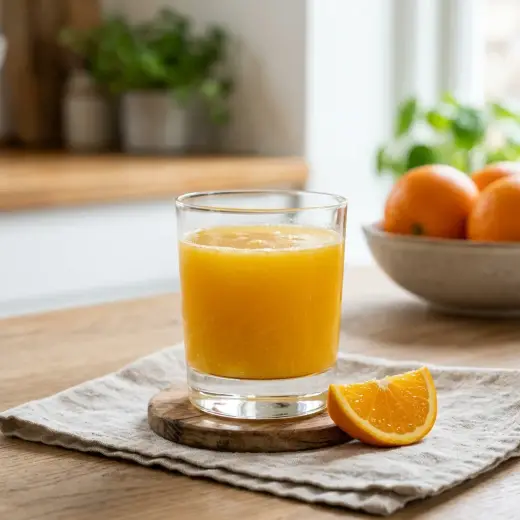
The soft pulp left in the cloth still has plenty of flavour. Sweeten it with a little sugar and a pinch of cinnamon to make apple compote, which is lovely on porridge. For another fruit drink, try homemade orange juice.
Common problems and fixes for Apple Juice
- The juice is too sharp.
- Your apples were on the tart side. Stir in a teaspoon of honey or sugar while the juice is still warm, or blend in sweeter varieties next time.
- The juice is cloudy.
- The pulp was pressed through the cloth. Let it drip on its own, and strain the finished juice again through a clean muslin cloth.
- The juice turns brown.
- Apple flesh darkens when it meets air. The lemon juice slows this, so add it as soon as the juice has dripped through, and keep the bottle sealed.
Frequently asked questions about Apple Juice
Do you need a juicer to make apple juice?
No. Simmering the chopped apples and straining them through muslin gives you juice without any special equipment. The juice is slightly less concentrated than pressed juice, because of the added water.
Which apples make the best juice?
A mix of sweet and tart gives the most balanced flavour. Cox, Gala and Braeburn are sweet and aromatic, while one or two Bramleys add acidity. Sweet eating apples alone give a flatter juice.
Can you freeze apple juice?
Yes, for up to 3 months. Pour it into freezer-safe containers and leave 2cm at the top for it to expand. Defrost in the fridge.
What can I do with the leftover pulp?
Sweeten it lightly and cook it down into apple sauce or compote, or use it as a base for a crumble.
How did you like the recipe?
4.8 / 5 · 6 ratings