Baguette
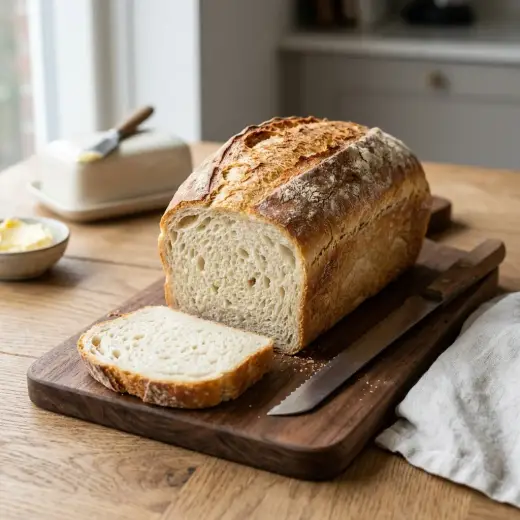
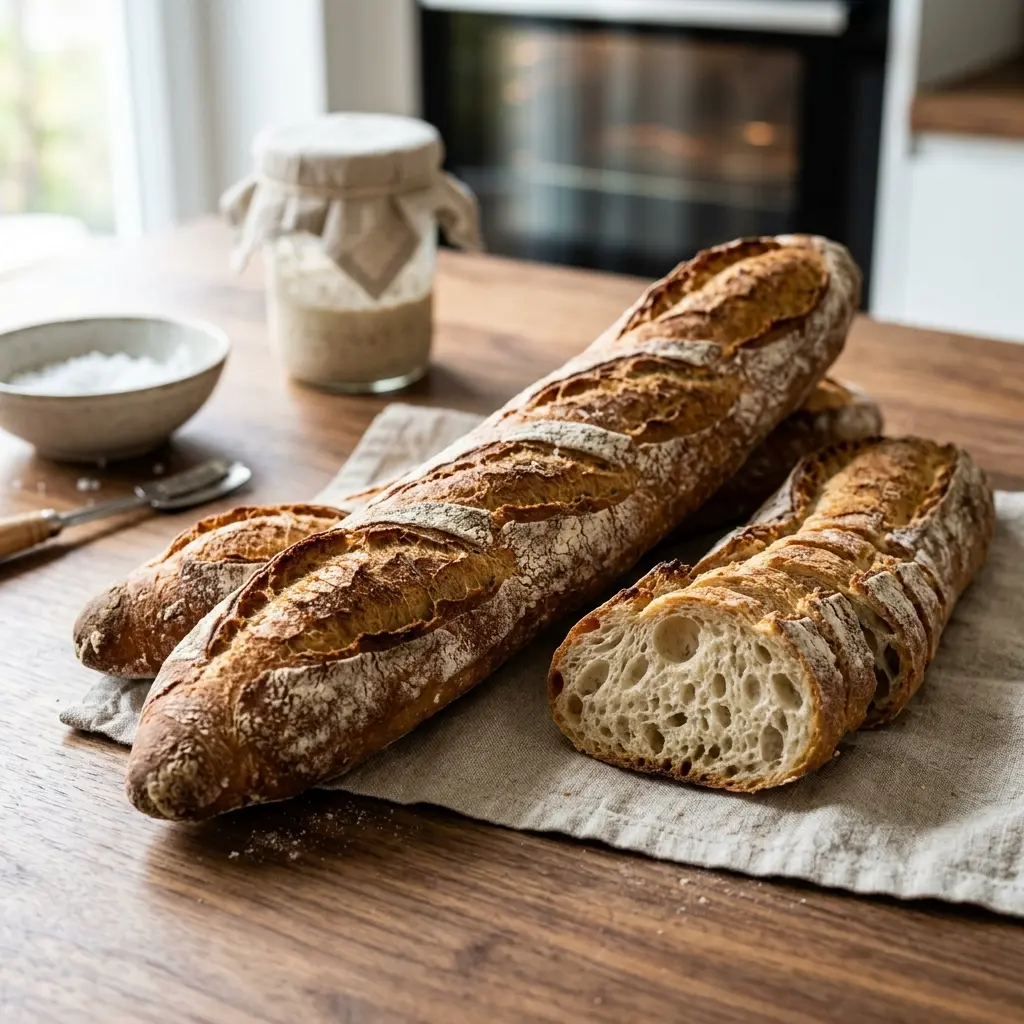
A homemade baguette needs nothing more than flour, water, salt and yeast, plus a little patience for two short rises. This dough is slightly sticky, which is what gives the soft, open crumb inside, and a blast of steam in a hot oven gives the thin, crackling crust. The recipe makes three baguettes, enough for sandwiches, soup and a dinner-party cheeseboard.
- Total
- 2 h 35 min
- Prep
- 25 min
- Cook
- 25 min
- Serves
- 6
- Per serving
- 300kcal
Getting the dough for a baguette right
Use lukewarm water so the yeast wakes up gently, and knead until the dough is smooth and bounces back when poked. A wet, slightly tacky dough feels awkward at first, but it creates the airy holes inside a good baguette. Shape firmly, so that the loaves rise upwards, not outwards.
Method for baguette
Tap a time to start a timer.
- Mix and knead Put the flour in a large bowl, with the salt on one side and the yeast on the other. Pour in the lukewarm water and mix to a rough, sticky dough. Knead on a lightly floured surface for , until smooth and elastic.
- First rise Put the dough in a lightly oiled bowl, cover with a damp tea towel and leave in a warm, draught-free place for 1 hour, until doubled in size.
- Shape Tip the dough onto a floured surface and press out the air. Divide into 3 pieces of about 290g. Flatten each into a rectangle, fold the long sides into the middle, then roll with your palms into a 35cm stick, tapering the ends slightly. Place on two baking-paper-lined trays, spaced well apart.
- Second rise Cover loosely with a damp tea towel and leave for , until puffy. Meanwhile, put a roasting tin on the bottom of the oven and heat to 220°C (200°C fan), gas 7.
- Slash and steam Cut 3–4 diagonal slashes, about 5mm deep, along each loaf. Slide the trays onto two shelves, pour the boiling water carefully into the hot roasting tin and shut the door quickly.
- Bake Bake for , swapping the trays after , until deep golden brown. The base should sound hollow when tapped.
- Cool Transfer to a wire rack and cool for at least before slicing. The crust will crackle as it cools.
What to serve with baguette
Warm baguette is excellent for dunking in mushroom soup, and slices work well toasted with homemade mayonnaise and a little salad. It also makes a good sandwich base: try it with the filling from a sandwich with turkey and bacon.
Common problems and fixes for baguette
- The crust is pale and soft instead of crisp.
- The oven was not hot enough or there was too little steam. Heat the oven fully with the roasting tin inside, and bake for 3–5 minutes longer if the loaves are still pale.
- The baguettes spread flat instead of rising upwards.
- The shaping was too loose or the dough over-proved. Fold and roll firmly to build tension, and bake as soon as the loaves are puffy but still spring back slowly when pressed.
- The dough sticks to the worktop and your hands.
- It is meant to be tacky. Use a dough scraper and a light dusting of flour rather than working in lots of extra flour, which makes the crumb dense.
Frequently asked questions about baguette
How long does a homemade baguette keep?
Baguettes are best eaten on the day they are baked. Keep leftovers in a paper bag for up to a day, or freeze cooled loaves wrapped in foil for up to 1 month and reheat at 200°C (180°C fan), gas 6, for 8–10 minutes.
Can I use plain flour for a baguette?
Yes, but strong bread flour gives a chewier crumb and a better rise. Plain flour makes a paler, softer loaf and may need slightly less water.
Why did my dough not rise?
The yeast may be out of date, or the water was too hot. Water above about 45°C weakens yeast, so use lukewarm water and a draught-free spot. In a cold kitchen, allow an extra 30 minutes.
How can I get the crust crackly?
Use steam for the first part of the bake and a really hot oven. Spraying the loaves with water before they go in helps too.
How did you like the recipe?
4.8 / 5 · 5 ratings