Christmas Ham
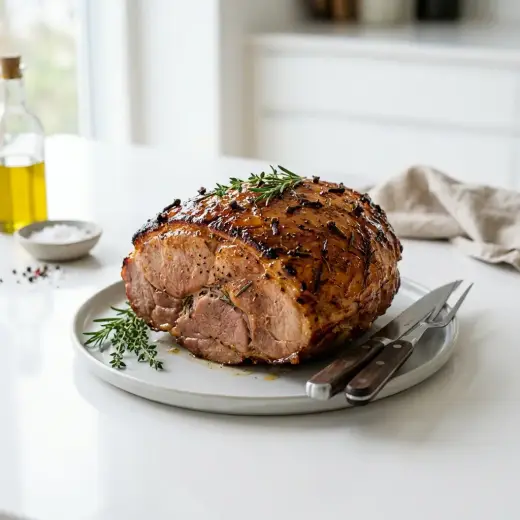
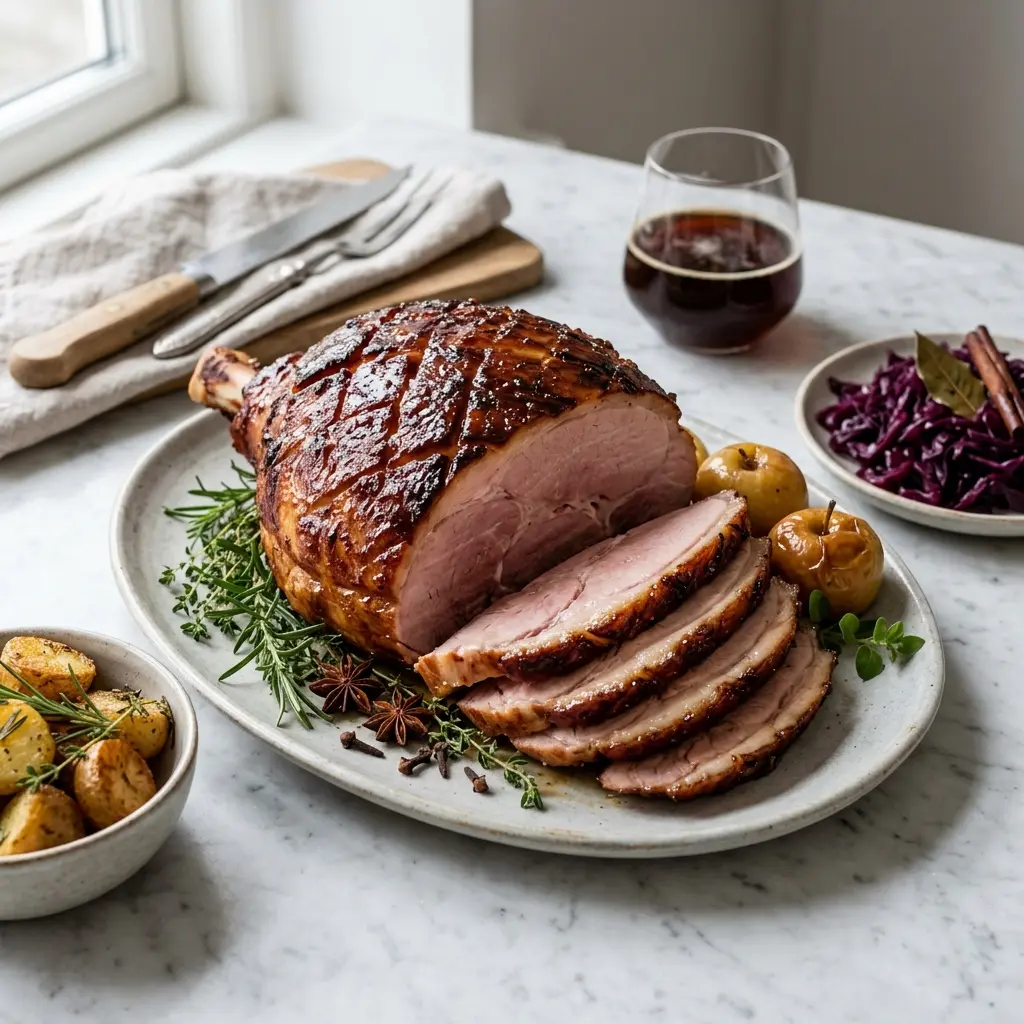
Christmas ham starts with a gammon joint that is simmered gently so the meat stays tender, then finished in a hot oven under a honey and mustard glaze until it turns sticky and dark. A 2kg joint feeds eight with plenty left for sandwiches, and the simmering can be done the day before. This recipe covers soaking, scoring, glazing and carving, with the temperature to aim for.
- Total
- 3 h 5 min
- Prep
- 25 min
- Cook
- 2 h
- Serves
- 8
- Per serving
- 340kcal
Keeping Christmas ham juicy
The simmering stage does most of the work. Cover the joint with cold water, bring it up slowly and keep the surface barely moving, because hard boiling tightens the meat and makes it dry. Start timing once the water is simmering. A raw gammon joint is cured pork, so it needs to be cooked through to 75°C in the thickest part (it stays pink because it is cured) in the thickest part.
Check the label before you start. Some gammon joints need soaking overnight in cold water, with the water changed once, to draw out salt, and others are ready to cook.
The fat is what carries the glaze. Leave about 5mm on the joint when you peel off the skin, and score it only as deep as the fat. Cuts into the meat let the juices run out in the oven.
Christmas ham, step by step
Tap a time to start a timer.
- Check the label If the joint needs soaking, do that first (see above). Drain it and put it in a large stock pot.
- Simmer Add the onion, carrots, celery, peppercorns and bay leaves and cover with cold water. Bring to the boil, skim off any scum, then turn the heat down so the water barely bubbles. Simmer, partly covered, for 1 hour ( per 500g).
- Cool and peel Lift the joint onto a board and leave it for , until you can hold it. Cut off the skin with a sharp knife and leave a layer of fat about 5mm thick.
- Score and glaze Heat the oven to 200°C (180°C fan), gas 6. Score the fat in a diamond pattern about 2cm apart and press a clove into each cross. Mix the honey, mustard and sugar in a small bowl and brush half of it over the fat.
- Roast Put the joint in a roasting tin and roast for , brushing with the rest of the glaze halfway through. It is ready when the glaze is bubbling and deep golden brown, and a thermometer in the thickest part reads 75°C.
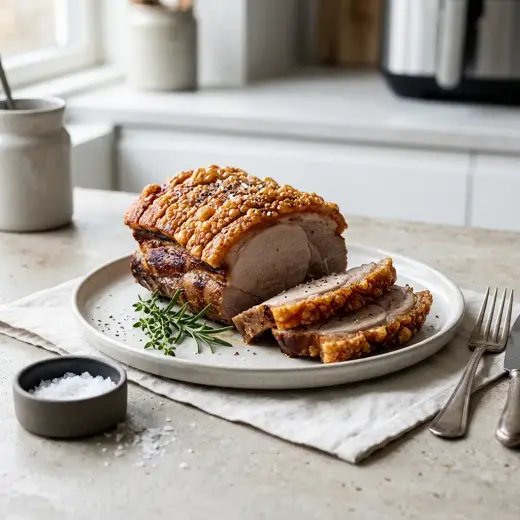
- Rest and carve Cover loosely with foil and rest for , then carve into thin slices across the grain.
What to serve with Christmas ham
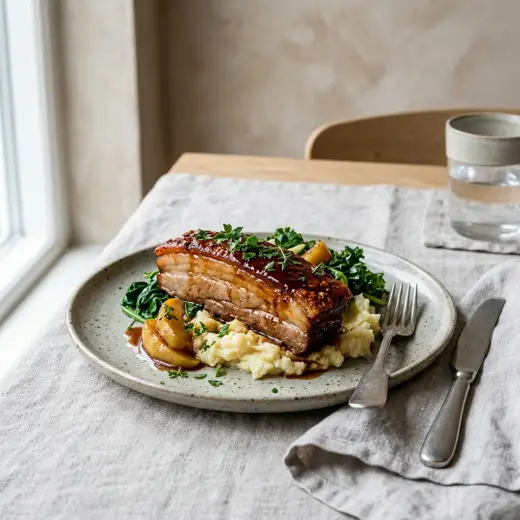
Hot, it goes with roast potatoes, parsnips, braised red cabbage and a spoonful of wholegrain mustard. Cold, it is the best part of Boxing Day, sliced into sandwiches with pickle or served with bubble and squeak. The smaller joint in glazed ham uses the same idea for a family dinner.
Leftover ham is easy to use up. Dice it into a ham puff pastry roll with mushrooms or fill an air fryer ham pie. The cooking water is salty, so dilute it well before using it as a base for pea and ham soup.
Common problems and fixes for Christmas Ham
- The glaze is catching and turning almost black.
- The honey and sugar burn quickly. Cover the joint loosely with foil as soon as it is a deep golden brown, and move the tin down a shelf if the top is close to the heat.
- The ham is too salty.
- The cure was strong. Soak the joint in cold water before simmering, even if the label says it is not needed, and do not season the cooking water with salt.
- The slices are dry and crumbly.
- The water boiled hard or the joint was left in too long. Keep the water at a bare simmer, start timing once it is simmering, and rest the joint before slicing.
Frequently asked questions about Christmas Ham
How long do you boil gammon for?
Allow 20 minutes per 500g at a gentle simmer, so 1 hour 20 minutes for a 2kg joint. Then roast it for 30 minutes at 200°C (180°C fan), gas 6.
What is the difference between gammon and ham?
Gammon is the cured back leg of pork, sold raw, and ham is the same cut once it has been cooked. This recipe turns a raw gammon joint into ham.
Can you simmer it the day before?
Yes. Simmer, cool, peel and chill the joint, covered, in the fridge. On the day, take it out for 30 minutes, then glaze and roast it, adding 10 minutes if it goes in cold.
How long do the leftovers keep?
Up to 3 days, wrapped tightly in the fridge. For longer, slice and freeze it for up to 2 months and thaw it in the fridge.
How did you like the recipe?
4.9 / 5 · 5 ratings