Homemade Crispbread
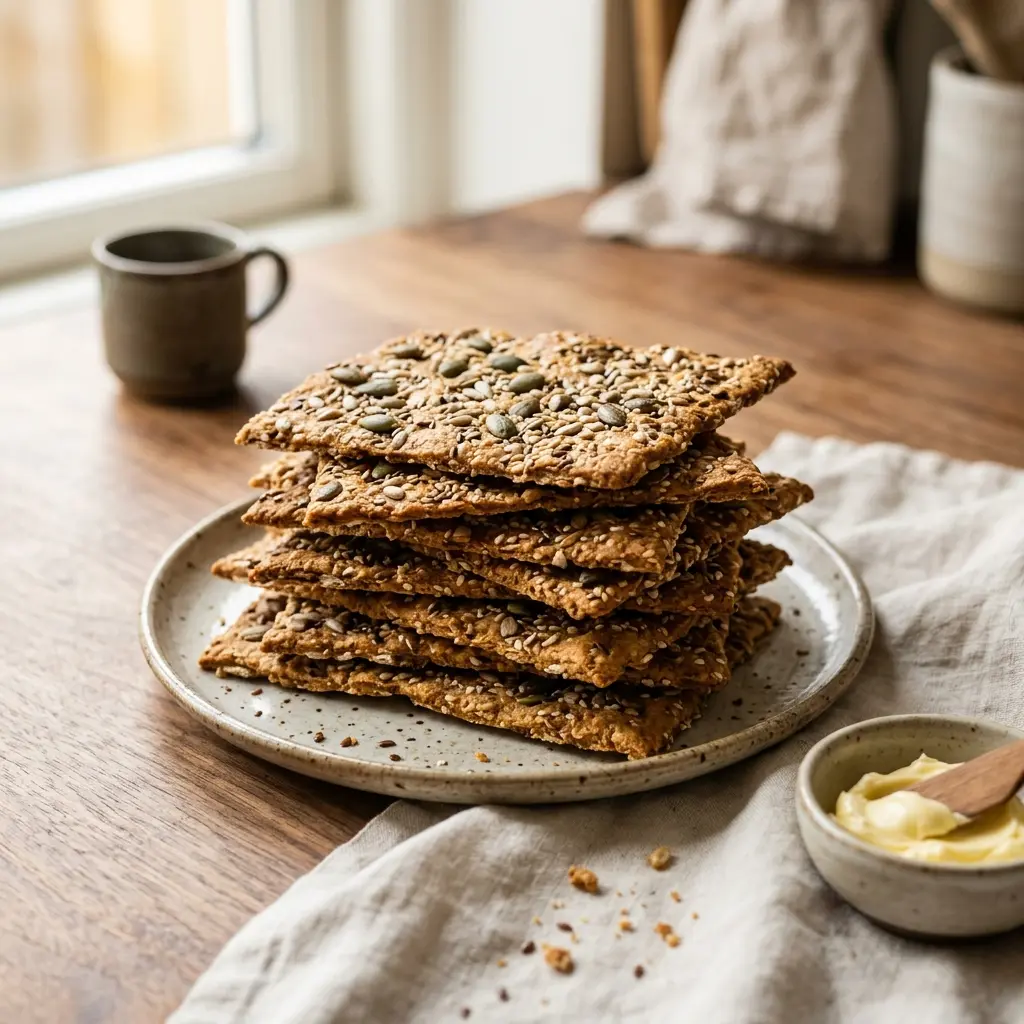
Homemade crispbread needs no yeast, no kneading and only one bowl. Rye flour, oats and a mix of seeds are bound with water and a little oil, rolled out thin and baked until snappy. You get 20 crackers for the price of a small packet of shop-bought ones, and you choose the seeds yourself.
- Total
- 1 h 30 min
- Prep
- 10 min
- Cook
- 40 min
- Makes
- 20 crispbreads
- Per 1 crispbread
- 98kcal
Why bake your own crispbread
Shop-bought crispbread is often mostly refined flour with a sprinkling of seeds. This version is about two-thirds oats and seeds, so each cracker has around 2g of fibre and no added sugar. The oats and flaxseeds soak up the water and act as the glue, which is why no egg or yeast is needed.
Swap the seeds for whatever is in the cupboard, as long as the total stays at about 150g.
Homemade crispbread method
Tap a time to start a timer.
- Mix the dry ingredients Heat the oven to 160°C (140°C fan), gas 3, and line a large baking tray with baking paper. Stir the rye flour, oats, sunflower seeds, flaxseeds, sesame seeds and salt together in a large bowl.
- Add the wet ingredients Pour in the water and oil and stir well to make a thick, sticky paste. Leave it for so the oats and flaxseeds soak up the liquid and bind everything together.
- Roll it thin Tip the mixture onto the lined tray, cover with a second sheet of baking paper and roll it out to about 3mm thick, right to the edges. Peel off the top sheet. Patch any gaps with your fingertips.
- Score Cut the sheet into 20 rectangles with a pizza cutter, pressing right through the dough so they snap apart cleanly later.
- Bake Bake for , turning the tray round after , until deep golden brown and dry at the edges. Pieces that feel soft in the middle need another .
- Cool Slide the baking paper onto a wire rack and leave for . The crispbread firms up as it cools. Snap along the cuts.
How to tell when crispbread is done
It should be deep golden, firm to the touch and dry at the cut edges. It still crisps a little as it cools, so don't wait for it to feel brittle in the oven, or it will taste scorched.
What to put on it
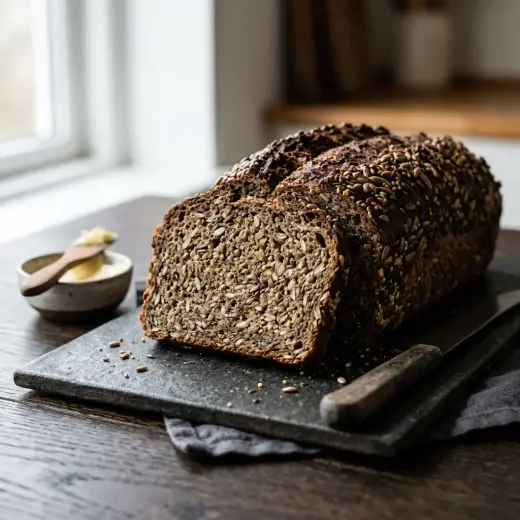
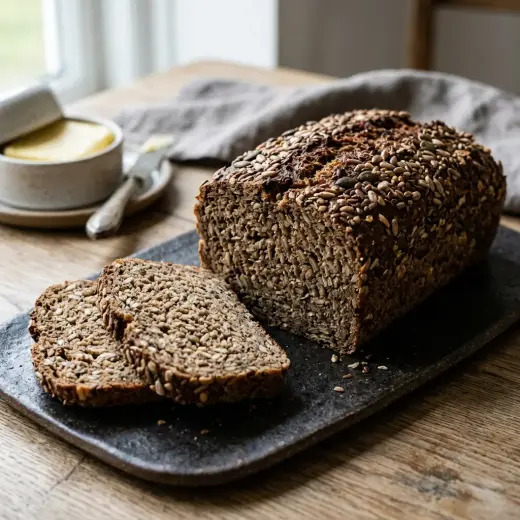
Crispbread is sturdy enough for butter and a slice of cheese, mashed avocado, or a soft-boiled egg cut into halves. For a sweet snack, spread it with butter and blackcurrant jam. If you like a chewier loaf for sandwiches, try seeded rye bread.
Common problems and fixes for Homemade Crispbread
- The middle of the crispbread is still chewy after baking.
- The dough was probably thicker than 3mm in the centre. Return the pieces to the oven on a clean tray for 5–10 minutes, then cool them on a wire rack.
- The edges brown before the middle dries out.
- Turn the tray after 25 minutes and move any dark outer pieces to the cooler side. Or lower the oven to 150°C (130°C fan), gas 2, and bake for 10 minutes longer.
- The dough crumbles when you roll it.
- Seeds and oats need time to swell. Wait another 5 minutes, or stir in 1–2 tbsp water, until the paste holds together when pressed.
Frequently asked questions about Homemade Crispbread
How long does homemade crispbread keep?
Up to three weeks in an airtight tin in a cool, dry cupboard. If the crackers soften, crisp them up on a baking tray in a 150°C (130°C fan), gas 2, oven for 5 minutes and let them cool.
Can I make crispbread gluten-free?
Yes, swap the rye flour for a gluten-free plain flour blend and use oats labelled gluten-free. The seeds are naturally gluten-free. Bake for the same time, but check from 35 minutes.
What can I use instead of flaxseeds?
Chia seeds or extra sesame seeds both work, and chia soaks up the water in the same way. Pumpkin seeds or poppy seeds can replace the sunflower seeds.
Can I add herbs or spices?
Yes. Stir in 1 tsp dried rosemary, caraway seeds or smoked paprika with the dry ingredients.
How did you like the recipe?
4.7 / 5 · 24 ratings