Homemade Fish Fingers
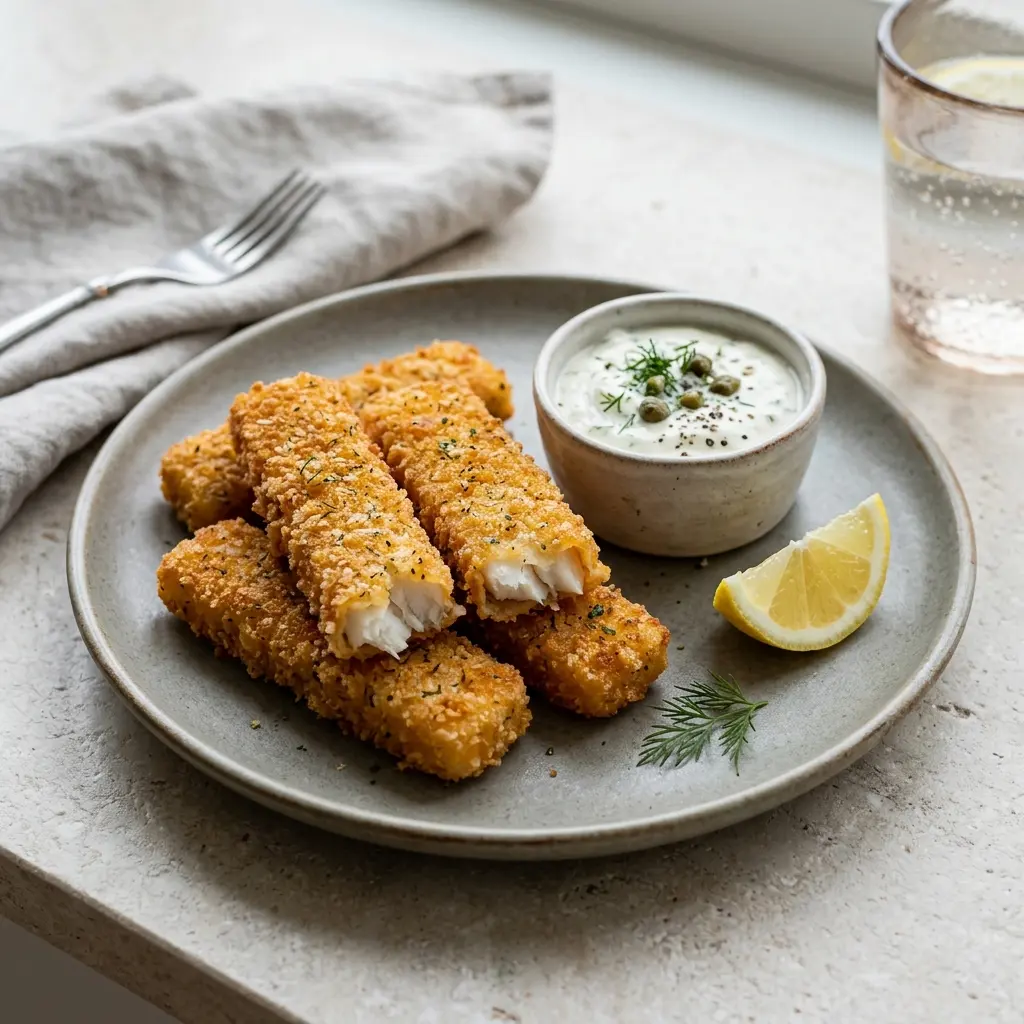
Homemade fish fingers take a bit longer than a packet from the freezer, but the fish inside is thick, white and properly flaky. Cod, haddock or pollock is cut into strips, coated in flour, egg and breadcrumbs, then shallow-fried for about 6 minutes a batch. A short chill makes the coating stick, so allow 50 minutes in total. Serve with chips, peas and tartare sauce, or in a buttered roll.
- Total
- 49 min
- Prep
- 20 min
- Cook
- 14 min
- Serves
- 4
- Per serving
- 330kcal
Common mistakes with homemade fish fingers
Most problems come down to moisture and heat. Damp fish makes a patchy coating, while a pan that is too hot burns the crumbs before the fish is cooked. Cut the fingers an even thickness, pat them very dry, and keep the heat at medium. Frozen fish is fine as long as it has been thawed in the fridge overnight and patted dry again before coating.
How to make homemade fish fingers
Tap a time to start a timer.
- Cut the fish Pat the fillets dry with kitchen paper, then cut them into fingers about 2cm wide and 8cm long. Check for any small bones and remove them with tweezers. You should get about 20 fingers.
- Set up the coating Put the flour in one bowl with the salt and pepper. Beat the eggs in the second bowl. Tip the breadcrumbs into the third.
- Coat the fingers Roll each finger in the flour and shake off the excess, dip it in the egg, then press it into the breadcrumbs until fully covered. Lay the fingers on the lined tray as you go.
- Chill Chill the coated fingers, uncovered, for . This helps the coating set so it stays on in the pan.
- Fry Heat 2 tbsp of oil in the frying pan over a medium heat. Fry half the fingers for about on each side, turning once with tongs, until deep golden. Check one by breaking it open: the fish should be opaque and flake easily, with no translucent patches. Wipe out the pan, add the remaining oil and fry the second batch.
- Drain and serve Lift the fish fingers onto a plate lined with kitchen paper for a minute. Serve straight away with lemon wedges and tartare sauce.
What to serve with them
Chips and peas, with plenty of homemade tartare, is the classic way. Fish finger sandwiches with butter and ketchup are the other great British tradition. A crunchy homemade coleslaw works well when you want something fresher on the side.
Common problems and fixes for Homemade Fish Fingers
- The coating falls off in the pan.
- Dry the fish well before it goes in the flour, and chill the coated fingers for the full 15 minutes. Turn them only once.
- The crumbs are dark but the fish is still raw in the middle.
- The heat is too high or the fingers are too thick. Turn the heat down to medium and keep the fingers to about 2cm thick.
- The fish fingers are greasy.
- The oil was not hot enough when they went in. It should shimmer and sizzle when a breadcrumb is dropped in. Drain on kitchen paper for a minute after frying.
Frequently asked questions about Homemade Fish Fingers
What is the best fish to use?
Firm white fish such as cod, haddock or pollock. They hold together when cut into fingers and flake nicely once cooked.
Can I bake them instead of frying?
Yes. Spray the coated fingers with oil, put them on a preheated baking tray at 220°C (200°C fan), gas 7, and bake for 15 minutes, turning once halfway, until golden and the fish is opaque all the way through.
Can I freeze them?
Yes, uncooked and coated, for up to 3 months. Freeze them in a single layer on a tray, then bag them up. Bake from frozen at 200°C (180°C fan), gas 6, for 20 minutes, turning once. Do not fry them from frozen.
Can I use panko?
Yes. Panko gives a crunchier, more open coating. Use the same weight, and fry for the same time.
How did you like the recipe?
4.6 / 5 · 12 ratings