Orange Curd
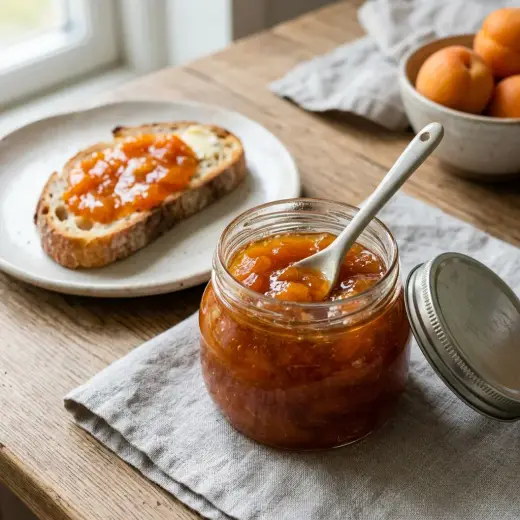
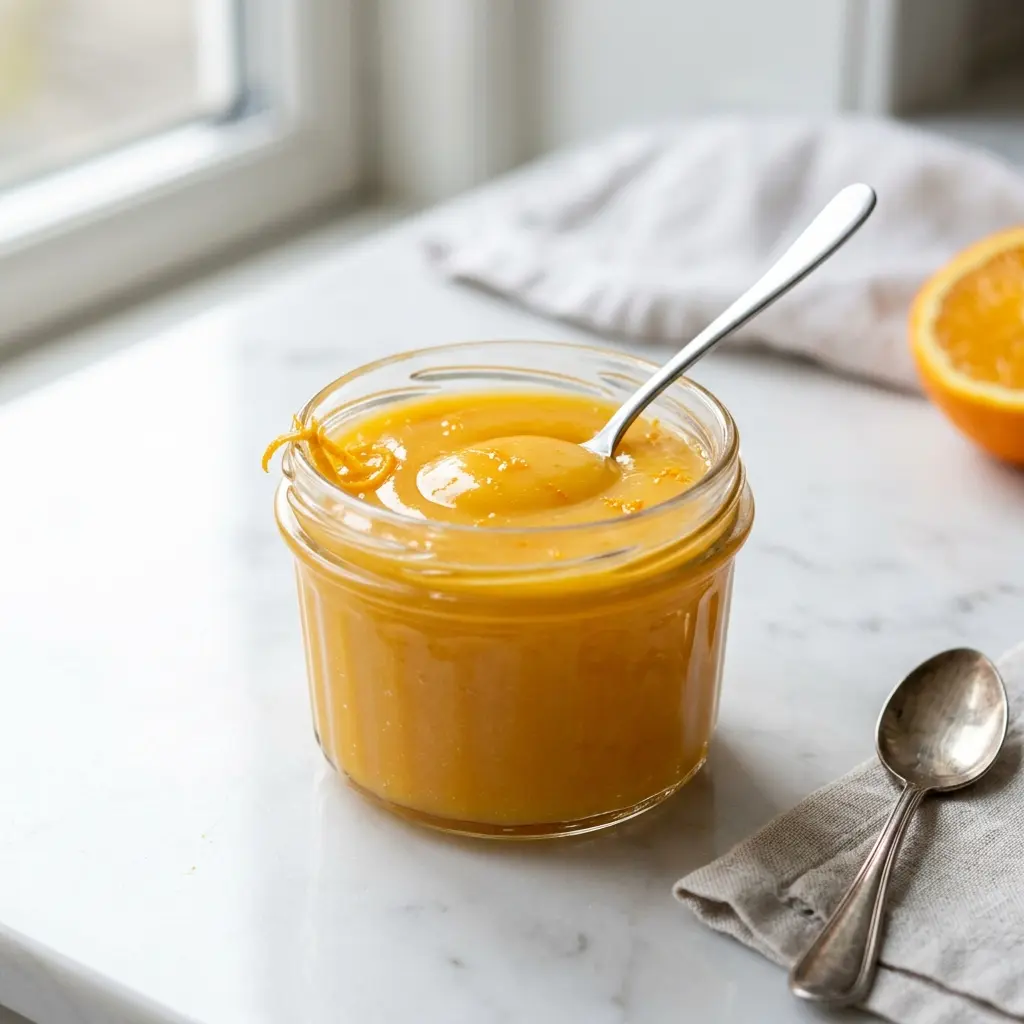
Orange curd is a silky, tangy spread made by cooking orange and lemon juice, zest, sugar, butter and eggs over simmering water until it thickens. A splash of lemon keeps the sweetness in check, and the batch fills three 250ml jars. Spread it on scones or toast, stir it into yoghurt, or use it to fill a sponge cake.
- Total
- 1 h 40 min
- Prep
- 20 min
- Cook
- 20 min
- Makes
- 3 x 250ml jars
- Per 1 tbsp (about 20g)
- 56kcal
How the juice, eggs and butter work together in orange curd
Fruit curd is a British classic, best known as lemon curd. Egg and egg yolks give it body: they set as they heat, so the curd thickens without any flour. The butter makes it glossy and soft, and the lemon juice adds acidity so the orange does not taste flat. The orange zest holds most of the flavour, so use unwaxed oranges if you can find them, or scrub the skins well in warm water first.
Seville oranges, in the shops in January and February, make a more bitter, marmalade-style curd, and you may want a little more sugar to balance them.
Preparing orange curd
Tap a time to start a timer.
- Sterilise the jars Wash the jars and lids in hot soapy water and rinse well. Stand the jars upright on a baking tray, without their lids, and put them in the oven at 140°C (120°C fan), gas 1, for . Leave the lids to air-dry.
- Zest and juice Finely grate the zest of all 3 oranges and the lemon, taking only the coloured skin and none of the bitter white pith. Squeeze the juice from 2 of the oranges and the lemon, and pick out any pips.
- Melt the butter and sugar Pour about 3cm of water into a saucepan and bring it to a simmer. Put the zest, juice, sugar and butter in a heatproof bowl and set it over the pan, making sure the bottom does not touch the water. Stir for about , until the butter has melted and the sugar has dissolved.
- Add the eggs Beat the whole eggs and the yolks together with a fork. Pour them through a fine sieve into the warm orange mixture in a thin stream, whisking all the time so they do not scramble.
- Cook until thick Keep the water at a gentle simmer and stir constantly for , until the curd is thick enough to coat the back of a spoon and leaves a clear line when you draw a finger through it.
- Strain and jar Pour the curd through the sieve into a jug to catch any zest or bits of egg, then pour it into the warm jars, filling them to about 1cm below the rim. Seal straight away and leave to cool for 1 hour, then store in the fridge. It will thicken more as it cools.
Ways to use orange curd
Spoon the curd onto warm scones with clotted cream, sandwich it between the layers of a layer cake, or serve it with classic pancakes and a few berries. It is also good swirled through Greek yoghurt or porridge, or spread on a slice of buttered toast.
Common problems and fixes for Orange Curd
- The curd looks grainy, with specks of scrambled egg.
- The heat was too high or the eggs went in too quickly. Keep the water at a gentle simmer, whisk while you pour the eggs through the sieve, and strain the finished curd again to rescue it.
- The curd is still runny after 12 minutes.
- Keep stirring over the simmering water for another 3–5 minutes. Egg thickens gradually, and the curd also firms up a lot once it is cold.
- The curd tastes bitter.
- Some white pith got into the zest. Grate only the orange part of the skin, and stop as soon as you reach the white.
Frequently asked questions about Orange Curd
How long does homemade orange curd keep?
It keeps for up to 2 weeks in the fridge in sterilised, sealed jars. Once a jar is opened, use it within a week, and always take it out with a clean spoon. It also freezes for up to 3 months in a freezer-safe container, then defrost it in the fridge.
Is it safe to eat, since the eggs are only lightly cooked?
Yes. The eggs are cooked until the curd thickens, which is enough to set them. British Lion-stamped eggs are recommended by the Food Standards Agency, including for pregnant women.
Can I use bottled juice?
Fresh juice tastes much better. If you have to use bottled, choose not-from-concentrate juice, measure out 200ml, and still add the grated zest, as that is where most of the orange flavour comes from.
Can I make it without a bowl over a pan?
You can cook it in a heavy-based pan over the lowest heat, but you must stir constantly and keep an eye on it, as it can scramble quickly. The bowl over simmering water is gentler and more forgiving.
How did you like the recipe?
4.8 / 5 · 33 ratings