Benefits of making scones
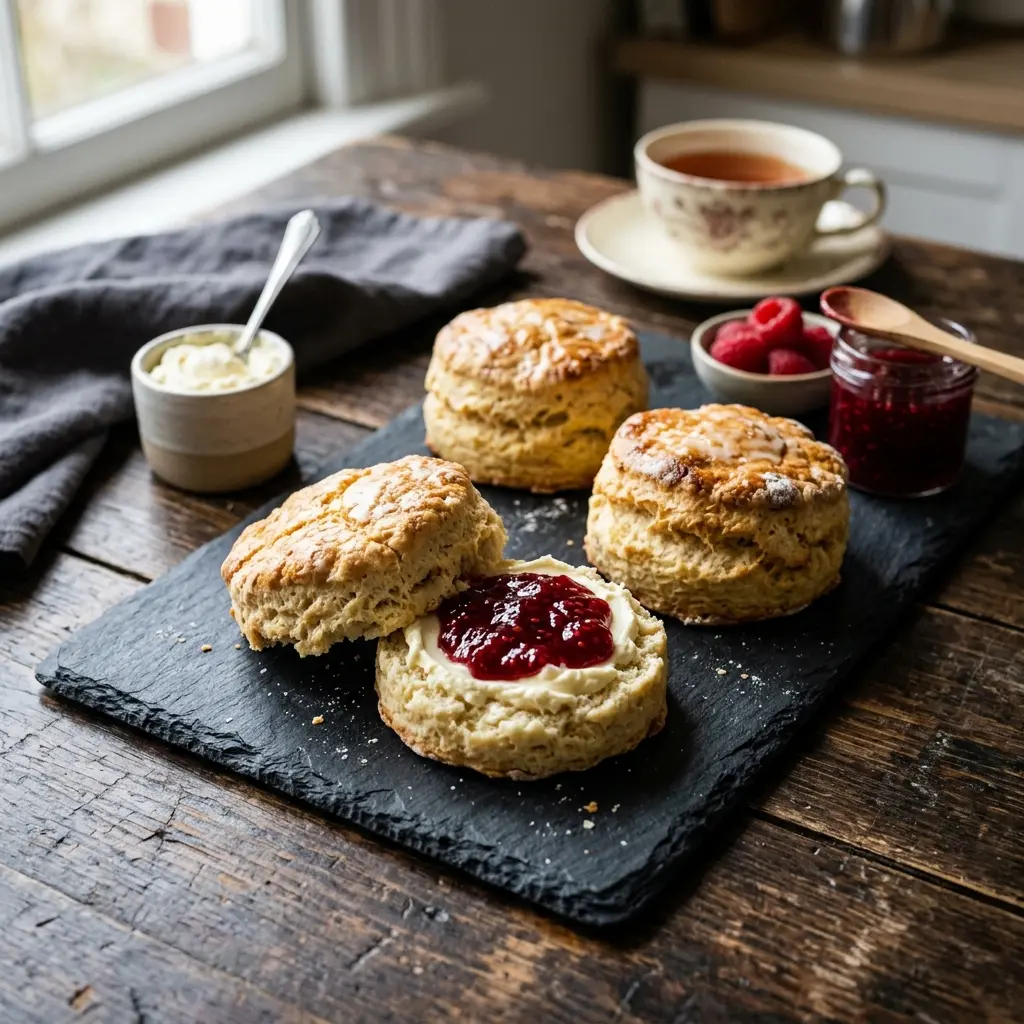
This recipe for scones is reliable and creates a wonderful texture every time. Using cold butter ensures the dough stays light and rises well in the oven. It is a very versatile bake that can be enjoyed with different toppings or even with dried fruit added to the mix. Making your own scones at home is much more satisfying than buying them from a shop.
Step by step: scones
Mix ingredients: Preheat your oven to 220C and line a baking tray with parchment. Combine the flour, baking powder and a pinch of salt in a large bowl. Rub the cold butter into the flour using your fingertips until the mixture looks like fine breadcrumbs. Stir in the caster sugar.
Add liquid: Warm the milk slightly in the microwave for a few seconds. Mix in the vanilla extract and lemon juice then set it aside for a moment. Make a well in the dry ingredients and pour in the liquid. Use a cutlery knife to quickly stir everything together into a soft dough.
Shape dough: Tip the dough onto a floured surface and fold it over a few times until smooth. Pat the dough down with your hands until it is about four centimetres thick. Use a round pastry cutter to stamp out your scones without twisting the cutter. Gather any scraps and repeat the process until all the dough is used.
Bake scones: Place the rounds on the baking tray and brush the tops with a beaten egg. Bake for about fifteen minutes until they are risen and golden brown on top. Transfer them to a wire rack to cool slightly before serving. Enjoy your warm scones with jam and cream.
Tips and tricks for scones
To get the best rise, make sure your butter is very cold when you start rubbing it into the flour. Avoid overworking the dough as this can make the final result heavy and dense rather than light. When using the pastry cutter, press straight down and lift it up without twisting it. Twisting the cutter can seal the edges and prevent the scones from rising evenly.
You can add a handful of sultanas or raisins to the dry mix if you prefer fruit scones. If the dough feels too sticky, add a tiny bit more flour to your hands and the work surface. Always bake them in a hot oven to ensure they spring up quickly and develop a golden crust.
You may also like
grilled beef rump cap,
pan-fried scallops or
beef stew with beer.