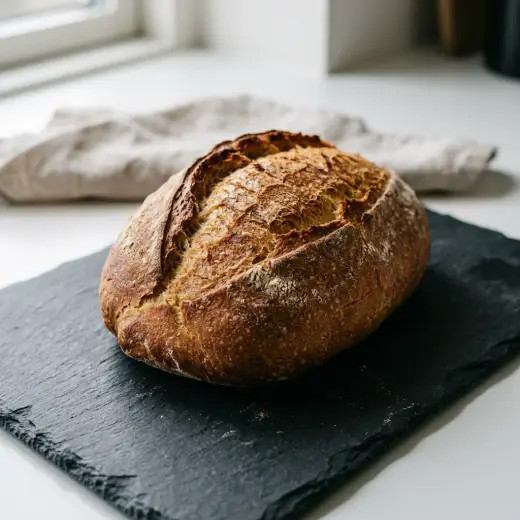
Sourdough Bread
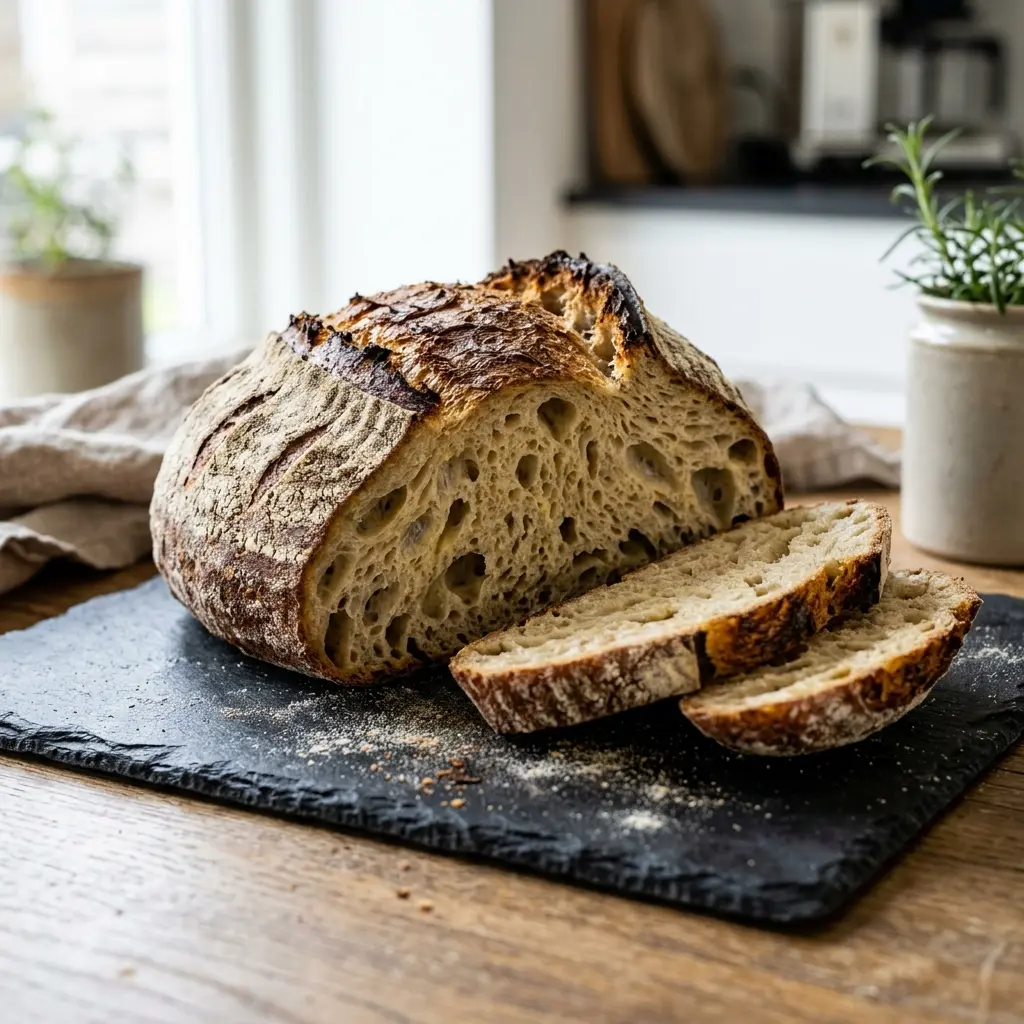
Sourdough bread needs only four ingredients, but it rewards a little planning: you mix and fold the dough in the afternoon, shape it in the evening and bake it from the fridge the next morning. The long, cool rise gives a mildly tangy flavour, a chewy crumb and a deep golden crust. This 73% hydration loaf is wet enough to be open and airy, but still easy to shape.
- Total
- 16 h 45 min
- Prep
- 30 min
- Cook
- 45 min
- Serves
- 10
- Per serving
- 190kcal
Shaping and baking sourdough bread
Most of the effort goes into the first few hours. Wet hands and gentle folds build strength without kneading, and the tight shaping step gives the loaf height in the oven. Cold proving in the fridge slows the fermentation, which deepens the flavour and lets you bake when it suits you.
A hot lidded pot acts like a small steam oven, keeping the crust soft long enough for the loaf to spring up before it sets into a crisp shell.
How to make sourdough bread
Tap a time to start a timer.
- Mix and rest Stir the starter into the water in a large bowl until mostly dissolved. Add the flour and salt and mix by hand until no dry flour is left. Cover and leave for so the flour can absorb the water.
- Fold and ferment With a wet hand, lift one edge of the dough, stretch it up and fold it into the centre. Turn the bowl a quarter turn and repeat 4 times, which counts as one set. Do 4 sets, apart, over 2 hours. Cover and leave at 22–24°C for another 2 hours, until the dough has grown by about half and is full of bubbles.
- Shape Tip the dough onto a lightly floured surface and fold the edges into the middle. Turn it seam-side down and drag it towards you in a circle to make a tight ball. Dust the proving basket with flour, then place the dough in seam-side up.
- Cold prove Cover the basket with a shower cap or a large plastic bag and chill for 8–12 hours. The dough firms up in the fridge, which makes it much easier to slash.
- Heat the oven About before baking, put the casserole dish with its lid in the oven and heat to 230°C (210°C fan), gas 8. Use oven gloves, as the dish will be extremely hot.
- Score and bake Turn the cold dough onto a sheet of baking paper and slash the top once with a sharp knife, about 1cm deep. Lift the paper into the hot dish, put the lid on and bake for . Remove the lid and bake for another , until deep golden brown and hollow-sounding when tapped underneath.
- Cool Lift the loaf onto a wire rack and leave it for at least 1 hour before slicing. The crumb is still setting inside, and cutting early makes it gummy.
How to enjoy your sourdough loaf
Sourdough is good simply sliced with salted butter, toasted under the grill with eggs, or cut thick for soup. Slices that have gone stale make an excellent base for panzanella. For another long-fermented loaf with more texture, try seeded rye bread.
Common problems and fixes for Sourdough Bread
- The loaf is flat and spreads sideways.
- The dough was probably under-fermented or the starter was weak. Use a starter that has doubled within 4–8 hours of feeding, and wait until the dough has grown by about half before shaping.
- The dough sticks to your hands and the surface.
- Wet your hands with cold water for the folds, and use a dough scraper to turn it. For shaping, flour the surface lightly, then brush off any excess so the dough can grip and tighten.
- The crust is pale and soft.
- The lid has to be on for the first 20 minutes to trap steam, then off for the colour. Check the casserole dish was properly hot, and bake for a few extra minutes without the lid if the crust is still pale.
Frequently asked questions about Sourdough Bread
How should I store sourdough bread?
Keep it cut-side down on a board or in a paper bag at room temperature for 2–3 days. For longer, slice and freeze it for up to 3 months, then toast slices straight from frozen. Avoid the fridge, which makes bread stale faster.
Can I bake it without a Dutch oven?
Yes. Bake on a preheated baking tray at the same temperature, with a roasting tin of boiling water on the shelf below for steam. The crust will be a little less blistered, and it needs about 35 minutes in total.
Why did my sourdough not rise?
Usually the starter was not active enough or the room was cold. Feed the starter and use it when it is bubbly and risen, and give the dough more time in a warmer spot if the kitchen is below 20°C.
Can I prove it at room temperature instead of overnight?
Yes, leave the shaped dough for 2–3 hours at room temperature until it springs back slowly when pressed. The flavour will be milder, and the dough harder to slash than after chilling.
How did you like the recipe?
4.7 / 5 · 6 ratings