Chapati
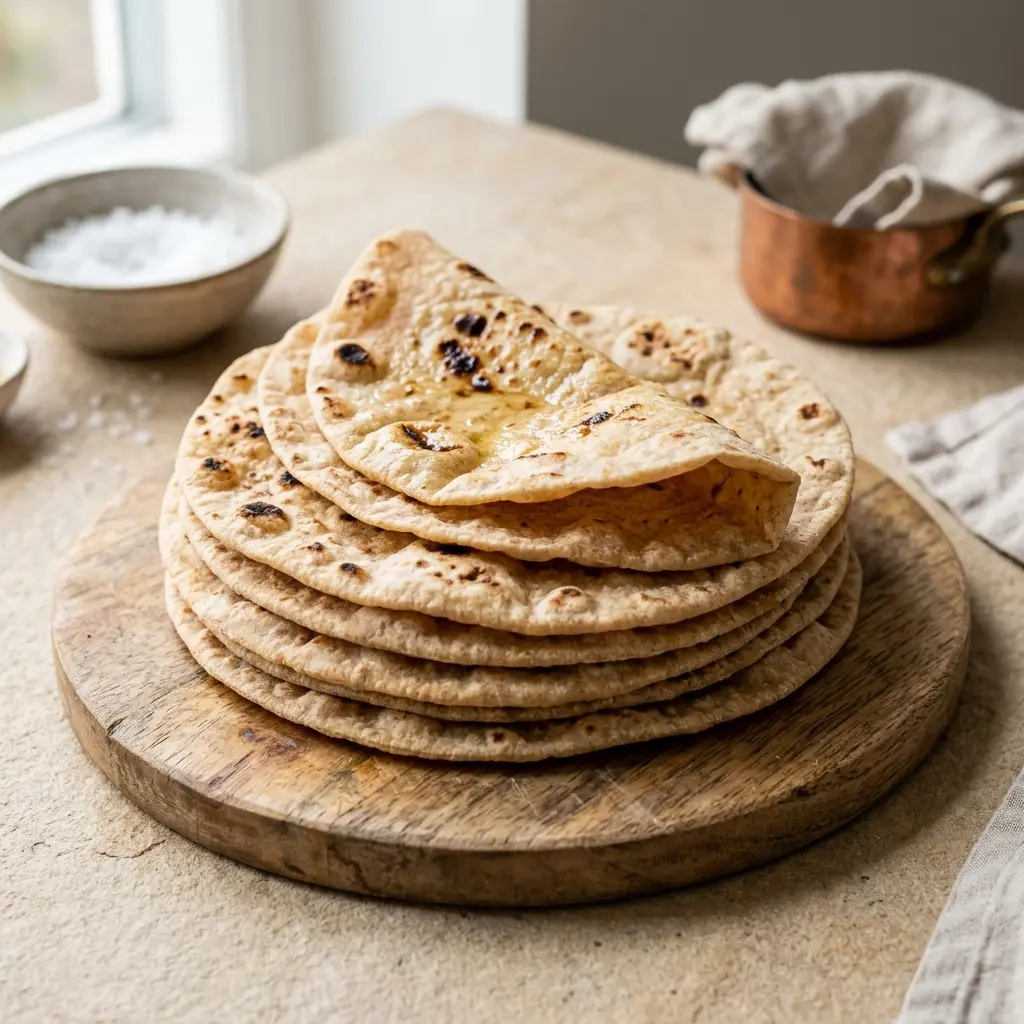
Chapati is an unleavened flatbread from the Indian subcontinent, also eaten across East Africa, and it needs only flour, water, salt and a little oil. The dough rests for 20 minutes, then each chapati is rolled thin and cooked in a hot dry pan in about a minute. This recipe makes 8, enough for four people, and takes under an hour.
- Total
- 55 min
- Prep
- 20 min
- Cook
- 15 min
- Makes
- 8 chapatis
- Per 1 chapati
- 120kcal
Common mistakes with chapati
Good chapati depends on soft dough and a very hot pan. Wholemeal flour soaks up water slowly, so add the water a little at a time and rest the dough for the full 20 minutes. Roll thin and even, then cook quickly: the chapati should get a few brown spots and puff up in about a minute. A longer time in the pan makes them dry and hard.
Chapati method
Tap a time to start a timer.
- Make the dough Mix the flour and salt in a large bowl. Add the oil and most of the warm water, then mix with your hand, adding the rest of the water a little at a time, until it comes together. Knead on a lightly floured surface for until smooth and soft, like an earlobe.
- Rest Put the dough back in the bowl, cover with a damp tea towel and leave for . This lets the flour absorb the water and the dough relax, so it rolls out easily.
- Roll Divide the dough into 8 equal pieces (about 40g each) and roll each into a ball. Dust the surface and a ball with flour, then roll into a thin circle about 15cm across, turning the dough as you go so the thickness is even.
- Cook Heat the frying pan over a medium-high heat until very hot. Lay in one flatbread and cook for 30–45 seconds until small bubbles appear, then turn and cook the other side for 30 seconds. Turn once more and press the edges gently with a folded tea towel so it puffs up.
- Keep warm Move each cooked flatbread to a clean tea towel, brush lightly with oil if you like, and wrap them up together so the steam keeps them soft. Cook the rest the same way and serve warm.
What to serve with chapati
Use the flatbreads to scoop up curry, dal or stew, or roll one around a filling as a wrap. Try it with Turkish meatballs and a little salad, or fill it with pitta bread with chicken style fillings. Stacked and wrapped in a tea towel, the chapatis stay warm for 20 minutes or so while you finish the rest of the meal.
Common problems and fixes for chapati
- The chapatis are hard.
- The dough was too dry, or they stayed too long in the pan. Add water until the dough is soft but not sticky, cook for no more than 1½ minutes in total and wrap them in a tea towel straight away.
- They do not puff up.
- The pan is not hot enough, or the dough was rolled unevenly or too thick. Heat the pan until a pinch of flour browns in seconds, and roll to an even 2mm thickness.
- The dough shrinks back when rolling.
- The gluten needs more rest. Cover the dough and leave it for another 10 minutes, then roll again.
Frequently asked questions about chapati
Can you make the dough ahead?
Yes. Wrap it well and keep it in the fridge for up to 24 hours. Let it come back to room temperature for 30 minutes before rolling.
How do you store and reheat chapatis?
Wrap them in foil or keep them in a sealed bag for up to 2 days in the fridge. They also freeze well for 3 months if layered with baking paper. Reheat in a hot dry pan for 15–20 seconds a side.
What flour should you use?
Atta, a fine wholemeal flour sold in supermarkets and Asian grocers, gives the softest results. Ordinary wholemeal flour works but the chapatis will be a little firmer.
Can you make them without oil?
Yes. Leave out the oil in the dough and the brushing. The chapatis will be a little less soft and flexible, but they will still taste good.
How did you like the recipe?
4.7 / 5 · 29 ratings