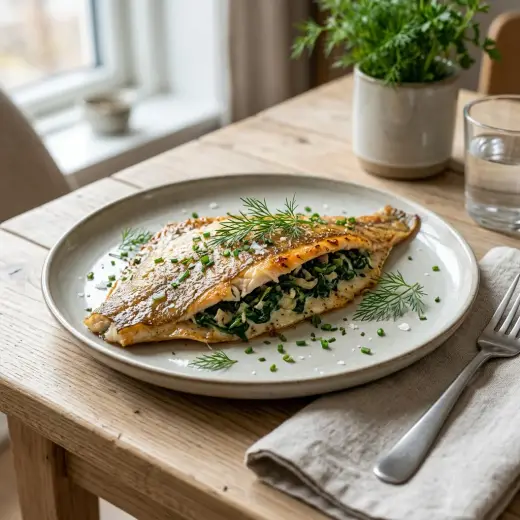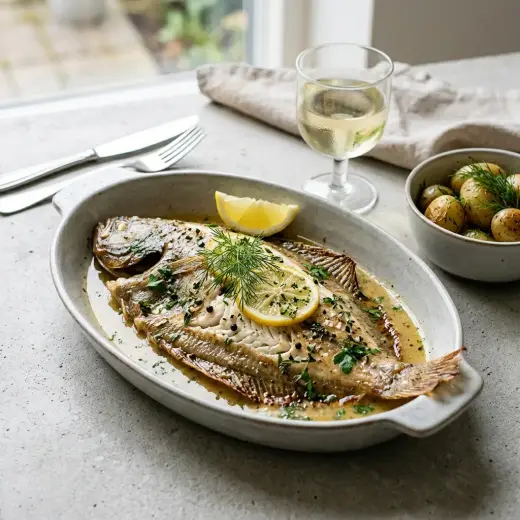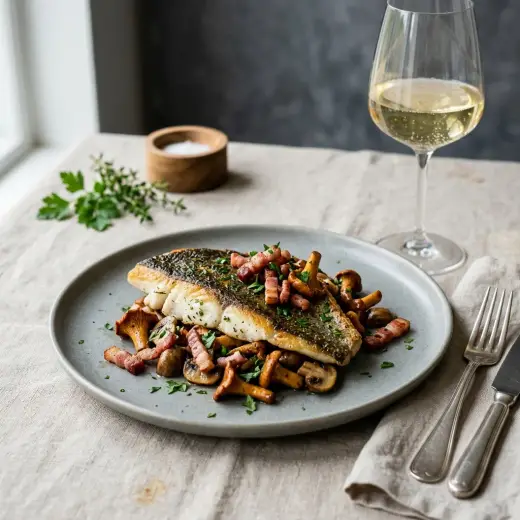
Pan-Fried Halibut
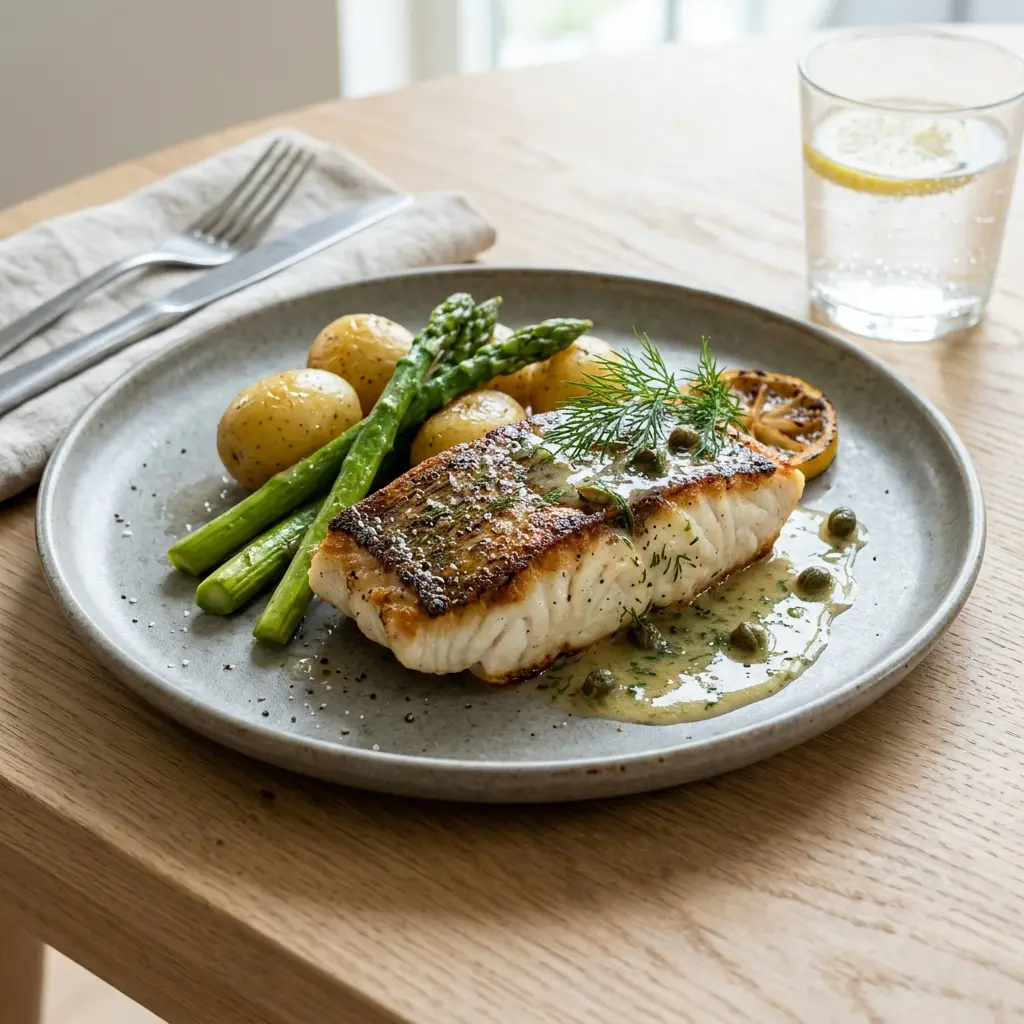
Halibut is a firm, meaty white fish that copes well with a hot pan, which makes pan-fried halibut one of the easiest ways to get a golden crust and moist, flaky flesh. Lemon, butter and parsley are all it needs. Start the fillets skin-side down, leave them alone while the skin crisps, then finish with a spoonful of foaming butter.
- Total
- 15 min
- Prep
- 5 min
- Cook
- 9 min
- Serves
- 2
- Per serving
- 320kcal
Knowing when pan-fried halibut is done
Halibut is leaner than salmon, so it moves quickly from moist to dry. Judge it by the flesh rather than the clock: the translucent centre should turn opaque, and a fork should part the flakes without any resistance. A meat thermometer is helpful here, and 55–60°C in the thickest part gives juicy fish. It carries on cooking for a minute after it leaves the pan, which is why the short rest matters.
Choose centre-cut fillets of an even thickness, so that they cook at the same speed. The fish is not cheap, so buy it fresh from a fishmonger or the supermarket fish counter and cook it within a day.
Pan-fried halibut method
Tap a time to start a timer.
- Dry and season Pat the fillets completely dry with kitchen paper, especially the skin, which is what makes it crisp. Season both sides with the salt and pepper just before cooking.
- Heat the pan Set a frying pan over a medium-high heat for , add the olive oil and wait until it shimmers.
- Fry skin-side down Lay the fillets in the pan, skin-side down, and press each one gently with a fish slice for 10 seconds so it does not curl. Cook for without moving it, until the skin is golden and the flesh has turned opaque about two-thirds of the way up.
- Turn and baste Turn the fillets carefully and add the butter. When it foams, spoon it over the fish for , until the flesh is opaque all the way through and flakes easily at the thickest part. A thermometer should read around 55–60°C. Squeeze the juice of half the lemon into the pan.
- Rest and serve Lift the fillets onto warm plates and leave for . Spoon over the pan juices, scatter with the parsley and serve with the lemon wedges.
What to serve with it
New potatoes with butter and mint are the classic partner, with peas, tenderstem broccoli or buttered samphire alongside. For an oven version of the fish, see baked halibut, and for another quick fillet from the hob, pan-fried salmon is ready in about the same time.
Common problems and fixes for Pan-Fried Halibut
- The fish sticks to the pan.
- The pan was not hot enough, or the fish was damp. The skin releases by itself once it has crisped, so if it resists, give it another 30 seconds rather than forcing it.
- The halibut is dry and chalky.
- It has been cooked too long. Halibut is lean, so take it off the heat as soon as the flesh turns opaque and begins to flake, at roughly 55–60°C in the middle.
- The butter turns brown and bitter.
- Add it only after you turn the fish, and lift the pan off the heat if it starts to darken. A little colour is fine, but black flecks mean it has burned.
Frequently asked questions about Pan-Fried Halibut
How long do you cook halibut in a frying pan?
A fillet 2.5cm thick takes about 4 minutes on the skin side and 2–3 minutes on the other. Thinner fillets need around 3 minutes and 2 minutes.
How do you know when halibut is cooked?
The flesh turns from translucent to opaque all the way through and flakes easily when you press it with a fork. A thermometer reading of 55–60°C in the thickest part is a good guide for moist fish.
Can I use frozen halibut?
Yes, but defrost it fully in the fridge overnight first. Pat the fillets very dry, otherwise the water they release will steam the fish instead of browning it.
What can I use if I cannot find halibut?
Thick cod loin or haddock fillets work well and take the same time at the same thickness. Skinless fillets need 3 minutes on the first side before turning.
How did you like the recipe?
4.8 / 5 · 59 ratings