Baked Halibut
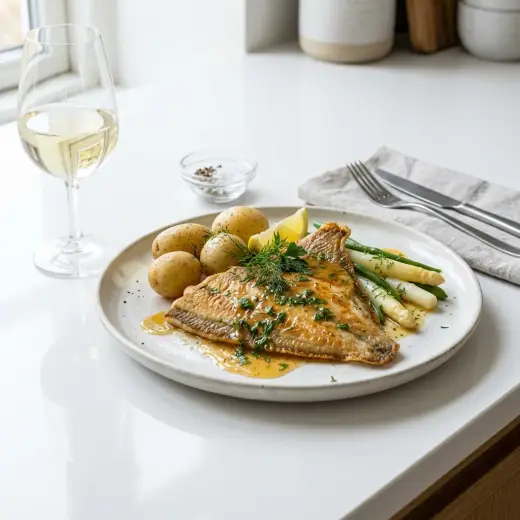
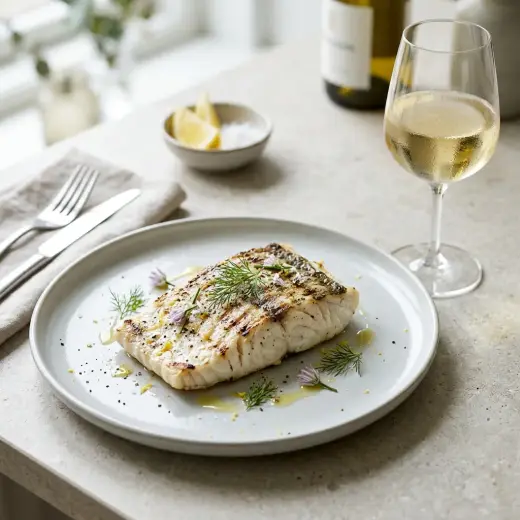
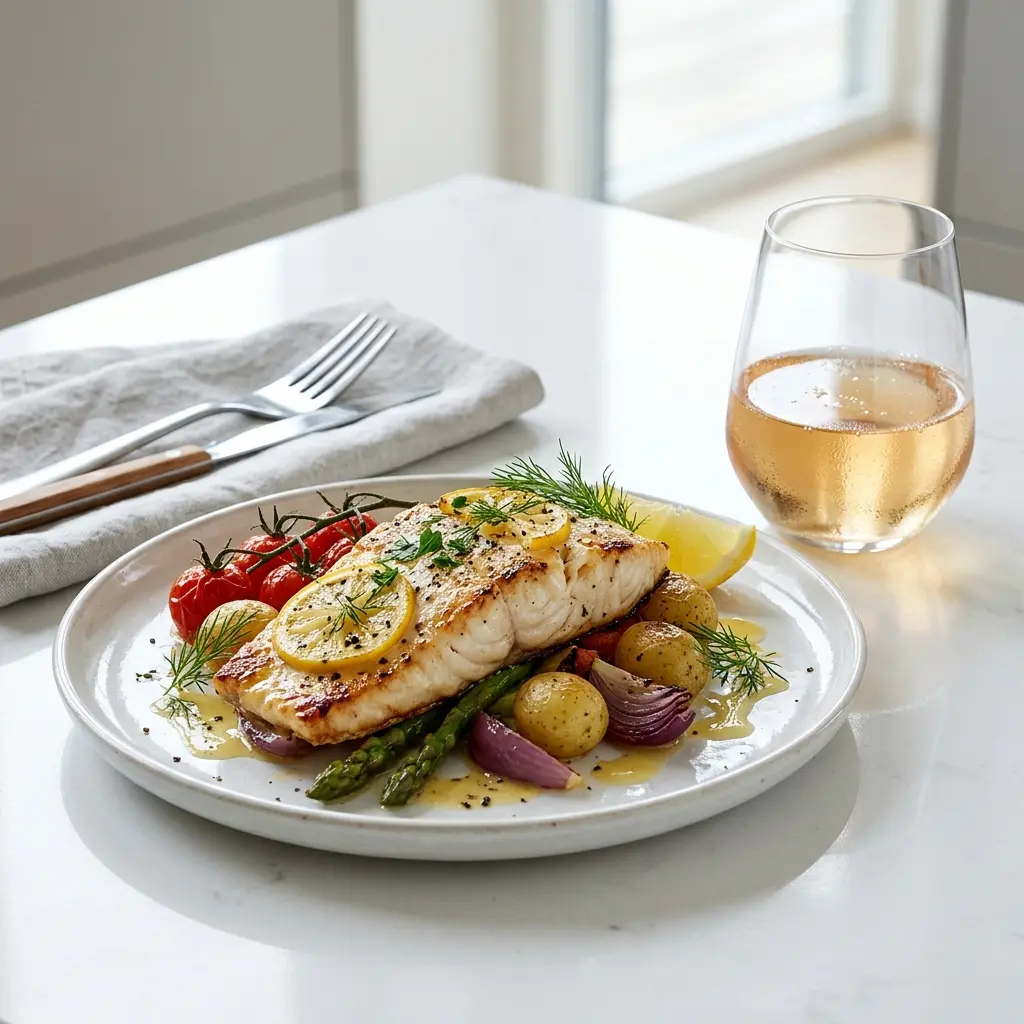
Baked halibut needs only 10 minutes of preparation and about 15 in the oven, so a special-occasion fish becomes an easy weeknight dinner. The thick white fillets are brushed with garlic butter, topped with lemon slices and baked until they turn opaque and flake. The fish is mild and firm, and it is lean, so the trick is simply not to overcook it.
- Total
- 25 min
- Prep
- 10 min
- Cook
- 15 min
- Serves
- 4
- Per serving
- 235kcal
Keeping baked halibut juicy
Halibut is a lean, meaty flatfish, which makes it forgiving in some ways and unforgiving in others. Its firm flesh holds together well in the oven, but with so little fat it dries out if it goes even a few minutes over. That is why the butter goes on top, and why the oven timing matters more than anything else in this recipe.
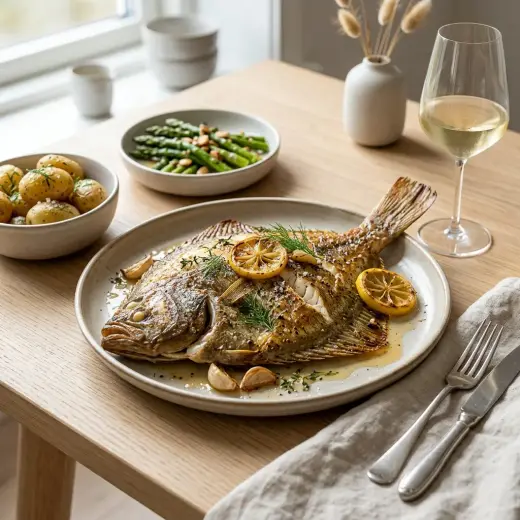
Look for fillets of the same thickness, ideally with the skin on, which helps the fish hold together as it bakes. If halibut is hard to find or expensive, hake or thick cod fillets can be baked in the same way for the same time.
Method for baked halibut
Tap a time to start a timer.
- Prepare the fish Heat the oven to 200°C (180°C fan), gas 6. Line the baking dish with baking paper. Pat the halibut fillets dry with kitchen paper and lay them in the dish, skin-side down, in a single layer.
- Make the garlic butter Melt the butter with the crushed garlic in a small saucepan over a low heat for , without letting the garlic brown. Brush the mixture over the top of each fillet, then season with the salt and pepper.
- Bake Lay the lemon slices over the fish. Bake in the middle of the oven for , depending on thickness. The fish is done when it has turned opaque and flakes easily when pressed with a fork. A thermometer in the thickest part should read 55–63°C.
- Finish and serve Squeeze the remaining lemon half over the fish, scatter with the parsley and spoon the buttery juices from the dish over each fillet. Serve straight away.
Serving and other ways to cook it
Spoon the lemony garlic butter over the fish and serve it with new potatoes and a green vegetable. For a crisp-edged finish, try pan-fried halibut. The same method also suits baked hake, a more affordable fillet.
Common problems and fixes for Baked Halibut
- The thin end of the fillet dries out while the thick part cooks.
- Choose fillets of an even thickness. If one tapers, fold the thin end under so the piece is the same depth all over.
- The fish is dry and chalky.
- Halibut is lean, so it overcooks quickly. Start checking at 12 minutes and take it out as soon as it flakes and turns opaque. It keeps cooking for a minute or so from the heat of the dish.
- The fish is watery and the butter pools in the dish.
- Pat the fillets dry before buttering, and defrost frozen fillets fully in the fridge first. Extra moisture then does not dilute the garlic butter.
Frequently asked questions about Baked Halibut
How do you know when baked halibut is done?
It is done when the flesh has turned from translucent to opaque and flakes easily at the thickest point. If you use a thermometer, 55–63°C is a good guide for moist fish.
How long does it take to bake halibut at 200°C?
Fillets about 2.5cm thick take 12–15 minutes at 200°C (180°C fan), gas 6. Thinner fillets need 10 minutes, so check them early.
Can I use frozen halibut?
Yes, but defrost it fully in the fridge overnight first. Pat the fillets thoroughly dry, otherwise they release water into the dish and bake rather than roast.
What can I serve with baked halibut?
Boiled new potatoes, steamed asparagus, green beans or a simple green salad all suit the mild fish. A spoonful of the garlic butter from the dish makes a sauce for the vegetables as well.
How did you like the recipe?
4.6 / 5 · 44 ratings