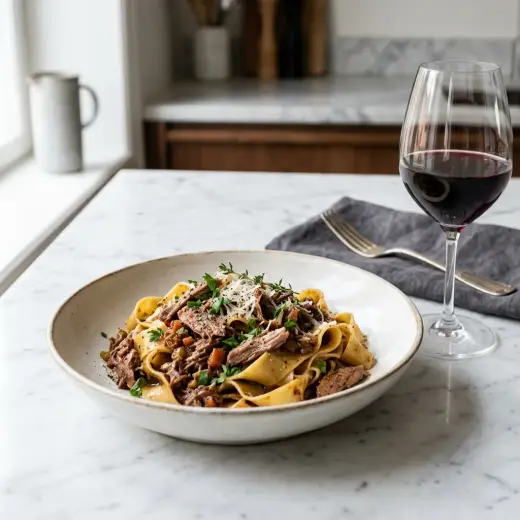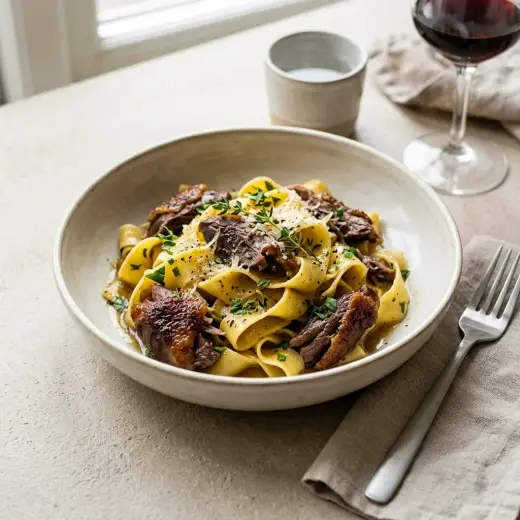
Pasta with Duck Breast
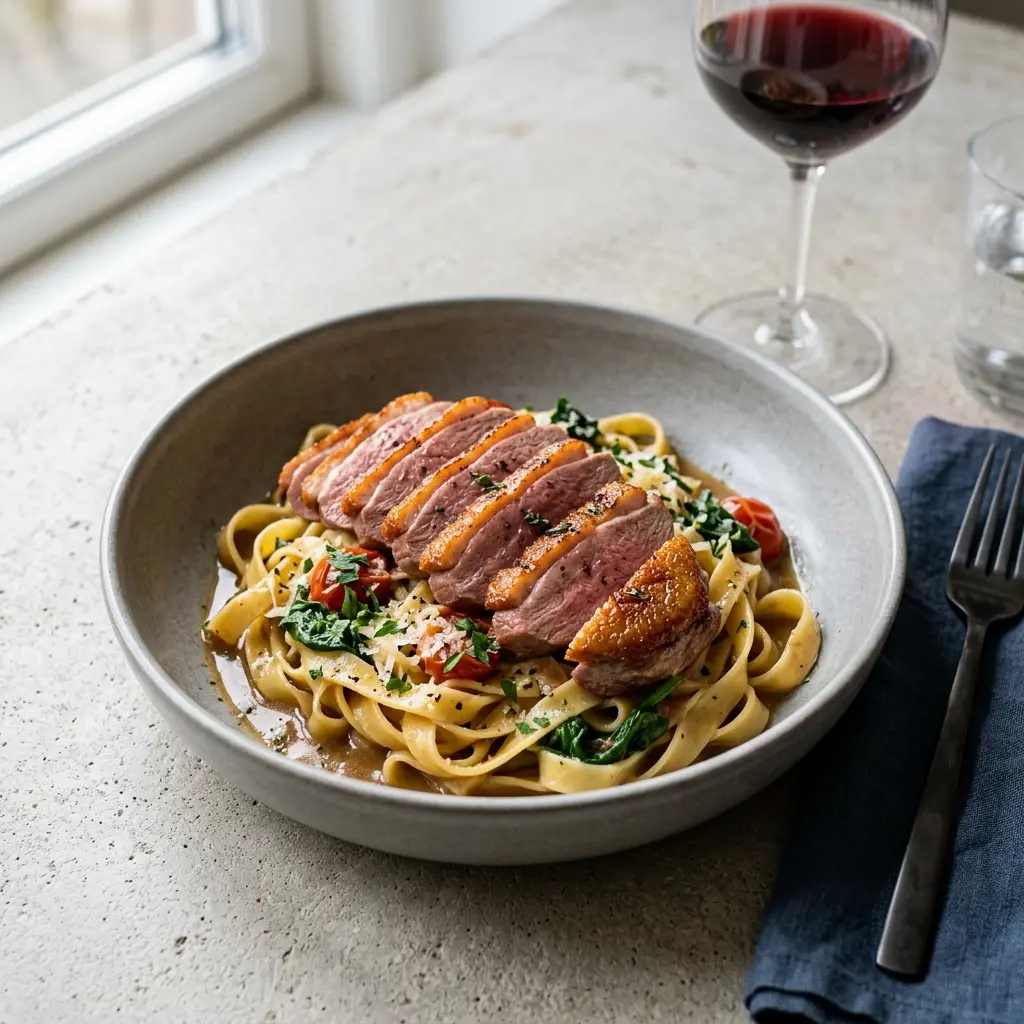
Pasta with duck breast makes a weeknight feel like a treat. The duck starts in a cold pan so its fat melts slowly and the skin turns crisp, and a spoonful of that fat flavours a quick sauce of garlic, stock and balsamic vinegar. Spinach wilts into the pasta at the end, and the sliced duck goes on top. The whole dish takes about 35 minutes.
- Total
- 35 min
- Prep
- 10 min
- Cook
- 20 min
- Serves
- 2
- Per serving
- 645kcal
Internal temperature and resting for pasta with duck breast
Duck breast is poultry, so it should be cooked through: 75°C in the thickest part, steaming hot, with clear juices. A digital thermometer is the surest way to check. Lift the breasts out of the pan as soon as they hit that temperature, because the meat carries on cooking while it rests.
Resting for 5 minutes lets the juices settle, and it gives you time to make the sauce in the same pan. Slice the duck across the grain into thin pieces so each bite is tender.
Pasta with duck breast: the method
Tap a time to start a timer.
- Score and season Pat the duck breasts dry with kitchen paper. With a sharp knife, score the skin in a diamond pattern, cutting through the fat but not into the meat. Season both sides with the sea salt and pepper. Thinly slice the garlic.
- Render the skin Put the duck skin-side down in a cold frying pan and set it over a medium heat. Cook for , until the skin is deep golden and crisp. After , carefully spoon off the melted fat into a heatproof bowl.
- Cook the pasta Meanwhile, bring a large pan of water with the pinch of salt to the boil and cook the pasta for , or less than the packet says. Scoop out a mugful of the cooking water, then drain.
- Turn the duck Flip the breasts and cook on the other side for , until a thermometer in the thickest part reads 75°C and the juices run clear. Move to a board and leave to rest for .
- Make the sauce Pour all but 1 tbsp of fat out of the frying pan. Add the garlic and cook over a medium heat for . Add the stock and balsamic vinegar and simmer for , until reduced by about half.
- Toss and serve Add the spinach, pasta and 3 tbsp of the pasta water to the pan and toss for , until the spinach wilts and the sauce coats the pasta. Slice the duck into 1cm pieces, spoon any resting juices into the pan, and serve the duck on top.
Swaps and serving
Any long, flat pasta suits the sauce, and penne works if you prefer a short shape. If you cannot find duck, chicken thighs or breasts work, as shown in pasta with chicken and spinach. Another way to cook the breasts is in the basket, in air fryer duck breast.
Pour the strained duck fat into a jar rather than down the sink. Leftover pasta should be cooled quickly, kept in the fridge and eaten within a day, then reheated until it is steaming hot all the way through.
Common problems and fixes for pasta with Duck Breast
- The duck skin is chewy rather than crisp.
- The pan was too hot at the start or the skin was wet. Pat the breasts dry, begin in a cold pan and keep the heat at medium so the fat has time to melt away.
- The duck meat is dry and tough.
- It has been cooked for too long. Use a thermometer and take the breasts off the heat as soon as they reach 75°C, then rest them for the full 5 minutes before slicing.
- The sauce is too sharp or too thin.
- Simmer it for another minute so it reduces and mellows. A splash more pasta water also helps it cling to the pasta rather than pool at the bottom.
Frequently asked questions about pasta with Duck Breast
How long do you cook duck breast for pasta?
About 14–15 minutes in total: 8 minutes skin-side down, then 6–7 minutes on the other side, until the centre reaches 75°C. Rest it for 5 minutes before slicing.
Can you serve duck breast pink?
Many restaurants do, but the Food Standards Agency advises cooking poultry until steaming hot with no pink meat. This recipe cooks the breasts to 75°C, so they stay juicy and are safe for everyone.
What can you use instead of balsamic vinegar?
Red wine vinegar with a pinch of sugar works, or a splash of sherry vinegar. Add it a little at a time, because both are sharper than balsamic.
What should you do with the leftover duck fat?
Keep it. Strain it into a clean jar and store it in the fridge for up to 2 weeks, or freeze it. It makes excellent roast potatoes.
How did you like the recipe?
4.7 / 5 · 55 ratings