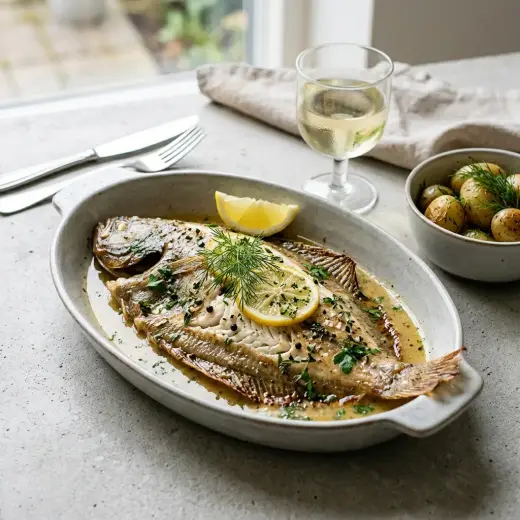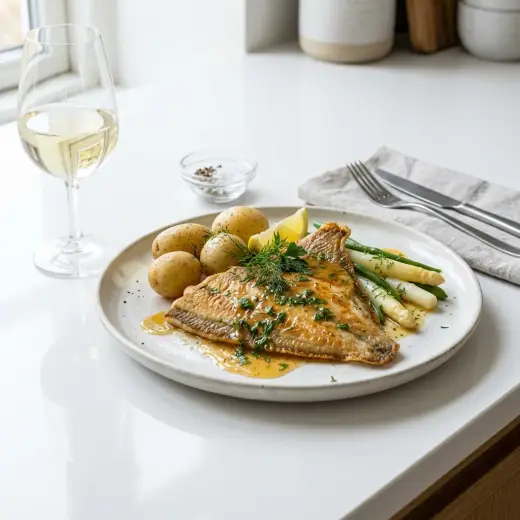
Plaice with Dauphinoise Potatoes
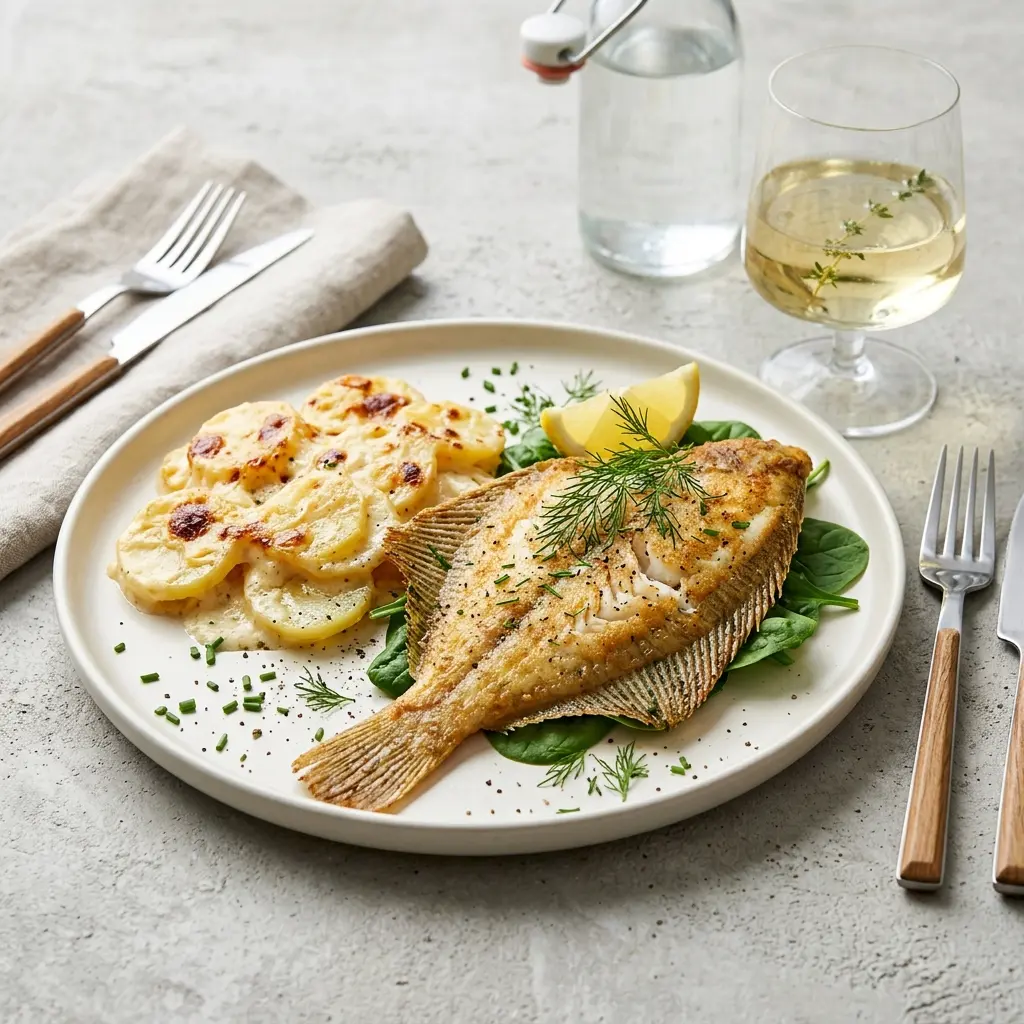
Plaice with dauphinoise potatoes pairs delicate, quick-cooking fish with the richest of potato bakes. The potatoes go in the oven first, which gives you time to relax, and the plaice takes less than 10 minutes in the pan right at the end. It is a good dish for a weekend dinner or a small celebration, and it needs only a squeeze of lemon and something green to finish.
- Total
- 1 h 18 min
- Prep
- 15 min
- Cook
- 1 h 3 min
- Serves
- 4
- Per serving
- 810kcal
Choosing the potatoes and the fish
Floury potatoes such as Maris Piper break down a little at the edges, thicken the cream and give a tender bake. Waxy types stay firmer and give a looser sauce. Ask your fishmonger for skinless plaice fillets of a similar size so they cook evenly. If they are frozen, defrost them in the fridge overnight and pat them very dry, as moisture stops the fish from browning.
How to prepare plaice with dauphinoise potatoes
Tap a time to start a timer.
- Slice the potatoes Heat the oven to 180°C (160°C fan), gas 4, and butter the dish. Slice the potatoes into 3mm rounds. Do not rinse them, as the starch helps to thicken the sauce.
- Warm the cream Heat the cream, milk, garlic, salt and pepper in a saucepan over a low heat for about , until steaming but not boiling.
- Layer and bake covered Layer the potatoes in the dish, pour over the cream, press down and cover with foil. Bake for , until the potatoes are starting to soften.
- Add the cheese Remove the foil, scatter over the Cheddar and bake for another , until the potatoes are tender and the top is deep golden.
- Fry the plaice Take the potatoes out and leave them to stand while you cook the fish. Pat the fillets dry and season both sides. Heat half the oil and butter in a frying pan over a medium-high heat and fry 2 fillets for on each side, until opaque and flaking easily. Keep them warm on a plate, then repeat with the rest.
- Serve Spoon a generous portion of potatoes onto each plate, add the plaice and serve with lemon wedges.
Serving and variations
Plaice with dauphinoise potatoes needs a squeeze of lemon to cut through the cream. Add steamed greens or peas for colour. If you like the idea of leeks in the bake, try dauphinoise potatoes with leeks, and for a simple sauce on the fish, see plaice fillet with parsley sauce.
A sprig of thyme in the cream adds fragrance. Keep the cheese on the potatoes only: it does not belong on the fish.
Common problems and fixes for plaice with Dauphinoise Potatoes
- The plaice breaks up when turned.
- Let the fish sit in the hot pan until it releases easily, usually 2 minutes, and turn it once with a wide fish slice. Do not move it earlier.
- The fish is dry.
- Plaice is thin and cooks fast. Take it out of the pan as soon as it turns opaque and flakes easily. Fillets under 1cm thick need only about 1½ minutes per side.
- The cream sauce is thin or split.
- Never let the cream boil before it goes into the oven and always bake at 180°C. Let the dish stand for 8 minutes while you fry the fish so the sauce thickens.
Frequently asked questions about plaice with Dauphinoise Potatoes
Can I make the potatoes ahead?
Yes. Bake them fully, cool and chill for up to 2 days, then reheat covered with foil at 180°C (160°C fan), gas 4, for 25 minutes until steaming hot all the way through. Cook the fish fresh just before serving.
What can I use instead of plaice?
Lemon sole, dab or flounder are the closest swaps. Cod or haddock fillets also work, but cook them for 3–4 minutes on each side as they are thicker.
How do I know when plaice is cooked?
It is done when the flesh turns opaque and flakes easily with a fork, usually after 4 minutes in total. A food thermometer reading of 55–63°C is a guide to juiciness.
What should I serve alongside?
Something green and fresh cuts through the cream: steamed green beans, buttered peas, tenderstem broccoli or a simple salad with a lemon dressing.
How did you like the recipe?
4.8 / 5 · 40 ratings