Reasons to choose pork pie
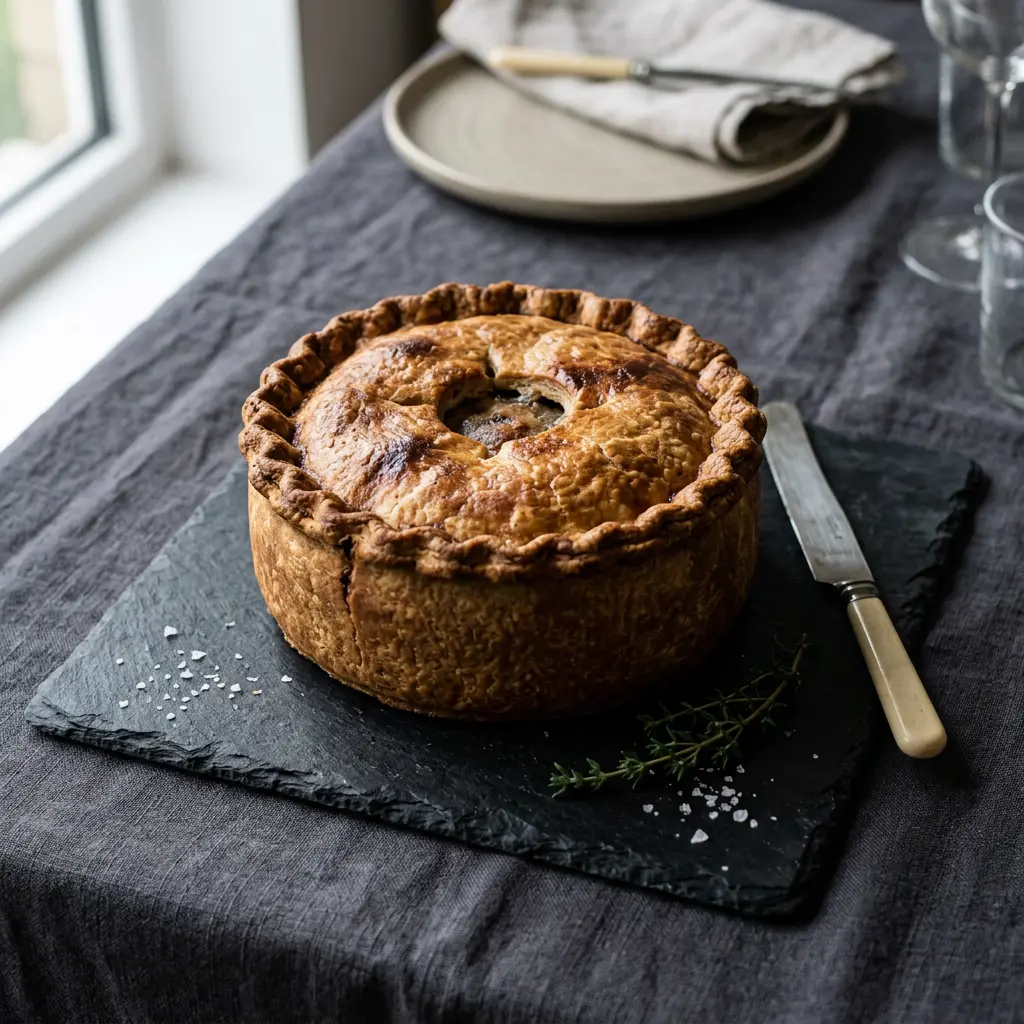
Homemade pies often taste much better than the ones you buy in a shop. You can control the quality of the meat and adjust the seasoning to your liking. Making a pork pie at home gives you a crispy pastry and a juicy filling every time. It is a great way to practice your baking skills while creating a hearty meal.
Follow these 4 steps for pork pie
Prepare the meat: Chop the pork shoulder and bacon into very small pieces or use a coarse grinder. Put the meat in a bowl and mix in the sage, salt and pepper until well combined. Keep the filling cold while you work on the pastry.
Make the pastry: Boil the water and lard in a small saucepan until the fat melts. Pour the hot liquid into the flour and stir until a dough forms. Knead the dough briefly while it is still warm so it stays flexible.
Assemble the pie: Line a greased cake tin with two thirds of the warm pastry and press it against the sides. Fill the pastry case with the meat mixture and press it down firmly. Roll out the remaining pastry to make a lid and pinch the edges to seal the pork pie.
Bake and set: Brush the top with beaten egg and bake at 180C for about 90 minutes. Once the pie is cold, dissolve the gelatine in warm stock and pour it through a small hole in the lid. Let the pork pie set in the fridge for several hours before serving.
Good advice for making pork pie
Make sure you work with the pastry while it is still warm because it becomes brittle as it cools down. If the dough starts to crack, just press it back together with your fingers. Do not rush the cooling process because the jelly needs time to set properly inside the meat. Using a mix of pork shoulder and bacon provides the best balance of fat and flavour. A well seasoned pork pie tastes much better after it has rested overnight in the fridge. Always ensure the edges are sealed tightly so the jelly does not leak out later.
You might also like
crumpets,
treacle tart or
eton mess.