Why salmon steaks is so popular
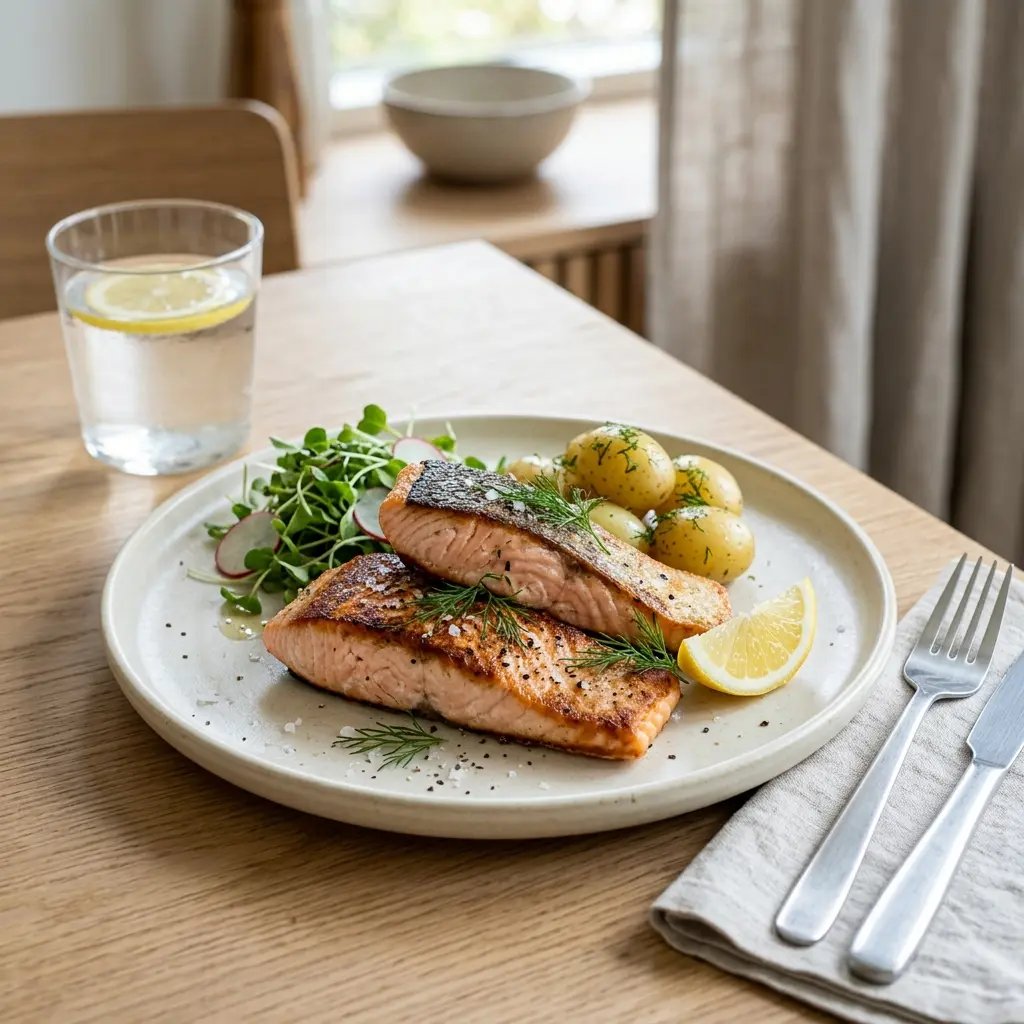
Preparing salmon steaks is very straightforward because the bone helps the fish retain its shape during cooking. This cut often has more flavour than fillets and develops a lovely golden crust when seared. It is an excellent way to get healthy fats into your diet with minimal preparation time. You can easily pair them with steamed vegetables or a fresh salad for a complete meal.
Follow these 4 steps for salmon steaks
Seasoning: Pat the fish dry with a paper towel to ensure a good sear. Rub the olive oil over both sides of the salmon steaks until they are lightly coated. Sprinkle the oregano, salt and pepper evenly over the surface. Make sure the seasoning sticks well to the flesh.
Heating: Place a large frying pan over a medium high heat. Wait until the pan is hot before adding the fish to prevent sticking. You do not need extra oil if the pan has a good non stick surface. The oil on the fish will be enough to cook it perfectly.
Searing: Carefully place the salmon steaks into the hot pan. Cook them for about four minutes on the first side until the skin is crisp. Flip them over gently using tongs and cook for another four minutes. The middle should be slightly opaque and the outside should be golden brown.
Serving: Remove the pan from the heat and let the fish rest for a minute. Squeeze fresh lemon juice over the top to add a bright finish. Transfer the steaks to plates and serve them while they are still warm. Enjoy your simple fish dinner with your favourite side dishes.
Tips and tricks for salmon steaks
Always bring your fish to room temperature for ten minutes before you start cooking. This helps the salmon steaks cook more evenly throughout the middle. Using a heavy pan like cast iron can give you a much better crust on the outside. If you prefer a milder taste, you can swap oregano for fresh parsley or dill after cooking. Watch the thickness of the fish as thicker cuts might need an extra minute on the heat. Do not overcook the fish or it may become dry and lose its delicate texture.
Make sure to leave enough space in the pan so the air can circulate around the fish. Crowding the pan will cause the meat to steam rather than sear properly.
Find more ideas here:
chicken with hasselback potatoes,
one-pot pasta with tuna or
fried rice with turkey.