Tapenade
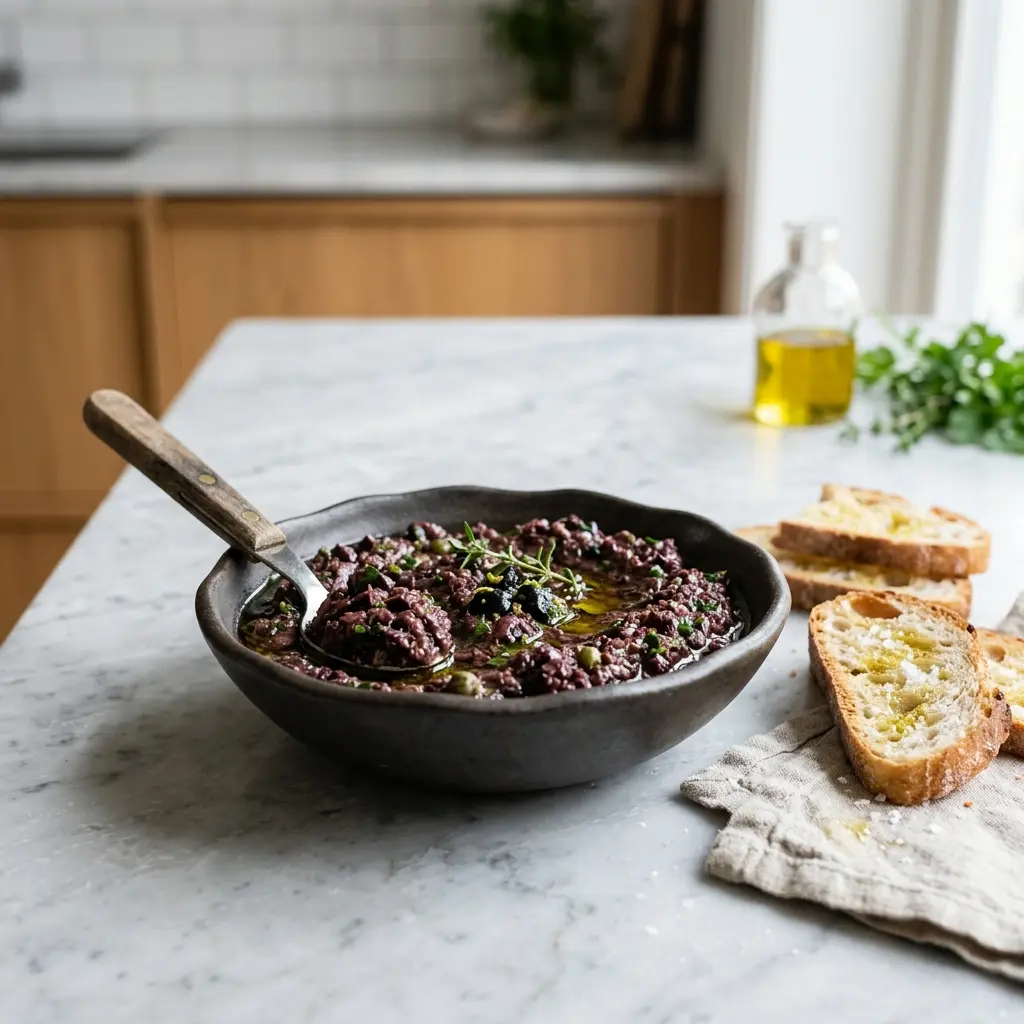
Tapenade is the olive, caper and anchovy spread of Provence, and a food processor does nearly all of the work. Ten minutes and a few storecupboard ingredients give you a dark, salty paste that is good on toast, stirred into hot pasta or put out with a cheese board. It is deliberately coarse, so the olives stay recognisable instead of turning into a smooth purée.
- Total
- 10 min
- Prep
- 10 min
- Serves
- about 280g (16 tbsp)
- Per 1 tbsp
- 41kcal
Getting the texture of tapenade right
Pulse in short bursts and stop while you can still see flecks of olive, because a few extra seconds is all it takes to turn a spread into a paste. The oil loosens the mix and does most of the smoothing for you, so add it last. Choose olives packed in plain brine rather than ready-marinated with herbs or garlic, which would take over the flavour.
How to make tapenade
Tap a time to start a timer.
- Drain everything Drain the olives, capers and anchovies well and pat them dry on kitchen paper. If your capers are packed in salt rather than brine, rinse them first. Peel the garlic.
- Chop the base Put the olives, capers, anchovies, garlic and thyme in a food processor. Pulse in short bursts, 8–10 times, scraping down the sides once, until everything is finely chopped but still flecked with olive.
- Add the oil and lemon Pour in the olive oil in a thin stream while pulsing, then add the lemon juice. Stop as soon as the paste holds together and looks glossy. A few more pulses will make it smooth, so stop when it is as coarse as you like it.
- Taste and season Taste a little on a piece of bread. The olives, capers and anchovies are already salty, so you will probably only need a few grinds of black pepper or another squeeze of lemon. Spoon it into a bowl or jar.
What to serve with tapenade
Spread it on toasted sourdough or ciabatta, or use it instead of tomato on bruschetta. A spoonful also works over grilled lamb chops or baked cod, stirred through hot pasta with a splash of the cooking water, or tucked into a jacket potato. For a sharing platter, put the bowl next to marinated olives and haydari, with crackers, cheese and raw vegetables.
Swaps and variations
Fresh thyme leaves can stand in for the dried thyme. A strip of orange zest or a few chopped sun-dried tomatoes give a sweeter, Provençal-style twist, and a small handful of parsley adds freshness and colour.
Common problems and fixes for tapenade
- The mixture has turned into a smooth, heavy paste.
- Next time, pulse in short bursts and add the oil last. To rescue this batch, stir in a few whole, chopped olives by hand so there is some texture again.
- It tastes far too salty.
- Rinse the capers and anchovies before they go in. To rescue it, add another tablespoon of oil and a squeeze of lemon, or blend in a few extra olives that you have rinsed under cold water.
- The garlic is overpowering.
- Raw garlic gets stronger as the spread sits. Stick to one small clove, or leave it out and rub a halved clove over the toast instead.
Frequently asked questions about tapenade
How long does homemade tapenade keep?
Up to a week in a clean, airtight jar in the fridge. A thin layer of olive oil on top helps to keep the surface fresh, and a clean spoon every time stops it spoiling early.
Which olives are best?
Black Kalamata or Niçoise olives give the deepest, fruitiest flavour and are the traditional choice. Green olives make a sharper, more acidic version, and cheap tinned black olives work if you add the lemon juice and taste as you go.
Can you make it without anchovies?
Yes. Add an extra tablespoon of capers to replace the salty depth of the anchovies. It will taste a little less rounded, but it is a good option for vegetarians.
Can I make it without a food processor?
Yes, use a pestle and mortar or a very sharp knife. Chop the olives, capers and anchovies as finely as you can, then mix in the oil, lemon juice and thyme. The result is more rustic and chunky.
How did you like the recipe?
4.7 / 5 · 40 ratings