Caramelised Potatoes
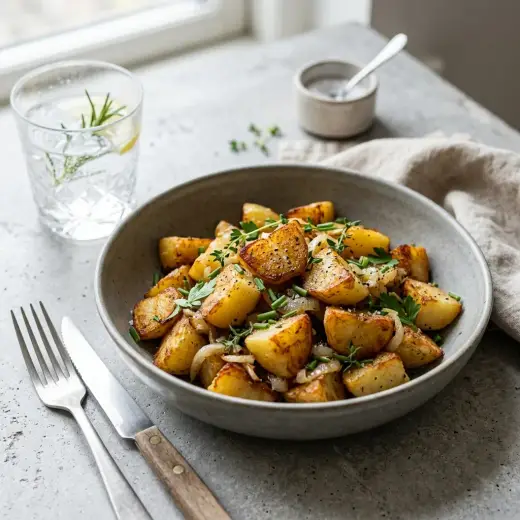
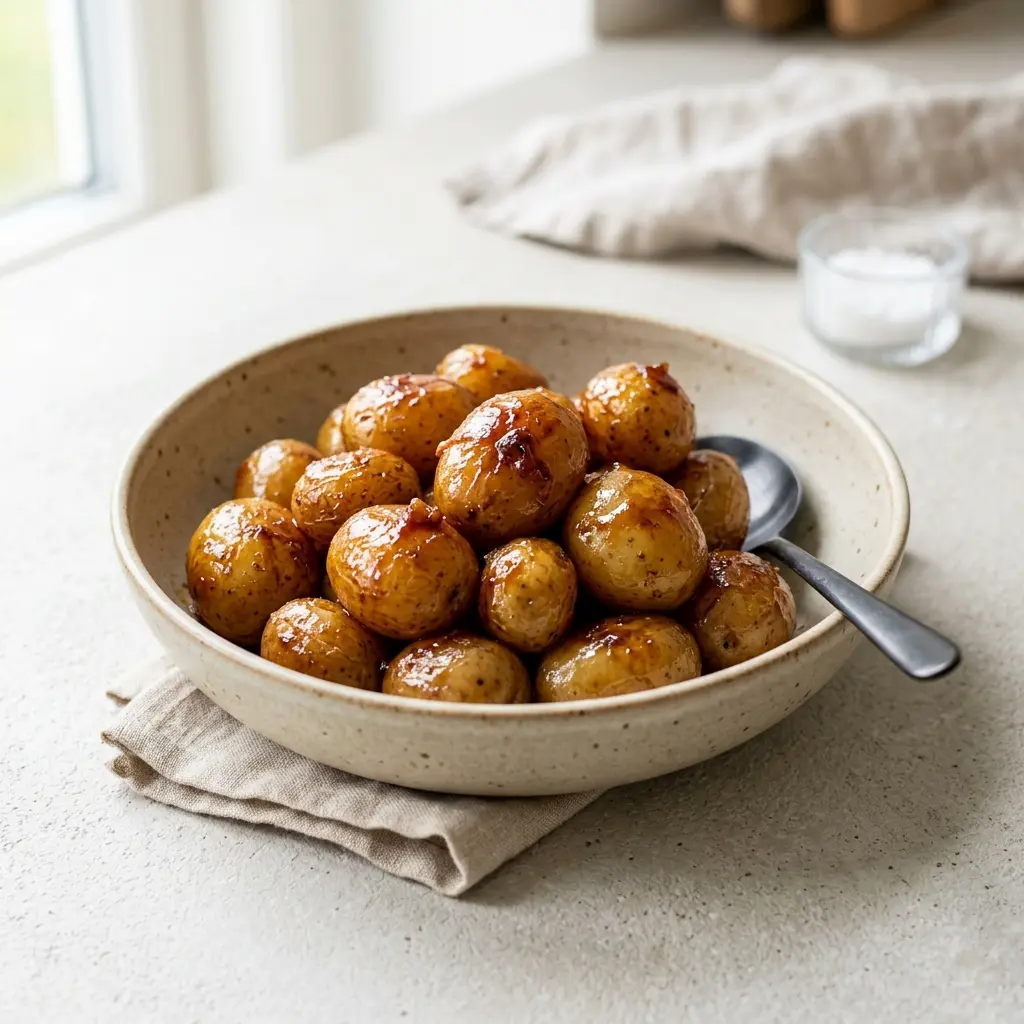
Caramelised potatoes are small boiled potatoes rolled in a glossy butter and sugar caramel until they turn dark amber. The glaze is sweet, a little salty and slightly toffee-like, which makes them a natural partner for roast pork, duck, turkey and gravy. Once the potatoes are boiled and cold, the caramel takes only about ten minutes.
- Total
- 1 h 15 min
- Prep
- 15 min
- Cook
- 30 min
- Serves
- 4
- Per serving
- 395kcal
Where caramelised potatoes come from
This dish is a Danish Christmas tradition, known there as brunede kartofler, and it is usually served with roast pork or duck. The idea works well with a British roast dinner too, wherever you would like a sweet and salty contrast to savoury gravy.
Choose small, waxy potatoes. They stay whole when boiled and peeled, and their size means each one is fully coated in glaze.
Cooking caramelised potatoes
Tap a time to start a timer.
- Boil the potatoes Put the potatoes in a pan of cold salted water, bring to the boil and simmer for , until a knife slides in easily but the potatoes still hold their shape. Drain in a colander.
- Cool and dry Let the potatoes cool for about , then peel off the skins with your fingers or a small knife. Pat them dry with kitchen paper. Cold, dry potatoes take the glaze best and stop the sugar spitting.
- Melt the sugar Spread the sugar in an even layer in a large, dry frying pan over a medium heat. Leave it alone until the edges start to melt, about , then swirl the pan gently, without stirring, until all the sugar has melted into a light golden syrup.
- Add the butter Take the pan off the heat for a moment, add the butter and the pinch of salt, and stir with a wooden spoon until the butter has melted into the caramel and the mixture is smooth. The caramel is very hot, so keep your hands and face back.
- Coat the potatoes Add the potatoes, return the pan to a medium heat and toss gently for , until every potato is coated in dark amber, glossy caramel. Serve straight away.
Serving and keeping caramelised potatoes
Serve the potatoes hot, as soon as they are coated, because the glaze sets as it cools. They go well with turkey with roast potatoes for a Christmas table, or you can serve them in place of plain fried potatoes when you want something sweeter.
You can boil and peel the potatoes a day ahead and keep them in the fridge. Bring them back to room temperature and dry them again before they go into the pan.
Common problems and fixes for Caramelised Potatoes
- The sugar turns grainy or forms lumps.
- Stirring too early or damp potatoes cause this. Let the sugar melt undisturbed and swirl the pan instead. If it does clump, keep heating over a low heat and it will usually melt again.
- The caramel burns and tastes bitter.
- Sugar goes from golden to burnt within a minute. Use a medium heat, watch the colour, and add the butter as soon as the syrup is light golden. If it smells acrid, start again.
- The potatoes break up in the pan.
- Potatoes that are too soft or too floury fall apart. Use waxy potatoes, stop boiling while they still hold a little firmness, and toss with a spoon rather than stirring hard.
Frequently asked questions about Caramelised Potatoes
Can you use tinned potatoes?
Yes. Drain small tinned potatoes well and pat them completely dry before adding them to the caramel. They are already soft, so toss them for only about 3–4 minutes.
Can you make them ahead and reheat them?
Yes. Keep them in the fridge for up to 2 days, then reheat in a frying pan over a low heat with a small knob of butter until hot all the way through, so the glaze melts and shines again. A microwave tends to make the coating sticky.
What do you serve them with?
They are traditional with roast pork, duck and turkey, plus gravy and red cabbage. The sweetness is a good contrast to salty or rich meat.
Can you use brown sugar?
Yes. Light soft brown sugar gives a deeper, more toffee-like flavour, but it melts faster and burns more easily, so watch the pan closely.
How did you like the recipe?
4.7 / 5 · 21 ratings