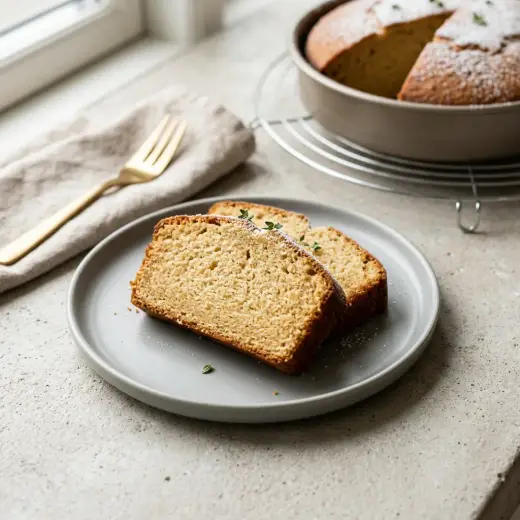
Homemade Lemon Cake
Homemade lemon cake is a tender loaf sponge scented with fresh zest, finished with a sharp lemon syrup spooned over while it is still warm. The syrup soaks in and leaves a thin, crunchy sugar crust on top. It uses butter, sugar, eggs and flour in equal weights, so it is easy to remember, and it stays moist for days, which makes it ideal for afternoon tea.

- Total
- 2 h 5 min
- Prep
- 15 min
- Cook
- 50 min
- Serves
- 8
- Per serving
- 440kcal
Common mistakes with homemade lemon cake
Most problems come down to temperature. Butter that is too cold will not cream properly, and cold eggs make the batter curdle, so take both out of the fridge in advance. Beat the butter and sugar for the full time, as this is where the light texture comes from, then fold the flour in gently. Stirring hard after the flour goes in makes the sponge tough.
Use fresh lemons, not bottled juice, and unwaxed ones if you can, since the zest goes straight into the batter. Bottled juice tastes flat and will not give the same sharp edge to the syrup.
Preparing homemade lemon cake
Tap a time to start a timer.
- Get ready Heat the oven to 180°C (160°C fan), gas 4. Grease the loaf tin and line it with baking paper. Finely grate the zest from both lemons.
- Cream the butter and sugar Beat the butter and caster sugar in a large bowl for with an electric whisk (about by hand), until pale and fluffy.
- Add the eggs Beat in the eggs one at a time. If the mixture starts to look curdled, stir in a spoonful of the flour before adding the next egg.
- Fold in the flour Sift in the flour, add the zest and fold gently with a large metal spoon until just combined. Spoon the batter into the tin and level the top.
- Bake Bake for , until golden, well risen and a skewer pushed into the centre comes out clean. If the top is browning too fast after , cover it loosely with foil.
- Soak with syrup Squeeze the juice from both lemons into a bowl and stir in the granulated sugar, which will not fully dissolve. Prick the hot cake all over with the skewer and spoon the syrup slowly over the top so it soaks in.
- Cool Leave the cake in the tin for 1 hour, until completely cold. Lift it out using the paper and slice.
Storing and serving
Keep the cake in an airtight tin at room temperature for up to 3 days. It also freezes well in slices for up to a month; thaw them at room temperature. Serve a slice with a cup of tea, or add some berries and a spoonful of cream for a simple dessert.
For a similar bake in a smaller appliance, try air fryer lemon cake, or make another simple butter loaf with pound cake.
Common problems and fixes for Homemade Lemon Cake
- The sponge sank in the middle.
- Keep the oven door closed for the first 35 minutes, and check that your flour is self-raising with no extra baking powder added, because too much raising agent makes the cake rise quickly and then collapse.
- The mixture curdled after adding the eggs.
- Cold eggs or butter are usually the cause. Stir in a spoonful of flour and keep beating, and next time take the eggs out of the fridge an hour before baking.
- The syrup sits on the surface instead of soaking in.
- Prick the cake deeply while it is still hot, and pour the syrup on in several small additions, letting each one sink in first.
- The cake is dry.
- Ovens vary, so start testing with a skewer at 45 minutes and take the cake out as soon as it comes out clean.
Frequently asked questions about Homemade Lemon Cake
How long does a lemon cake take to bake?
It takes 50 minutes at 180°C (160°C fan), gas 4 in a 900g loaf tin. The cake is done when a skewer comes out clean.
Can I use plain flour instead of self-raising?
Yes. Use 200g plain flour mixed with 2 tsp baking powder, and sift them together.
Can I use oranges or limes instead of lemons?
Yes. Oranges give a sweeter cake, so use only 30g sugar in the syrup. Limes give a sharper, slightly more tropical flavour.
Why use granulated sugar for the syrup?
The larger crystals do not dissolve completely, so they dry into a crunchy layer on top of the cake.
How did you like the recipe?
4.9 / 5 · 8 ratings